


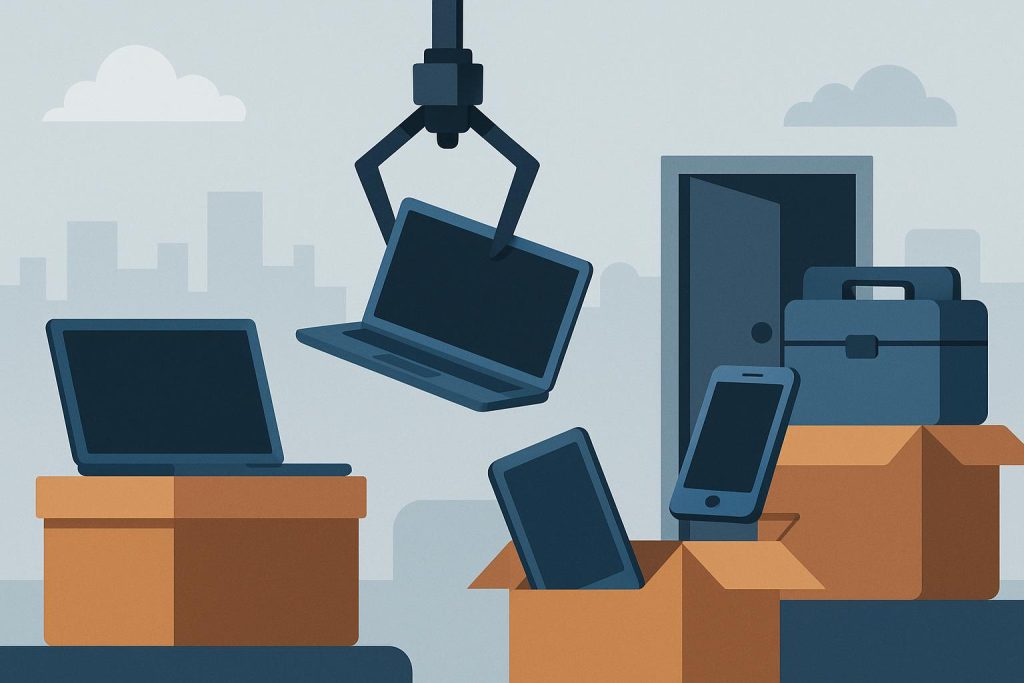
The shift to hybrid and remote work transformed how companies operate, but it also created a logistical headache that few anticipated: what happens when a remote employee leaves the company and still has thousands of dollars worth of equipment sitting in their home office?
For IT directors and operations managers, this scenario has become alarmingly common. Laptops, monitors, docking stations, and mobile devices scattered across different states or even countries need to be retrieved, tracked, and properly processed. The alternative, writing off the loss or hoping employees ship things back on their own, creates security vulnerabilities and budget problems that no organization can afford to ignore.
This is where specialized IT asset disposition services have become invaluable. Companies that handle device lifecycle management now offer comprehensive logistics solutions that take the entire burden off internal teams. Here’s how the right partner makes remote asset retrieval manageable, secure, and surprisingly efficient.
1. White Glove Pickup Eliminates the Guesswork
Contents
When an employee separation happens, the last thing an IT department wants is a drawn-out back-and-forth about shipping labels, box sizes, and tracking numbers. An ITAD company handles this complexity through coordinated pickup services that work on the company’s timeline, not the former employee’s. Professional retrieval services typically include:
- Scheduled pickup windows that accommodate the individual’s availability
- Pre-arranged shipping materials delivered directly to the home address
- Clear communication and confirmation at every step
- Direct transportation to secure processing facilities
This approach removes the uncertainty that comes with asking a terminated employee to package and ship equipment themselves. There’s no risk of devices sitting in a garage for weeks, no missing components, and no excuses about not having the right box or enough packing materials.
The white glove approach also maintains professionalism during what can be an awkward transition. Instead of adversarial conversations about returning company property, the process becomes a simple, scheduled appointment that respects everyone’s time.
2. Certified Data Wiping Protects What Matters Most
Hardware replacement costs are significant, but data breaches are catastrophic. Every device that leaves company control without proper sanitization represents a potential security incident waiting to happen.
Professional IT asset disposition providers use certified data destruction methods that go far beyond a factory reset. Military grade wiping software runs multiple overwrite cycles that make data recovery impossible. For devices with damaged drives or those requiring absolute certainty, physical destruction services ensure that sensitive information never falls into the wrong hands.
What separates professional services from internal efforts is the documentation. Companies receive detailed certificates of data destruction for each device, complete with serial numbers, wiping protocols used, and compliance standards met. This paper trail becomes essential during audits, regulatory reviews, or security assessments. IT teams often underestimate how time consuming proper data wiping becomes at scale. A single device might take hours to process correctly when factoring in verification, documentation, and quality control. Multiply that across dozens or hundreds of remote retrievals per year, and the internal labor costs become staggering.
3. Asset Tracking Brings Visibility Back to IT
One of the most frustrating aspects of remote work has been the loss of physical inventory control. Devices disappear into home offices, and IT departments lose track of what’s where, what condition equipment is in, and what needs to be retrieved when someone leaves.
An ITAD company with strong logistics capabilities implements tracking systems that restore visibility from the moment retrieval begins. Each device gets logged with detailed condition assessments, serial number verification, and accessory inventories. Missing power adapters, damaged screens, or unreturned peripherals get documented immediately rather than becoming surprises months later.
This tracking continues throughout the entire disposition process. Companies can see exactly where their assets are at any given time, whether in transit, undergoing data sanitization, being evaluated for resale, or moving toward final recycling. Real time dashboards and regular reporting give IT leaders the oversight they need without requiring constant check-ins or status calls.
The data collected during retrieval also feeds into better asset management going forward. Patterns emerge about which devices hold up well in home environments, which accessories frequently go missing, and which employees consistently return equipment in good condition. These insights help refine remote work policies and hardware selection.
4. Compliance Documentation Reduces Legal and Financial Risk
Remote device retrieval isn’t just an operational challenge, it’s a compliance concern. Industries dealing with protected health information, financial data, or government contracts face strict requirements about how IT assets must be handled at end of life.
Professional disposition services understand these regulatory frameworks and build compliance into their processes. Whether it’s HIPAA requirements for healthcare data, NIST standards for government contractors, or industry-specific mandates, specialized providers maintain the certifications and procedures that keep companies compliant.
The documentation provided after retrieval goes beyond simple receipts. Comprehensive reporting includes chain of custody records, environmental compliance certificates for recycled materials, and detailed manifests of every asset processed. When auditors come calling or when demonstrating due diligence becomes necessary, having this documentation readily available makes the difference between a smooth review and a costly problem.
Many companies also overlook the financial reporting implications. Proper asset disposition creates accurate records for depreciation schedules, tax deductions, and balance sheet adjustments. Working with a provider that understands these financial dimensions ensures that accounting teams get the information they need without additional follow-up work.
5. Recovery and Resale Offset Program Costs
The final advantage of using specialized logistics services is the potential to recover value from returned equipment. Not every retrieved device is ready for the scrap heap. Many laptops and peripherals returned from remote workers still have useful life remaining and can be refurbished for resale.
Professional IT asset disposition providers evaluate each device for its potential secondary market value. Equipment that meets quality standards gets securely wiped, refurbished if necessary, and sold through established remarketing channels. Companies receive financial returns that offset retrieval and processing costs, sometimes substantially.
This remarketing capability requires infrastructure that most internal IT teams simply don’t have. It demands relationships with buyers, understanding of secondary market pricing, quality control processes, and the ability to handle logistics at scale. Specialized providers bring all of this to the table as part of their core service.
For organizations with sustainability commitments, maximizing reuse before recycling also supports environmental goals. Extending the useful life of electronics reduces e-waste and the environmental impact of manufacturing new devices. Many companies now include circular economy metrics in their sustainability reporting, and strong IT asset disposition practices contribute directly to these initiatives.
The Bottom Line on Remote Asset Management
The remote work revolution isn’t reversing, which means the challenge of retrieving and processing devices from distributed employees will only grow more common. IT directors who continue handling this internally will find themselves buried in logistics coordination, compliance paperwork, and security concerns that pull focus from strategic initiatives.
Partnering with an experienced ITAD company transforms this burden into a managed process that runs in the background. The white glove retrieval, certified data destruction, comprehensive tracking, compliance documentation, and value recovery services don’t just save time, they reduce risk and often pay for themselves through recovered asset value. For organizations serious about security, efficiency, and professional device lifecycle management, the logistics capabilities of specialized providers have become not just helpful, but essential.