


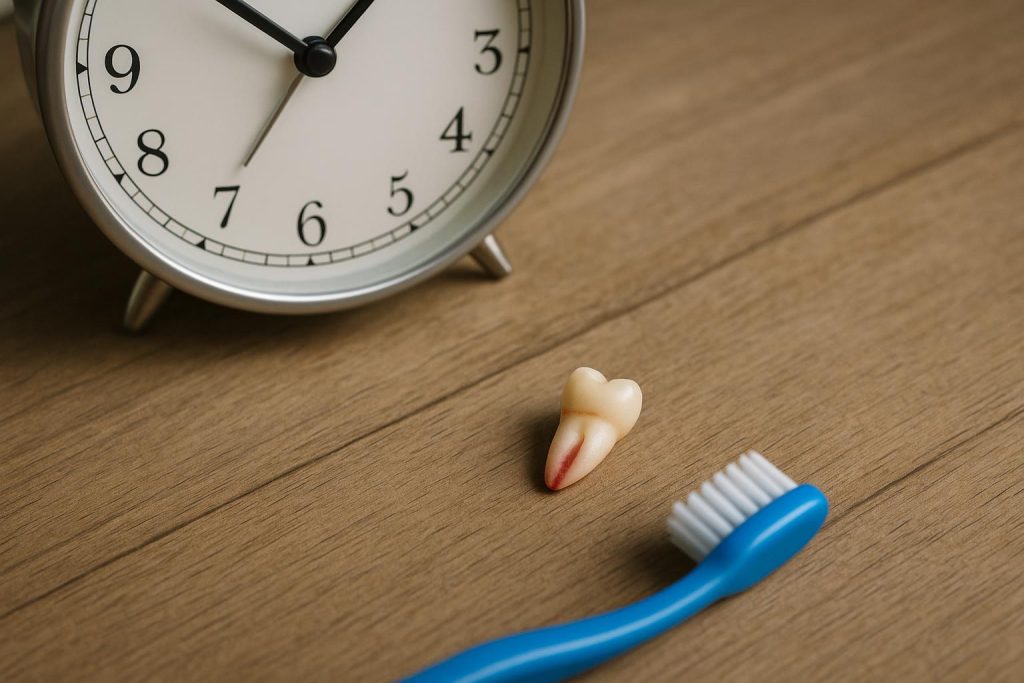
A football collision, a cycling accident, or even a simple fall can knock out a tooth in seconds. In that moment, most people panic, focus on the bleeding, or assume the tooth is permanently lost. What many do not realise is that a knocked-out adult tooth can sometimes be saved if action is taken quickly enough.
Time matters enormously. The longer the tooth remains out of the mouth, the lower the chance of successful reattachment. In many cases, dentists aim to treat the injury within 30 to 60 minutes because the living cells on the root begin deteriorating rapidly after that point.
Why Fast Action Matters
Contents
When a permanent tooth is knocked out completely, the tissues attached to the root are damaged and exposed. These tiny ligament cells are essential because they help the tooth reconnect to the bone and surrounding structures. If the tooth dries out or is handled incorrectly, these cells may die, significantly reducing the likelihood that the tooth can be saved.
This is why dental trauma is considered a genuine emergency rather than something that can wait until the next day. The first hour after the injury is often the most important window for successful treatment.
What To Do Immediately After a Tooth Is Knocked Out
The priority is locating the tooth quickly and handling it properly. Pick it up only by the crown, which is the visible white chewing surface. Avoid touching the root because the delicate tissues attached to it are extremely important for reimplantation.
If the tooth is dirty, gently rinse it with milk or saline solution. Avoid scrubbing it or using soap, disinfectants, or harsh cleaning methods. Excessive handling can damage the root surface further. If possible, carefully place the tooth back into the socket and hold it in position by gently biting down on clean gauze or cloth. If reinserting the tooth is not possible, keep it moist by placing it in cold milk or saliva until dental care is available. Water is not ideal because it can damage root cells.
At this stage, immediate professional care becomes critical. Seeking an emergency dentist Sydney as quickly as possible may greatly improve the odds of saving the tooth.
Common Causes of Knocked-Out Teeth
Knocked-out teeth are more common than many people realise. Sporting injuries are a major cause, especially in contact sports such as rugby, football, and basketball. Falls, cycling accidents, car accidents, and physical impacts to the face are also frequent contributors.
Children and teenagers are particularly vulnerable because of sports participation and outdoor activities. However, adults are also commonly affected, particularly during recreational activities or workplace accidents.
Risks of Delaying Treatment
Delaying treatment can create several complications beyond simply losing the tooth itself. Once the root cells begin dying, the body may reject the tooth even if it is reinserted later. In some cases, infection can develop around the damaged tissues. Bone loss around the socket may also occur over time, making future replacement options more complicated.
There is also the cosmetic and functional impact to consider. Losing a front tooth can affect speech, chewing ability, and confidence. Replacing a lost tooth later often involves more complex procedures such as bridges, implants, or dentures. Prompt treatment significantly reduces these risks.
How Dentists Treat a Knocked-Out Tooth
When a patient arrives quickly enough, the dentist may attempt to stabilise the tooth by repositioning it and attaching a temporary splint to neighbouring teeth. This helps keep the tooth secure while healing begins.
X-rays are usually taken to assess the surrounding bone and check for additional injuries. Follow-up treatment is often necessary because the nerve inside the tooth may become damaged after trauma. In many adult cases, root canal treatment is eventually required to preserve the tooth long-term. The outcome depends heavily on how long the tooth remained out of the mouth and how it was handled during transport.
Why Baby Teeth Are Different
Parents sometimes panic when a child loses a tooth through trauma, but baby teeth are treated differently from permanent teeth. Dentists generally do not reinsert knocked-out baby teeth because doing so may damage the developing adult tooth underneath. Even so, children should still receive dental assessment after the injury to ensure there is no hidden damage to the gums, jaw, or surrounding teeth.
Preventing Dental Trauma
While accidents cannot always be avoided, prevention plays an important role. Mouthguards significantly reduce the risk of dental injuries during sport. Properly fitted protective gear is especially important for children and teenagers participating in contact sports.
Cycling helmets, safe play practices, and avoiding risky behaviour also reduce the likelihood of severe facial injuries. Knowing basic first aid steps for a knocked-out tooth can also make a major difference during emergencies.
Conclusion
A knocked-out tooth is one of the few dental emergencies where immediate action can genuinely determine whether the tooth survives or is lost permanently. Handling the tooth correctly, keeping it moist, and seeking urgent dental care within the first hour dramatically improves the chance of successful reattachment. Delays reduce those odds quickly. Understanding what to do before reaching a dentist may help preserve not only the tooth itself, but also long-term oral health, appearance, and function.
FAQs
1. Can a knocked-out tooth really be saved?
Yes. A permanent tooth can often be saved if it is treated quickly, ideally within 30 to 60 minutes.
2. What is the best way to store a knocked-out tooth?
Milk is one of the best temporary storage options. Saliva or saline can also help keep the tooth moist.
3. Should I clean the tooth before going to the dentist?
Only rinse it gently if dirty. Do not scrub, disinfect, or dry the tooth.
4. Can baby teeth be put back into the mouth?
No. Baby teeth are generally not replanted because this can damage developing adult teeth.
5. What happens if the tooth cannot be saved?
Replacement options may include dental implants, bridges, or dentures, depending on the situation.
6. How can knocked-out teeth be prevented?
Wearing mouthguards during sports and using protective equipment during activities significantly reduces the risk of dental trauma.