


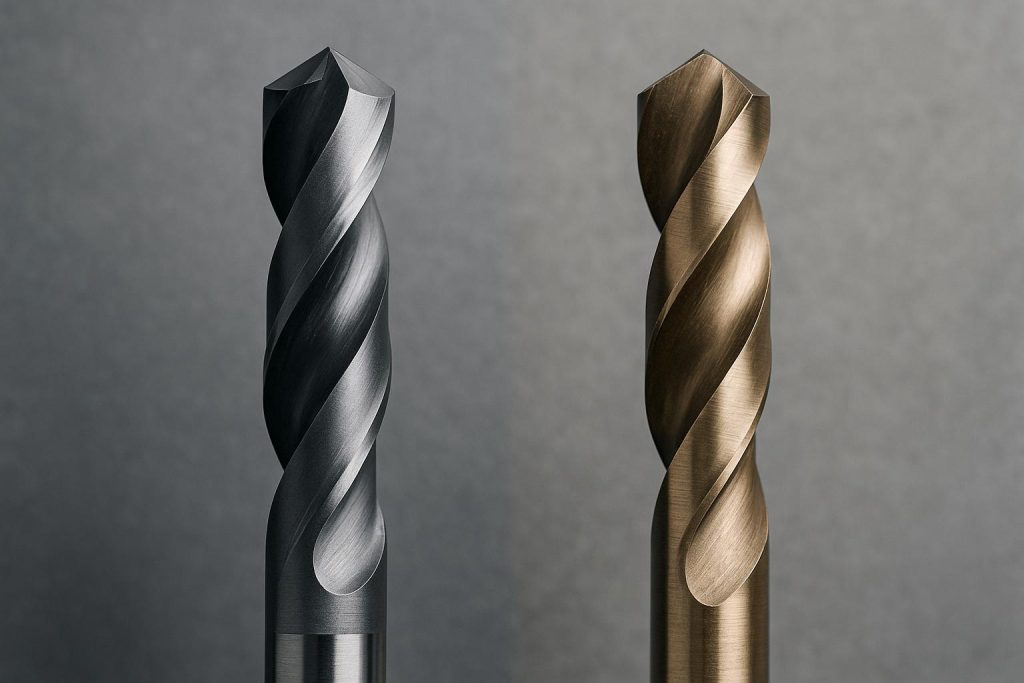
Choosing the right drill bit can have a major impact on hole quality, tool life, and overall machining efficiency. For machinists working with metals, two common options are carbide and cobalt. Both can perform well in demanding applications, but they are designed for different situations and should not always be used interchangeably.
The right choice depends on factors such as workpiece material, machine rigidity, production volume, cutting speed, coolant, and how accurately the hole needs to be produced. A high-performance drill can still struggle if the setup is unstable or the cutting parameters are poorly matched to the application.
For CNC machining, solid carbide drill bits are often considered when high rigidity, consistent hole quality, and faster cutting conditions are important. Carbide is extremely hard and can maintain its cutting edge at higher temperatures than many other tool materials. That makes it useful for production environments where speed and repeatability matter.
Cobalt drills, on the other hand, can offer a useful combination of heat resistance and toughness. They may be better suited to applications where the setup is less rigid or where a drill needs to tolerate more vibration and variation.
Understanding these differences helps machinists avoid choosing a tool based only on price or reputation. The best drill is the one that matches the machine, material, and job.
Picking the Right Drill Bit for Tough Materials
Contents
Carbide and cobalt drills both have advantages when working with difficult metals, but their behavior during cutting is different.
Carbide is significantly harder and more wear resistant than high-speed steel-based tooling. This allows carbide drills to maintain a sharp cutting edge under demanding conditions. In a rigid CNC machine, that can translate into higher cutting speeds, reduced cycle times, and more consistent holes.
Carbide can be especially useful when producing many parts with the same hole features. If a stable setup allows the tool to run at the recommended parameters, the increased cutting performance may justify the higher initial cost.
However, hardness comes with a tradeoff. Carbide is more brittle than cobalt. A carbide drill does not respond well to excessive vibration, misalignment, interrupted cuts, or unstable workholding. If the drill is subjected to sudden side loads, the tool may chip or break rather than flex.
This is why machine rigidity matters so much. A CNC machining center with solid workholding and accurate toolholding can provide the controlled environment carbide tools need.
Cobalt drills are different. They are typically made from high-speed steel alloyed with cobalt, which improves heat resistance while preserving more toughness than solid carbide.
For this reason, cobalt drill bits for metal can be useful for drilling materials that generate significant heat or when the setup may not be ideal for brittle carbide tooling. They can tolerate some vibration and misalignment better, which can make them practical for a wider range of shop conditions.
Cobalt drills are commonly considered for harder steels, stainless steels, and other metals where basic high-speed steel tooling may wear quickly. They can also be useful in manual machines or applications where cutting conditions are less consistent.
The decision often comes down to how controlled the machining environment is.
If the machine, holder, workpiece, and drilling cycle are highly rigid, carbide may provide better productivity. If the setup is more forgiving or involves occasional drilling jobs, cobalt may offer a better balance of durability and cost.
Hole depth should also be considered. Deeper holes require effective chip evacuation and proper coolant delivery. Chips that remain trapped in the hole can increase heat, damage the cutting edges, and affect surface quality.
Drill geometry matters too. Different point angles, flute designs, coatings, and coolant configurations can change how a drill performs in specific materials.
Rather than treating carbide and cobalt as competing tools where one is always better, machinists should think of them as different solutions for different conditions.
Another factor is production volume. A shop producing hundreds or thousands of identical components may benefit more from the speed and repeatability of carbide. A job shop making short runs of different parts may value the versatility and toughness of cobalt drills.
Tool cost should therefore be evaluated alongside productivity. A less expensive drill is not necessarily cheaper if it wears quickly and needs frequent replacement. Similarly, an expensive carbide drill may not provide good value if the setup causes premature chipping.
Better Drilling Starts With the Right Tool Setup
Drill material is only one part of successful holemaking. Toolholding, alignment, cutting parameters, coolant, and workholding all influence drilling performance.
The holder is particularly important because the drill must remain centered and stable as it enters the material. Excessive runout can cause one cutting edge to do more work than the other, leading to uneven wear, oversized holes, or premature tool failure.
A properly selected drill chuck can help provide secure toolholding for suitable drilling applications. Regardless of the holder style, the drill should be installed correctly and inspected before machining begins.
Machinists should also minimize unnecessary tool stickout. The farther a drill extends from the holder, the more leverage cutting forces have on the setup. Keeping the tool as short as practical improves rigidity and can reduce vibration.
Workholding is just as important. The workpiece should remain secure throughout the drilling cycle. If the material moves, even slightly, hole location and tool life can be affected.
Before starting the program, confirm that the part is properly clamped and that the drill has adequate clearance throughout the cycle.
Cutting speed and feed must match the drill material and workpiece. Carbide drills often operate at higher speeds than cobalt tools, but manufacturers’ recommendations should still be followed rather than assuming faster is always better.
Running a tool too quickly can generate excessive heat, while feeding too slowly may cause rubbing instead of efficient cutting. Both conditions can shorten tool life.
Coolant can help manage temperature and assist with chip evacuation. In deeper-hole applications, through-tool coolant may provide an advantage by delivering fluid directly to the cutting zone.
Chip appearance can also provide useful information. Long, poorly formed chips may indicate that the cutting parameters need adjustment. Discolored chips can sometimes point toward excessive heat.
Machinists should pay attention to sound as well. A smooth drilling operation usually sounds consistent. Sudden squealing, vibration, or changes in cutting noise may indicate a problem with the tool, setup, or parameters.
Inspection should be part of the drilling process too. After producing the first hole, measure the diameter and confirm that the location and depth meet the print requirements.
If the results are incorrect, investigate before continuing production. A tool may be worn, the holder may have runout, or the program may need adjustment.
Keeping records of successful drilling parameters can make future jobs easier. Note the drill type, material, speed, feed, coolant method, hole depth, and tool life. These records can help create a starting point when similar work returns to the shop.
Conclusion
Carbide and cobalt drill bits both deserve a place in a capable machining environment, but they are best suited to different conditions.
Carbide offers excellent hardness, wear resistance, and cutting performance when used in a rigid CNC setup. It can be especially valuable for production work where consistent hole quality and faster cycle times are priorities.
Cobalt provides greater toughness and can tolerate less rigid setups more easily. It remains a practical choice for many metals, particularly when versatility, heat resistance, and durability are more important than maximum cutting speed.
The tool material should never be considered by itself. Workholding, toolholding, coolant, machine rigidity, speed, feed, and hole depth all affect the final result.
Instead of asking whether carbide or cobalt is universally better, machinists should ask which drill best matches the current application. Choosing the right tool and pairing it with a stable setup can improve hole quality, extend tool life, and make drilling more predictable across a wide range of machining projects.