



Cybersecurity used to be something many people thought about only after something went wrong.
A suspicious email arrived. A password was stolen. A website went offline. A company discovered that sensitive information had been exposed.
Today, the situation is very different.
Businesses operate through cloud platforms, mobile applications, APIs, connected devices and increasingly sophisticated AI systems. Employees access corporate systems from different locations. Customers expect digital services to be available around the clock. Companies store enormous amounts of financial, personal and operational information online.
Every new layer of technology creates another potential entry point for attackers.
At the same time, cybercriminals are also using automation and artificial intelligence to make attacks faster and more scalable.
That has changed the role of cybersecurity professionals.
The modern security professional is not simply someone who monitors an antivirus dashboard. They may need to understand networks, cloud infrastructure, web applications, penetration testing, vulnerability assessment, incident response and increasingly, AI-assisted security workflows.
For students and professionals in Delhi considering a technology career, this creates an important question:
What does it actually take to become job-ready in cybersecurity and ethical hacking?
Cybersecurity is no longer only an IT problem
Contents
- Cybersecurity is no longer only an IT problem
- What is ethical hacking?
- Why AI is changing cybersecurity
- The attack surface is getting bigger
- What skills does a modern ethical hacker need?
- Why practical labs matter
- What students can learn at Boston Institute of Analytics in Delhi
- Why Generative AI belongs in a cybersecurity curriculum
- Cybersecurity careers are broader than ethical hacking
- Why Delhi can be a strong place to build a cybersecurity career
- Choosing a Cyber Security and Ethical Hacking Course in Delhi
- Boston Institute of Analytics offers three learning paths
- Why placement support matters in cybersecurity
- Dual certification can add another dimension
- Cybersecurity is a mindset, not just a technical skill
- What beginners should know before learning ethical hacking
- The future of cybersecurity will be more complicated
- From learning tools to understanding systems
- The opportunity for aspiring cybersecurity professionals
- Frequently Asked Questions
- 1. What does the Boston Institute of Analytics Cyber Security and Ethical Hacking course in Delhi cover?
- 2. Does Boston Institute of Analytics provide practical training in Cyber Security and Ethical Hacking?
- 3. What are the different Cyber Security and Ethical Hacking programmes offered by Boston Institute of Analytics in Delhi?
- 4. Does Boston Institute of Analytics provide placement assistance for Cyber Security students in Delhi?
- 5. Can beginners join the Boston Institute of Analytics Cyber Security and Ethical Hacking course in Delhi?
A security incident can affect almost every part of a business.
A successful attack against a financial organisation can disrupt transactions.
An exposed customer database can damage trust.
A ransomware attack can interrupt operations.
A vulnerability in a mobile application can expose user information.
A compromised cloud account can provide attackers with access to multiple systems.
This is why cybersecurity has moved from being a technical concern handled by a small IT team to becoming a business priority.
Security professionals increasingly need to understand how technology is being used across an organisation.
They also need to think like an attacker.
That is where ethical hacking becomes important.
What is ethical hacking?
Ethical hacking involves using authorised security techniques to identify weaknesses before malicious attackers can exploit them.
The basic idea is simple.
Instead of waiting for someone to discover a vulnerability, security professionals deliberately test systems to find weaknesses.
A penetration tester, for example, may examine a web application for vulnerabilities.
A security professional may assess whether network controls are configured correctly.
A cloud security specialist may look for misconfigurations that could expose sensitive information.
The objective is not to break systems for personal gain.
It is to identify weaknesses, document them and help organisations fix them.
This makes ethical hacking an important part of proactive cybersecurity.
Why AI is changing cybersecurity
Artificial intelligence is creating a fascinating contradiction in cybersecurity.
The same technology that can help defenders detect threats can also be used by attackers.
Security teams can use machine learning and AI to analyse large amounts of activity, identify unusual behaviour and prioritise potential threats.
Attackers, meanwhile, can use automation to create convincing phishing campaigns, accelerate reconnaissance and adapt attacks.
This means cybersecurity professionals increasingly need to understand both sides of the technology.
They do not necessarily need to become AI researchers.
But they should understand how AI systems work, where they can introduce risks and how security teams can use them responsibly.
That is one reason modern cybersecurity education is moving beyond traditional network security.
The attack surface is getting bigger
Consider how a modern company operates.
It may have a website.
A mobile application.
Cloud infrastructure.
Employee laptops.
Remote workers.
Third-party software.
APIs.
Customer databases.
Payment systems.
Internal dashboards.
IoT devices.
AI applications.
Each component can potentially introduce security risks.
The result is an expanding attack surface.
A vulnerability in one system can sometimes become the starting point for a much larger compromise.
Cybersecurity professionals therefore need a broad understanding of technology rather than expertise in only one area.
What skills does a modern ethical hacker need?
Someone considering ethical hacking as a career should not focus exclusively on learning hacking tools.
Tools are useful, but understanding the underlying technology is more important.
A strong foundation can include:
- Network security
- Operating systems
- Cryptography
- Web application security
- Mobile application security
- Cloud security
- Vulnerability assessment
- Penetration testing
- Threat detection
- Incident response
- Security automation
- Security compliance
- Ethical hacking methodologies
A professional should also understand how attackers approach a target.
How do they discover systems?
How do they identify weaknesses?
How might a vulnerability be exploited?
What evidence would an attack leave behind?
How can the weakness be fixed?
These questions turn ethical hacking from a collection of commands into a structured security discipline.
Why practical labs matter
Cybersecurity is particularly difficult to learn entirely through theory.
Reading about a vulnerability is one thing.
Finding it inside a controlled environment is another.
Practical labs allow learners to experiment safely with security concepts and understand what actually happens when a vulnerability is discovered.
This can include analysing network traffic, testing web applications, identifying vulnerabilities, examining security configurations and simulating attacker-versus-defender scenarios.
The Boston Institute of Analytics Cyber Security & Ethical Hacking programme in Delhi is structured around this practical approach, with 200+ hours of learning and practical exercises, 15+ projects and case studies, and 20+ tools and technologies. The programme also highlights live hacking demonstrations, ethical hacking challenges, red-team versus blue-team simulations and real-world projects.
That practical component is important because employers ultimately need people who can apply security concepts rather than simply define them.
What students can learn at Boston Institute of Analytics in Delhi
For learners researching a Cyber Security Course in Delhi, the Boston Institute of Analytics offers a programme covering several major areas of cybersecurity and ethical hacking.
The curriculum includes network security, cloud security, ethical hacking, penetration testing, web application security, mobile application security and exploitation techniques with countermeasures. It also introduces students to areas such as threat detection, data encryption, compliance and security automation.
The programme also includes exposure to more than 10 programming tools, libraries and technologies, alongside 7+ Generative AI tools, libraries and technologies. Tools highlighted by the programme include technologies such as Wireshark, Burp Suite and Nikto.
The goal is to help students understand cybersecurity as a complete discipline rather than simply learn a few penetration-testing commands.
Why Generative AI belongs in a cybersecurity curriculum
Cybersecurity education is increasingly intersecting with Generative AI.
AI tools can help security professionals analyse information, automate repetitive tasks and assist with investigation workflows.
But AI also introduces new security concerns.
Organisations need to think about sensitive information being entered into AI systems, prompt injection, model-related vulnerabilities, data leakage and the security of AI applications.
Security professionals therefore need to understand the technology they are being asked to protect.
The Boston Institute of Analytics programme incorporates 7+ Generative AI tools, libraries and technologies alongside its core cybersecurity curriculum.
This is useful because the security professional of the future may not be protecting only websites and networks.
They may also be protecting AI-powered applications and the data flowing through them.
Cybersecurity careers are broader than ethical hacking
"Ethical hacker" is one of the most recognisable cybersecurity job titles, but it is far from the only option.
A cybersecurity learner can potentially explore roles such as:
Cybersecurity Analyst: Monitoring systems, investigating suspicious activity and supporting security operations.
Penetration Tester: Testing applications, networks and systems to identify vulnerabilities.
Security Consultant: Helping organisations assess security risks and improve their security posture.
Cloud Security Professional: Protecting cloud infrastructure, configurations and workloads.
Incident Response Professional: Investigating and responding to security incidents.
Application Security Professional: Working with development teams to identify and reduce security vulnerabilities in applications.
The exact requirements differ between organisations, but the underlying foundation remains similar.
Why Delhi can be a strong place to build a cybersecurity career

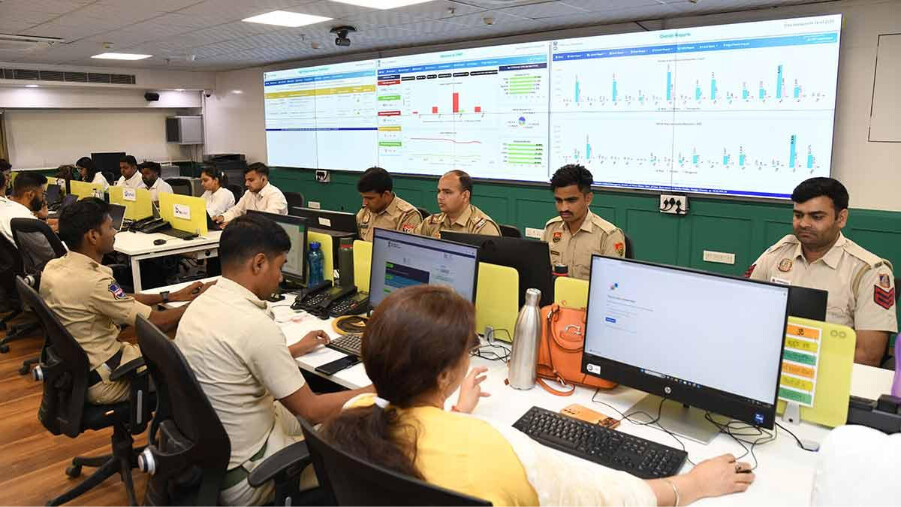
Delhi and the wider National Capital Region have a diverse technology and business ecosystem.
Technology companies, financial services organisations, consulting firms, e-commerce businesses, government-linked organisations and enterprises all depend on digital infrastructure.
This creates a broad environment in which cybersecurity skills can be relevant.
For a student, the important question is therefore not simply whether cybersecurity jobs exist.
It is whether the learner has developed enough practical knowledge to compete for them.
That is where training, projects and career preparation become important.
Choosing a Cyber Security and Ethical Hacking Course in Delhi
The growth of cybersecurity education has also created a new problem: there are many programmes to choose from.
Students should look beyond course names.
A good programme should ideally answer several questions.
Does it teach networking and security fundamentals?
Does it include practical labs?
Are students exposed to penetration testing?
Does it cover web and mobile application security?
Is cloud security included?
Are students introduced to current AI-related security issues?
Are there projects that can become part of a professional portfolio?
Does the institute provide interview and career preparation?
These questions can reveal much more about a programme than simply looking at its advertised duration.
Boston Institute of Analytics offers three learning paths
The Boston Institute of Analytics Cyber Security & Ethical Hacking programme in Delhi currently provides three learning paths.
The 4-month Certification is designed as a shorter structured pathway.
The 6-month Diploma includes 2 months of guaranteed internship.
The 10-month Master Diploma includes 6 months of guaranteed on-the-job training as a Cyber Security Analyst.
This allows learners to choose a path based on the depth of training and practical exposure they want.
For someone considering an Ethical Hacking Course in Delhi, the practical exposure is particularly relevant.
Cybersecurity is a field where experience with realistic scenarios can make a significant difference.
Why placement support matters in cybersecurity
Learning how to identify a vulnerability is only one part of building a cybersecurity career.
Students also need to know how to communicate what they can do.
That means creating a clear resume, explaining projects during interviews and demonstrating an understanding of real security situations.
This is why students researching a Cyber Security Course with Placement in Delhi should examine what an institute means by placement support.
Is there resume preparation?
Is there interview training?
Are students given one-to-one career guidance?
Does the institute have corporate relationships?
Are there internship opportunities?
The Boston Institute of Analytics provides 360-degree career support, including resume building, interview preparation, access to partner companies and in-person 1:1 career mentorship. Its Delhi programme also highlights an exclusive job opportunities portal and in-person job interview preparation.
The institute states that its broader network includes 350+ corporate partners, 1,500+ industry trainers and 15,000+ trained students, with a presence across 105+ campuses in 7+ countries. The cybersecurity programme itself states that 10,000+ learners have been trained in Cyber Security & Ethical Hacking across 105+ campuses in 7+ countries.
These figures provide context around the scale of the institution and its cybersecurity training network.
Dual certification can add another dimension
The programme also follows a dual-certification model covering Cyber Security and Ethical Hacking.
The distinction is useful.
Cybersecurity is the broader discipline concerned with protecting systems, networks, applications and information.
Ethical hacking focuses more specifically on thinking and testing from an attacker’s perspective within authorised boundaries.
Understanding both can help a learner develop a more complete view of security.
A person who understands how attackers identify weaknesses can potentially become better at designing defences.
Cybersecurity is a mindset, not just a technical skill
One of the most interesting things about cybersecurity is that technology alone is not enough.
A strong security professional needs curiosity.
They need to ask questions.
Why did this login happen at an unusual time?
Why is this system communicating with an unfamiliar server?
Why does this application expose this particular information?
What happens if this input is manipulated?
What would an attacker try next?
This investigative mindset is one of the reasons cybersecurity can be such an engaging career.
Every system presents a puzzle.
The objective is to understand how it works well enough to identify where it could fail.
What beginners should know before learning ethical hacking
Ethical hacking sometimes gets portrayed as something mysterious or highly advanced.
The reality is more accessible.
The most important requirement is curiosity and a willingness to learn technology systematically.
The Boston Institute of Analytics Delhi programme states that no prior programming or security background is required, with foundational modules designed to help beginners enter cybersecurity and ethical hacking. The programme is also positioned for learners from backgrounds including Commerce, Arts, Engineering and Science, as well as professionals considering a career transition.
That does not mean cybersecurity is easy.
Students still need to put in significant effort to understand networks, operating systems, security concepts and practical tools.
But the absence of a previous cybersecurity job should not automatically prevent someone from starting.
The future of cybersecurity will be more complicated
The cybersecurity industry is unlikely to become simpler.
Cloud adoption is increasing.
AI applications are expanding.
More devices are becoming connected.
Businesses are collecting more information.
Software is becoming more complex.
Attackers are becoming more automated.
Every one of these trends creates new security challenges.
The professionals who succeed will therefore need to keep learning.
A tool learned today may be replaced tomorrow.
A new vulnerability can change industry priorities overnight.
A new AI technology can create both opportunities and risks.
Continuous learning is not an optional extra in cybersecurity.
It is part of the profession.
From learning tools to understanding systems
There is a temptation when starting cybersecurity to focus on tools.
Which scanner should I use?
Which penetration-testing framework is best?
Which command should I run?
Tools are useful, but the deeper skill is understanding what the tool is telling you.
A vulnerability scanner may identify a potential issue.
The professional needs to determine whether the vulnerability is real, how serious it is, what could happen if it were exploited and how it should be fixed.
That requires reasoning.
It requires understanding the system.
And it requires being able to communicate the risk to people who may not have a technical background.
That is what turns technical knowledge into professional cybersecurity capability.
The opportunity for aspiring cybersecurity professionals
Cybersecurity is becoming one of the defining challenges of the digital economy.
Every new technology creates opportunities, but it also creates new ways for systems to fail.
AI can improve security operations while introducing new attack vectors.
Cloud computing can make businesses more flexible while creating configuration and identity risks.
Mobile applications can improve customer experiences while introducing application-security challenges.
The answer is not to stop using technology.
It is to build systems and teams capable of using technology securely.
For students in Delhi, that creates an opportunity to build a career in an industry where technical knowledge, curiosity and problem-solving can come together.
A well-structuredCyber Security and Ethical Hacking Course in Delhi can provide the foundation, but the learner’s willingness to practise, investigate and keep learning will ultimately determine how far that foundation can take them.
The future of cybersecurity will not belong only to people who know the most tools.
It will belong to people who understand systems, think like attackers, defend like security professionals and adapt as technology changes.
And that is what makes cybersecurity and ethical hacking such an interesting career to enter today.
Frequently Asked Questions
1. What does the Boston Institute of Analytics Cyber Security and Ethical Hacking course in Delhi cover?
The Boston Institute of Analytics Cyber Security and Ethical Hacking programme covers areas including network security, cloud security, ethical hacking, penetration testing, web application security, mobile application security and exploitation techniques with countermeasures. The programme also introduces learners to Generative AI tools and technologies relevant to the changing cybersecurity landscape.
2. Does Boston Institute of Analytics provide practical training in Cyber Security and Ethical Hacking?
Yes. The Delhi programme includes 200+ hours of learning and practical exercises, 15+ projects and case studies, and 20+ tools and technologies. Students also get exposure to live hacking demonstrations, ethical hacking challenges, red-team versus blue-team simulations and real-world projects.
3. What are the different Cyber Security and Ethical Hacking programmes offered by Boston Institute of Analytics in Delhi?
Boston Institute of Analytics offers three learning paths: a 4-month Certification, 6-month Diploma and 10-month Master Diploma. The Diploma includes 2 months of guaranteed internship, while the Master Diploma includes 6 months of guaranteed on-the-job training as a Cyber Security Analyst.
4. Does Boston Institute of Analytics provide placement assistance for Cyber Security students in Delhi?
Boston Institute of Analytics provides 360° career support, including resume building, interview preparation, career mentorship and access to partner companies. The Delhi programme also provides an exclusive job opportunities portal and in-person career and interview preparation. The institute states that its placement assistance connects students with partner companies, although securing a job ultimately depends on individual performance, market conditions and employer requirements.
5. Can beginners join the Boston Institute of Analytics Cyber Security and Ethical Hacking course in Delhi?
Yes. The programme states that no prior cybersecurity or IT background is required and includes foundational learning to help beginners understand cybersecurity and ethical hacking concepts. This makes the programme suitable for learners exploring cybersecurity for the first time, as well as professionals looking to transition into the field.