


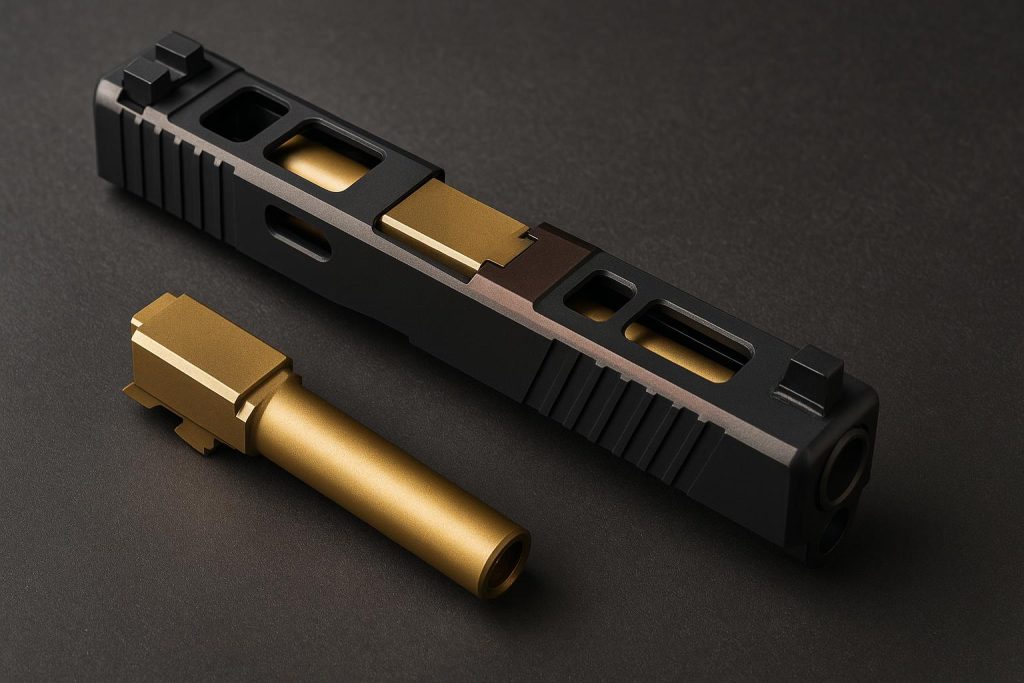
The slide does more than most shooters realize. On the Glock 17, it contains the barrel, drives the cycling sequence, and plays a direct role in how the pistol behaves under pressure. Factory specs get the job done, but they leave room for meaningful improvement.
Slide modifications fall into a few clear categories: material removal, surface treatment, and fitment refinement. Each targets something specific, and understanding what that is makes the difference between a purposeful upgrade and an expensive cosmetic change.
How Slide Cuts Affect Performance
Contents
Serrations and cuts are not decorative choices. Every one of them serves a mechanical or ergonomic purpose, and the better aftermarket options are designed with both in mind.
Front and Rear Serrations
Rear serrations ship standard from the factory. Front serrations are a popular addition because they support press-checks, letting the shooter verify chamber status without fully cycling the slide. Deeper, more aggressive patterns also pay off when conditions get wet or gloves are involved, since grip on a bare slide surface degrades quickly under either.
Lightning Cuts
Removing material from the slide directly lowers reciprocating mass. A lighter slide cycles faster, which tightens split times in competitive shooting and reduces the muzzle flip that follows each shot. The tradeoff is structural. Cuts that go too deep or are poorly positioned can compromise the slide wall, so machining quality matters here more than on most other components.
Top Ports and Optics Cuts
Pre-milled optics cuts are now a standard feature on most serious aftermarket slides. Mounting a red dot directly to the slide brings the optic closer to the bore axis, which reduces parallax and makes sight alignment more consistent. Shooters looking at aftermarket options will find a range of ready-to-mount configurations among the glock 17 slide for sale selections carried by specialized retailers. A slide already milled to a specific optic footprint saves fitting work and keeps tolerances where they need to be.
Coatings and Surface Treatments
The finish on a slide is not just about appearance. It determines how the component holds up against corrosion, friction, and extended use.
Nitride and Tennifer Treatments
The factory Tennifer finish uses a ferritic nitrocarburizing process that penetrates into the steel rather than coating the surface. That distinction matters because the treatment cannot flake or peel the way a topical coating can. Most quality aftermarket slides use a comparable salt bath nitride process. Both perform reliably in humid conditions and need very little upkeep.
Physical Vapor Deposition Coatings
Physical vapor deposition applies a thin ceramic-metallic film to the slide surface. The result is a durable, low-friction finish with strong resistance to scratching and chemical exposure. PVD is also available in a wide range of colors, which makes it a frequent choice for shooters who want performance and a distinct look without sacrificing one for the other.
Cerakote
Cerakote is a polymer-ceramic coating applied as a liquid and heat-cured after application. It offers solid corrosion resistance and comes in more color options than almost any other finish. Because the film sits on top of the metal rather than bonding into it, the coating adds slight thickness and may require minor fitting adjustments. Thoroughly prepared and applied, it holds up well through sustained firing and daily handling.
Barrel Fit and Slide Compatibility
An upgraded slide performs only as well as the components it works with. Barrel and frame compatibility are worth confirming before any purchase.
Tolerances and Lockup
Factory slides are machined to relatively open tolerances. Many aftermarket options use tighter specs, which improves barrel lockup and supports more consistent accuracy. The catch is that tighter slide tolerances require a barrel machined to match. Pairing a tight slide with a loose barrel introduces the same inconsistencies the upgrade was meant to fix.
Match-Grade Barrels
A match-grade barrel pairs naturally with a tighter aftermarket slide. The reduced chamber dimensions limit case expansion during firing, which contributes to better shot groupings. This combination works best when both parts come from manufacturers with consistent machining standards, since variance between the two will show up at the range.
Finish Durability in Field Conditions
Slides take on friction, heat, and debris through regular use. A finish must withstand all three without failing at the worst moment.
Hard chrome and black nitride both perform well under sustained fire. Cerakote can chip if the metal surface is not thoroughly prepared before application. PVD maintains surface integrity longer under abrasion but tends to show wear at high-contact points over time. The shooting environment, whether dry range conditions or humid outdoor use, should factor into finish selection just as much as aesthetics.
Conclusion
Slide upgrades on the Glock 17 produce real, measurable gains when chosen with a clear purpose. Cuts reduce weight and sharpen handling. Surface treatments extend service life and push corrosion resistance well past factory levels. Optics cuts bring modern sighting systems into reach without additional mounting hardware.
None of these changes work in isolation, though. Component compatibility determines whether the upgraded slide delivers on its promise or introduces new problems. Taking the time to match parts carefully is what separates a functional upgrade from one that looks good but performs poorly.