


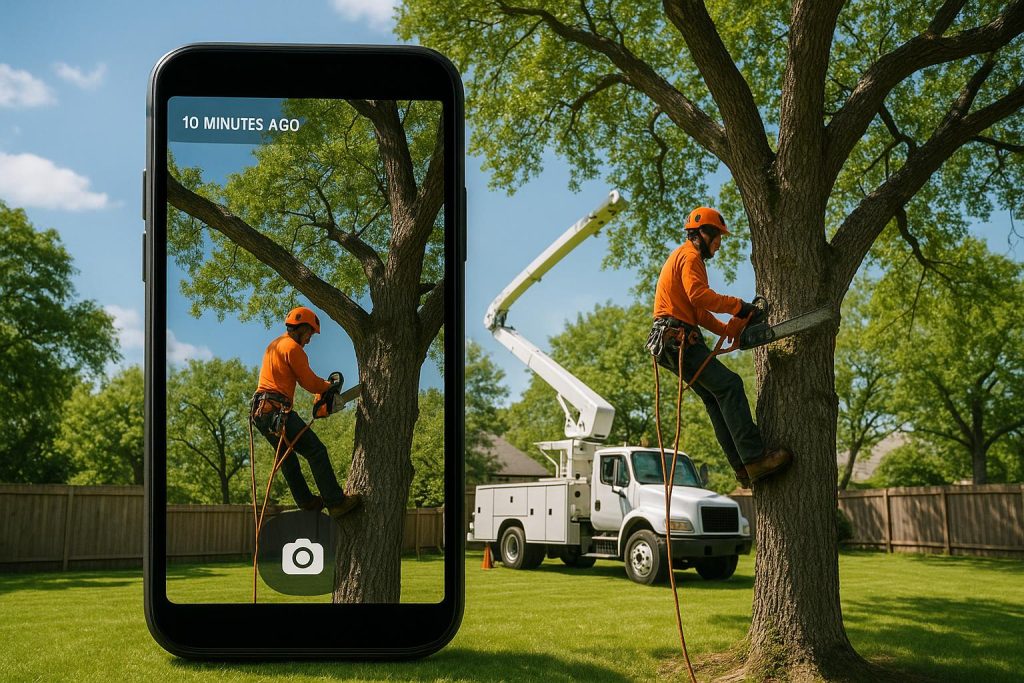
Twenty years ago, hiring someone to look after the trees on a property meant waiting at home for a truck to show up, hoping the crew leader would explain what happened before driving off. Today, the experience looks almost nothing like that. A homeowner might get a text message when the crew is ten minutes out, a photo of the canopy before the first cut, and a follow-up image showing the finished work, all before lunch. The tools have changed. What they changed most, though, is how it feels to be the person paying for the service.
From Phone Tag to Real-Time Photos
Contents
For a long stretch of the industry’s history, communication between arborists and property owners ran through landlines and paper estimates. A crew would assess a tree, jot notes on a clipboard, and call later with a verbal summary. Mistakes in translation were common, and homeowners often had no visual record of what their trees looked like before or after treatment. Smartphones changed that almost overnight. Crew leads now photograph problem limbs, disease patterns, or root damage on site and send them directly to the client, sometimes with brief voice notes explaining what they see. The homeowner is no longer trusting a description alone. They are looking at the same image the arborist is looking at, which turns a technical judgment call into a shared decision.
Mapping Software That Shows the Whole Yard
Aerial mapping tools, originally built for construction and land surveying, have found a natural home in tree care. A crew can now pull up a satellite view of a property, mark every tree that needs attention, and share that map with the homeowner before anyone picks up a saw. This matters most on larger lots or wooded properties where it used to be difficult to keep track of which tree was which during a phone conversation. With a shared digital map, a client can point to a specific tree on their screen and ask a direct question, and the arborist can respond with the exact history of that spot. The vagueness that used to define these conversations has largely disappeared.
Digital Estimates That Remove the Guesswork
Pricing used to be one of the more uncomfortable parts of hiring outdoor labor of any kind. A verbal quote given on a driveway carried little documentation and left room for confusion later. Software built specifically for tree and landscape companies now generates itemized estimates on a tablet, breaking down labor, equipment, and cleanup so a homeowner can see exactly what each line covers. Many of these platforms also let clients approve or ask questions about an estimate from their phone, rather than needing a crew member to return in person. The result is a process that feels more like scheduling a home repair through a reputable contractor and less like negotiating on the spot.
Where Removal Decisions Still Require a Human Eye
Not every advance in the field is about screens and software. Some of the most meaningful changes in customer experience happen when technology supports, rather than replaces, an arborist’s judgment. Take the decision to take down a tree entirely. A homeowner considering a tree removal service today typically receives more information before agreeing to the work than they would have a decade ago, including photo documentation of decay, a written explanation of risk to nearby structures, and sometimes a short video walkthrough of the tree in question. The final call still rests with a trained professional standing in the yard, but the client is now brought into that reasoning in a way that used to be reserved for verbal reassurance alone. That shift, more than any single piece of equipment, has changed how much trust homeowners place in the process.
Safety Technology That Reassures the Person Watching
Tree work involves height, weight, and moving equipment, and homeowners have always paid close attention to how safely a crew operates in their yard. Modern crews now use harness systems with built in fall arrest sensors, chainsaws with improved kickback guards, and rigging equipment that lowers heavy limbs with far more control than older rope and pulley methods allowed. The Occupational Safety and Health Administration oversees workplace safety standards that shape how these tools are used on the job, and many companies build their training programs directly around those guidelines. For the person standing at their back door watching a crew work forty feet up in a tree, visible safety equipment and clearly practiced protocol are not background details. They are often what determines whether the homeowner feels comfortable hiring that company again.
What the Client Actually Notices
It is worth remembering that most homeowners cannot evaluate the technical skill involved in a proper pruning cut or a correctly assessed root system. What they can evaluate is whether someone showed up on time, explained the work clearly, and left the property looking better than they found it. This is precisely where the newer generation of tools has made the biggest difference. A photo sent mid-job, a digital invoice that matches the verbal estimate, a text confirming next spring’s checkup, these small touches shape the overall impression of professionalism far more than most clients realize. The arborist’s skill has not changed in kind, but the visibility of that skill to the person paying for it has improved considerably.
The tools available to tree care professionals today have not replaced the fundamentals of the trade. Reading a tree’s health, understanding root structure, and knowing when a limb poses a genuine risk still depend on years of hands-on experience. What has changed is how much of that expertise a homeowner gets to see and understand in real time. A photo sent from the yard, a map marked with notes, an estimate broken down line by line, these are small conveniences on their own, but together they have reshaped what people expect from a visit. The trees are being cared for the same way they always were. The people paying for that care simply know a great deal more about what is happening, and when it happens, than they used to.