


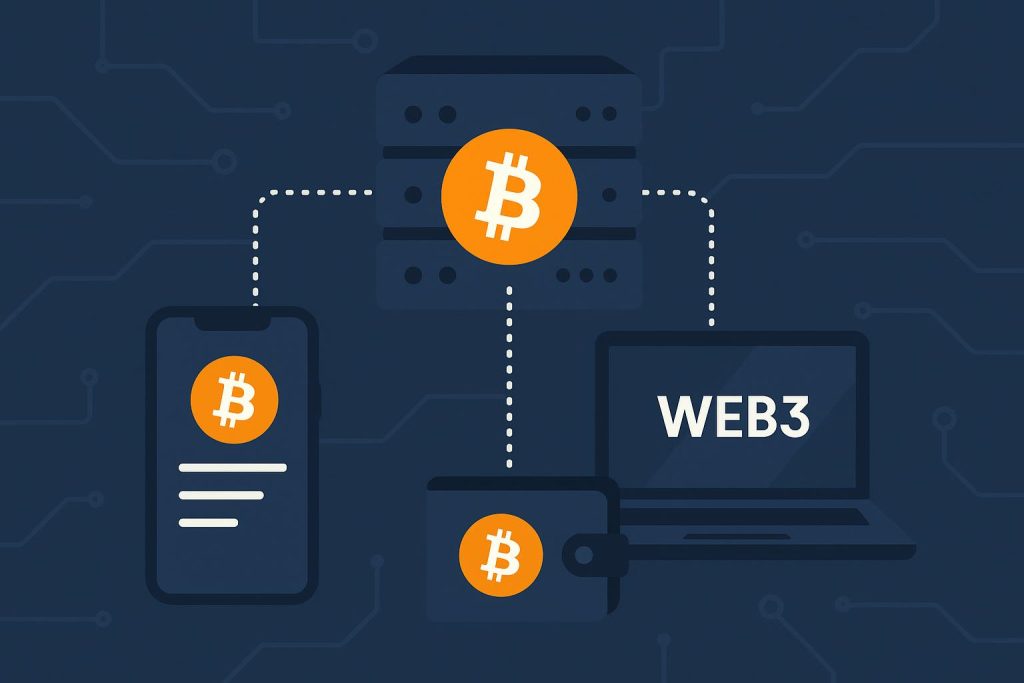
As Bitcoin continues to expand beyond simple peer-to-peer transfers into fintech, analytics, and mobile-first Web3 ecosystems, reliable access to blockchain data has become a core infrastructure requirement. Modern teams building wallets, portfolio trackers, trading bots, payment gateways, and blockchain dashboards all depend on fast, stable access to Bitcoin blockchain data.
For developers and product teams, btc rpc is no longer just a backend utility. It has become the foundation of real-time transaction monitoring, address balance queries, mempool visibility, and block confirmation workflows that power user-facing products.
Why Mobile and Fintech Apps Need Reliable Bitcoin Data
Contents
- Why Mobile and Fintech Apps Need Reliable Bitcoin Data
- The Hidden Complexity of Running Your Own BTC Full Node
- Why Managed Providers Reduce Infrastructure Costs
- Speed, Uptime, and Scalability for User-Facing Apps
- Practical Use Cases Across Modern Bitcoin Products
- The Future of Bitcoin Infrastructure for Mobile Ecosystems
Mobile wallets and fintech apps operate in environments where latency and uptime directly affect user trust. A delayed balance refresh, missing transaction status, or failed confirmation check can degrade the user experience and introduce operational risk.
This is especially relevant in:
- mobile crypto wallets
- payment settlement apps
- Bitcoin portfolio dashboards
- compliance and monitoring tools
- blockchain analytics platforms
- trading and arbitrage bots
In each of these products, the crypto wallet backend must continuously fetch blockchain API responses, often across thousands or millions of user sessions. This makes dependable BTC node infrastructure essential for both performance and data consistency.
The Hidden Complexity of Running Your Own BTC Full Node
While self-hosting a Bitcoin full node provides full control, it also introduces non-trivial engineering overhead. Initial blockchain synchronization can take days, storage requirements continue to grow, and uptime management demands constant DevOps attention.
For mobile app teams and Web3 startups, maintaining in-house node clusters often means dealing with:
- server provisioning and failover
- chain reindexing and upgrades
- traffic spikes during market volatility
- distributed monitoring
- secure RPC access controls
- global endpoint redundancy
These responsibilities can easily distract engineering teams from core product development, especially in fast-moving Web3 mobile app development cycles.
Why Managed Providers Reduce Infrastructure Costs
This is where managed node services and remote node providers create operational leverage. Instead of allocating engineering resources to maintain backend blockchain infrastructure, teams can integrate a reliable btc rpc endpoint as part of their service architecture.
A managed Bitcoin RPC layer reduces costs associated with:
- DevOps maintenance
- server scaling
- node failover
- storage expansion
- uptime monitoring
- security hardening
More importantly, it transforms infrastructure from a fixed operational burden into an elastic service aligned with actual application demand.
Speed, Uptime, and Scalability for User-Facing Apps
For products that rely on real-time blockchain interactions, scalable RPC endpoints directly impact retention and reliability.
Key performance benefits include:
- faster balance and UTXO lookups
- stable transaction broadcasting
- low-latency mempool checks
- high uptime during traffic surges
- parallel request handling for dashboards
- better global response times for mobile apps
This architecture is particularly important for fintech apps serving users across multiple regions, where milliseconds can influence checkout completion or transaction confidence.
Practical Use Cases Across Modern Bitcoin Products
The strongest use cases for managed Bitcoin RPC infrastructure include:
Mobile Wallets
Instant transaction status, address history, fee estimation, and push notification triggers.
Blockchain Explorers
Continuous block indexing, transaction parsing, and scalable query layers.
Payment Apps
Reliable merchant payment confirmation and settlement automation.
Trading Bots
Fast mempool monitoring and confirmation-based strategy execution.
Analytics Dashboards
Historical and real-time Bitcoin blockchain data pipelines for product insights.
These products all require resilient backend systems that can scale without compromising response quality.
The Future of Bitcoin Infrastructure for Mobile Ecosystems
As mobile-first finance and Web3 services continue evolving, infrastructure decisions increasingly shape product competitiveness. Teams are prioritizing faster releases, leaner backend operations, and globally distributed reliability.
That shift is why managed BTC RPC infrastructure is rapidly becoming the default standard for scalable apps. Instead of investing in node maintenance as a side discipline, modern engineering teams are adopting infrastructure layers that abstract complexity while preserving speed, uptime, and flexibility.
In the long term, the products that win in mobile wallets, fintech, and blockchain analytics will be the ones built on resilient, scalable Bitcoin RPC foundations capable of supporting millions of concurrent interactions without operational friction.