


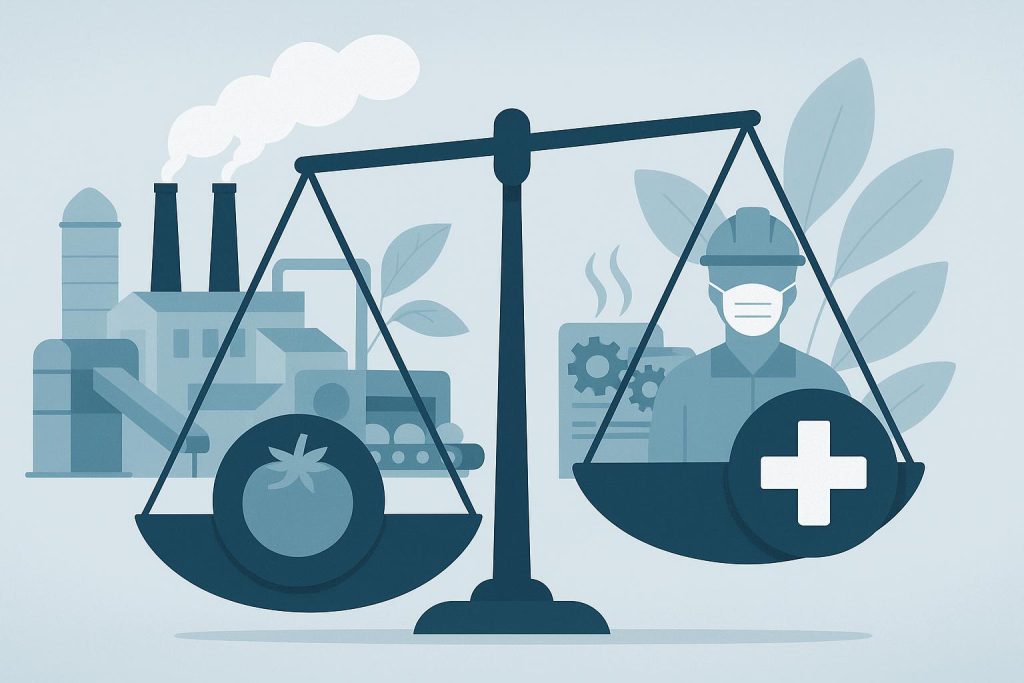
Walk into a produce packing facility on any given morning and you’ll see the tension immediately. Conveyor belts move fast. Inspectors check for mold, discoloration, and pest damage. Somewhere behind the scenes, someone is deciding how much disinfectant to spray, how much humidity to add, and how much of both the workers standing nearby will end up breathing.
This is the part of food safety that rarely makes it into news coverage about recalls or outbreaks. We talk about the produce. We talk less about the people handling it, often for minimum wage, often without union protection, often in facilities where ventilation upgrades compete for budget against faster production lines.
The Problem Behind the Problem
Contents
Food safety regulations exist for good reason. Pathogens like listeria and salmonella can spread quickly through packing lines, and produce that isn’t handled properly can sicken a large number of people before anyone traces the source. Regulators have tightened standards over the past decade, and rightly so.
But tightening standards on the produce side doesn’t automatically improve conditions for the people doing the work. Many disinfection methods rely on chemical treatments or intense airflow systems that were designed with the product in mind, not the humans standing next to it for eight or ten hours a day. That gap is where labor advocates say attention is overdue.
How Facilities Try to Manage the Risk
Most large processing plants use some combination of washing, chemical treatment, and climate control to slow spoilage and reduce contamination. Humidity plays a bigger role in this than most people realize. Produce that dries out too fast loses shelf life and weight, which costs money. Produce sitting in overly wet, stagnant air can grow mold within days.
Getting that balance right requires equipment that can add moisture to the air without soaking surfaces, workers, or product. It sounds simple. In practice, it’s one of the harder engineering problems in a processing facility, especially at scale.
Airborne Contaminants and Spoilage Risk
Cold storage and packing rooms are humid by nature, and that moisture has to come from somewhere controlled. Uneven humidity creates pockets where mold and bacteria can take hold, even in rooms that look clean. Some facilities now use adiabatic humidification, a method that adds moisture through fine, self-evaporating droplets rather than steam or standing water. Several manufacturers market food safety humidification systems specifically for this kind of produce and cold storage environment, aiming to hold humidity in a tight range without leaving surfaces wet.
The appeal for plant operators is fairly direct. Consistent humidity can help slow spoilage and reduce the conditions that let mold spread across a packing line. That’s a real business incentive, separate from any worker safety conversation, and it’s part of why this equipment shows up in facilities that might otherwise treat air quality as an afterthought.
Worker Exposure to Cleaning Chemicals
The other half of the problem is chemical exposure. Chlorine-based sanitizers and other disinfectants are common in food processing, and they don’t stay contained to the surfaces they’re sprayed on. Workers in poorly ventilated rooms can end up breathing low levels of these chemicals for entire shifts.
Some occupational health researchers have raised concerns about this for years, though enforcement varies a lot by state and by how closely OSHA actually inspects a given facility. A worker moving pallets near a fog line has different lungs than the produce does. Nobody designed the air around them.
What This Means for Farmworkers and Plant Employees
For the people actually doing this work, the stakes are personal, not abstract. Respiratory irritation, chronic coughing, and skin reactions from chemical exposure are commonly reported among food processing workers, many of whom are immigrants with limited job mobility. Speaking up about air quality can feel risky when the alternative is losing a shift, or a job.
That’s part of why labor organizations have started paying closer attention to the equipment side of food safety, not just the wage and hour side. Better climate control isn’t a replacement for enforcement or unionization. But it can reduce one source of daily harm that workers have had almost no power to negotiate around.
For consumers, the connection is less visible but still real. A facility that manages air quality well is often a facility that’s also managing contamination risk well. Those two things tend to travel together, even if they aren’t legally linked in the way they probably should be.
What Plant Managers and Policymakers Should Look For
Facility managers evaluating upgrades should ask who the system is actually protecting. Some humidity and disinfection equipment is built purely around throughput and shelf life, with worker exposure treated as someone else’s department. That’s a mistake, and an avoidable one.
Look for systems designed to avoid saturating surfaces or creating standing moisture, since that reduces both mold risk and slip hazards on the floor. Ask vendors directly about air quality data, not just spoilage reduction numbers. If a company can’t answer basic questions about worker exposure, that’s worth noting.
Policymakers, for their part, could do more to tie food safety inspections to occupational health inspections. Right now these often run on separate tracks, handled by different agencies with different priorities. A facility can pass a food safety audit while still exposing its workers to conditions that could fail an OSHA review, and the reverse can also be true.
Final Thoughts
The next round of food safety reform in California and beyond should stop treating worker conditions as a side issue. As climate pressure pushes more produce into extended cold storage and faster processing cycles, the air inside these facilities is only going to matter more, for the food and for the people handling it. Advocates pushing for stronger labor protections have an opening here: point to equipment and practices that already exist, and demand they become the floor, not the exception.