


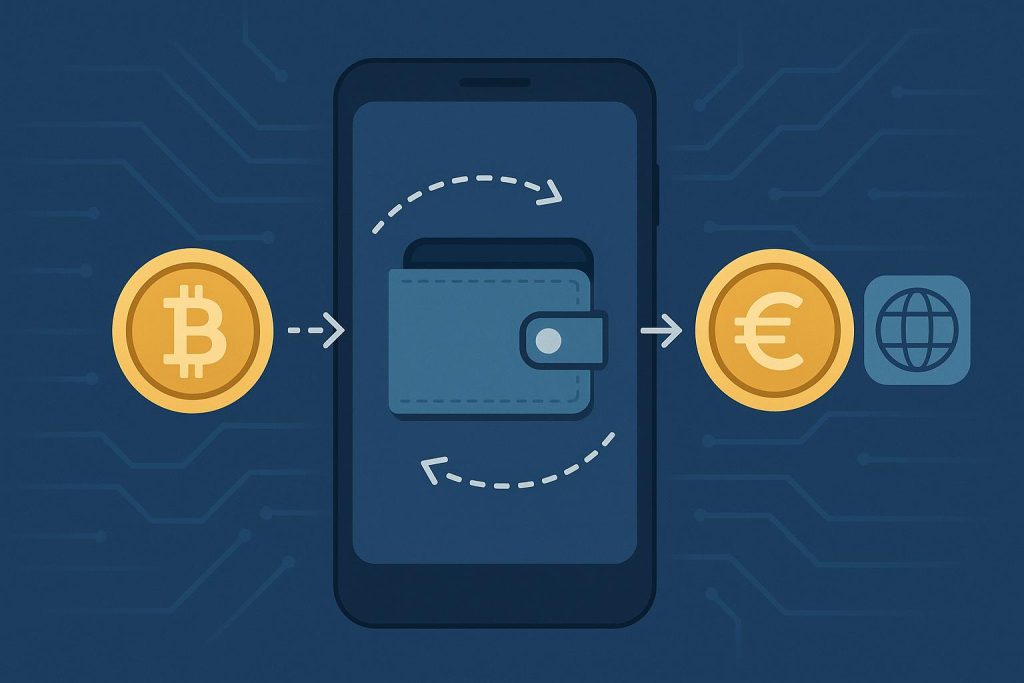
As mobile finance platforms continue to evolve, users increasingly expect instant movement between digital assets, stable currencies, and payment-ready balances. Whether inside a crypto wallet, a remittance platform, or a broader fintech ecosystem, seamless currency exchange has become a fundamental part of the modern user experience.
For product teams, fast in-app conversion is no longer just an additional feature. It now plays a direct role in payment settlement, treasury optimization, international transfers, and reducing friction across multi-asset ecosystems. This shift is especially visible in mobile-first products, where users expect transactions to happen in seconds without thinking about the infrastructure behind them.
A good example of this trend is eth to usdttrc20 conversion, which allows users to move value from a volatile asset into a stable, low-fee transfer format that is better suited for payments, remittances, and fast wallet-to-wallet transfers. In practice, this kind of conversion helps apps deliver a smoother payment flow while minimizing uncertainty around network costs and asset volatility.
Why Currency Exchange Has Become Core Product Infrastructure
Contents
Today’s mobile wallets and payment apps function as complete financial interfaces rather than simple storage tools. Users expect to send money internationally, pay merchants, rebalance digital holdings, and maintain stable balances without leaving the app.
That expectation makes instant exchange logic part of the core infrastructure layer. Instead of forcing users to manually move assets across platforms, modern apps increasingly integrate seamless conversion directly into the payment flow. This improves transaction completion rates and creates a more intuitive wallet experience, particularly in cross-border finance where speed and predictability matter most.
The challenge is that supporting multiple assets and settlement routes often introduces hidden UX friction. Network fees may change unexpectedly, transfer confirmations can vary by chain, and users often do not understand why different assets behave differently during payment flows. The best mobile products reduce this complexity by abstracting conversion into a near-invisible layer of the app experience.
The Role of Stable Transfer Rails in Global Payments
One reason stable transfer routes remain so important is their ability to reduce uncertainty between send and receive events. For remittance apps, merchant payouts, and treasury management tools, stable-value transfers provide consistency that volatile assets cannot always guarantee.
This is where efficient digital currency exchange becomes strategically important. Moving between assets quickly allows apps to preserve user value while optimizing for lower transfer costs and faster settlement. In mobile environments, that directly translates into stronger retention and greater trust in the payment experience.
As fintech and Web3 products continue converging, this infrastructure layer is becoming less about crypto mechanics and more about delivering seamless value transfer across global digital ecosystems.
The Future of Exchange in Mobile Finance
The next generation of payment apps will increasingly treat currency exchange as an invisible utility rather than a visible trading feature. Users care less about the route an asset takes and more about whether funds arrive instantly, cheaply, and in the expected denomination.
That is why seamless exchange layers are quickly becoming foundational infrastructure for scalable mobile wallets, fintech super apps, and global digital payment systems. The products that succeed will be the ones that make complex currency movement feel as simple as sending a message.