


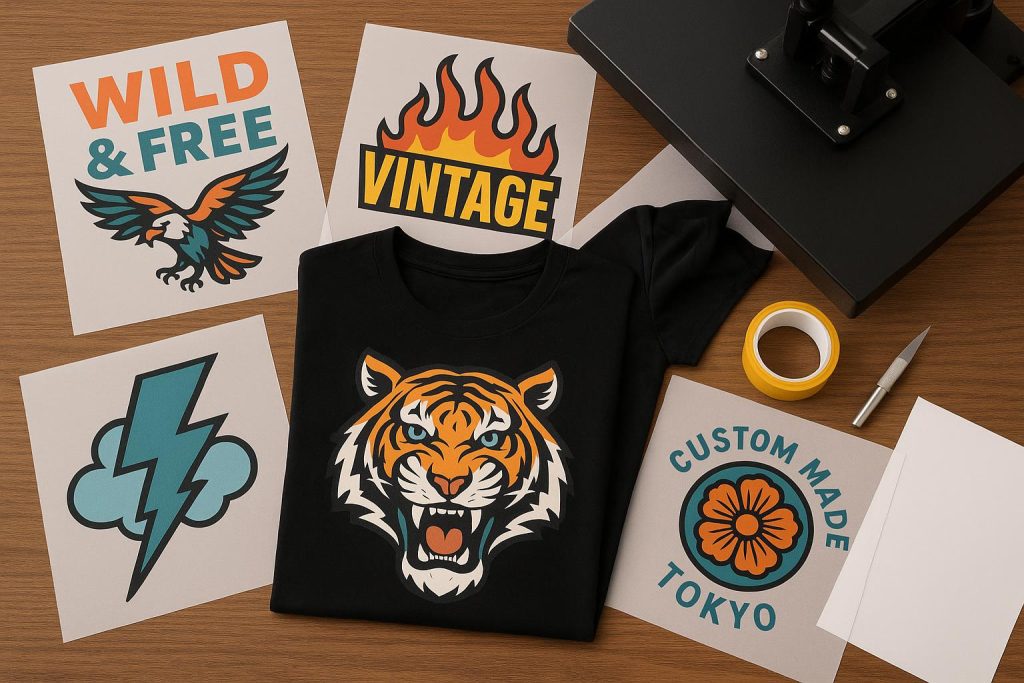
Direct-to-Film (DTF) transfers have become the go-to solution for custom apparel businesses that need flexibility, speed, and consistent quality. Whether you run a small print shop or manage a high-volume operation, choosing the right DTF transfer comes down to a handful of factors that directly affect your margins, your turnaround times, and your customers’ satisfaction. This guide covers what to evaluate before placing your next order.
What Is a DTF Transfer?
Contents
A DTF transfer is a heat-press-ready design printed onto a special PET film using CMYK and white inks, with a hot melt adhesive powder applied and cured on top. When pressed onto a garment at around 325°F for 10 to 15 seconds, the design bonds permanently to the fabric and the carrier film is peeled away.
Unlike screen printing, DTF requires no setup fees and no minimum order quantities. Unlike DTG, it requires no fabric pretreatment and works on virtually any material — cotton, polyester, nylon, and blended fabrics alike.
Print Quality: What to Look For
Print quality varies significantly between suppliers, and the differences become obvious after the first few washes rather than immediately after pressing. The most important quality indicators are color accuracy, white ink opacity, and edge definition. A high-quality transfer should reproduce design colors accurately across the full CMYK range, provide a solid white ink base layer that keeps colors vibrant on dark fabrics, and show clean, sharp edges without pixelation or ink bleeding.
When evaluating a new supplier, order a sample run of 5 to 10 transfers before committing to larger volumes. Press them onto the fabric types you use most frequently, wash them three to five times, and inspect the results carefully. Transfers that crack, peel, or fade significantly within the first ten washes are not suitable for professional use — and discovering this after a large order is far more costly than a proper test upfront.
Wash Durability: The Real Test
Wash durability is the most important performance metric for any DTF transfer used commercially. Professional-grade transfers should maintain their appearance for a minimum of 50 wash cycles without cracking, peeling, or noticeable fading. Durability depends on three factors: the adhesive powder quality, the ink formulation, and correct application. Even a well-made transfer will fail prematurely if pressed at the wrong temperature or with insufficient pressure — always verify application settings against the fabric types you work with and follow the supplier’s instructions closely.
Turnaround Time and Fulfillment
For businesses running on tight timelines, turnaround time can matter as much as quality. A transfer that looks perfect but takes two weeks to arrive creates operational problems that cancel out its quality advantages entirely. When evaluating suppliers, look for same-day or next-day production options on standard orders, clear cutoff times for daily production runs, and reliable shipping that consistently delivers on the stated timeline.
Some suppliers also provide local pickup options, which eliminates shipping delays for time-sensitive orders entirely. Businesses that source their DTF transfers from DTF Print Depot, for example, benefit from same-day printing and shipping on orders placed before 3 PM, with 7/24 local pickup available at their Arbutus, Maryland facility — a meaningful operational advantage for shops that cannot afford to wait on fulfillment.
Gang Sheets vs. Individual Transfers
One of the most practical decisions in DTF ordering is whether to use individual cut transfers or gang sheets. Individual transfers are pre-cut and ready to press immediately — convenient for single designs and on-demand fulfillment, but more expensive per print. Gang sheets pack multiple designs onto one large sheet, reducing the cost per print by 30 to 50 percent compared to individual orders.
For businesses ordering five or more designs in a single production run, gang sheets are almost always the more economical choice. The only tradeoff is that you need to cut the designs apart before pressing. If your business handles a mix of one-off orders and repeat runs, using gang sheets for high-volume designs and individual transfers for rush single orders gives you the best balance of cost efficiency and workflow speed.
File Requirements
PNG format with a transparent background at 300 DPI minimum is the standard for DTF printing. Sized to exact print dimensions — do not rely on the supplier to resize files, as this introduces quality loss. Most suppliers also accept PDF, AI, and PSD formats, but PNG is the most straightforward option for consistent results.
Pricing: Value Over Cost
The cheapest option is rarely the best value. A transfer that costs 20 percent less but requires reprinting due to adhesion failures, or generates returns from poor wash durability, ends up costing more in the long run. When comparing suppliers, evaluate equivalent products at the same size, film type, and production timeline. A slightly more expensive transfer that ships same-day and lasts 50+ washes delivers more value than a cheaper one that takes a week and fades quickly.
How to Make Your Decision
Prioritize in this order: quality and durability first, turnaround time second, price third. A supplier that consistently delivers high-quality transfers on schedule — even at a slight premium — will have a more positive impact on your business than one that is cheaper but unpredictable.
Start with a small test order from any new supplier. Verify quality, confirm the timeline, and check application settings against your heat press setup. Once you have validated all three, you can scale with confidence. In a market where professional-grade quality is widely available, the right supplier is less about the lowest price and more about the one you can rely on every single time.