


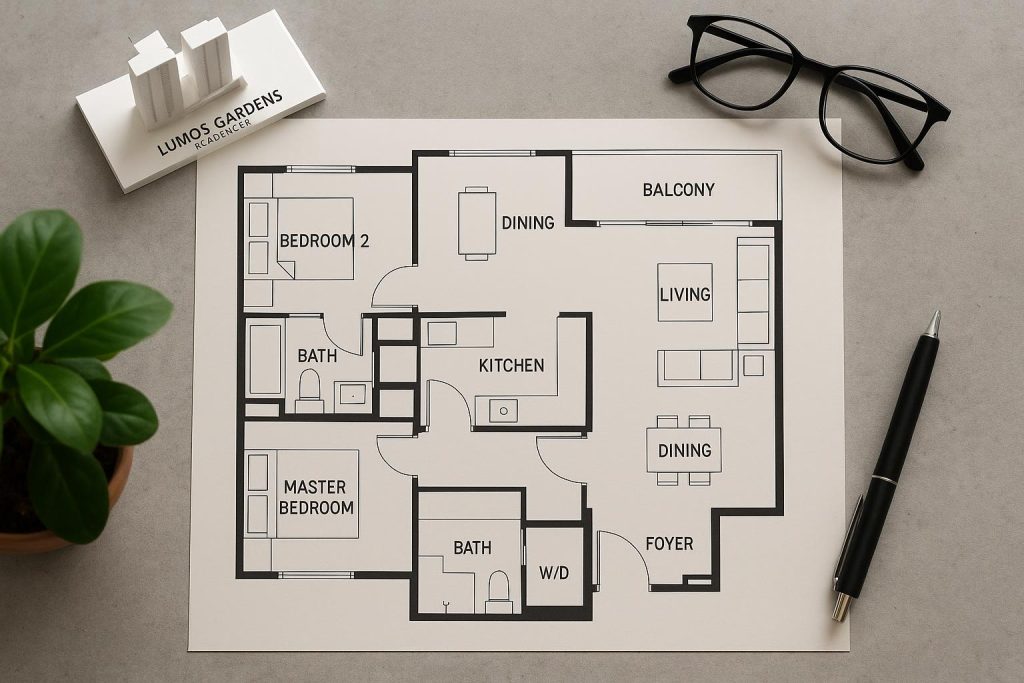
Understanding the layout of a unit before making a condominium purchase is one of the most important steps a savvy homebuyer can take. A well‑designed floor plan directly influences daily comfort, space usability, environmental quality, and long‑term adaptability. For buyers considering Lentor Gardens Residences, examining the Lentor Gardens Residences Floor Plan is essential to appreciating how the development supports modern urban lifestyles. This article breaks down why studying the floor plan matters, what to look for in unit layouts, and how this translates into real‑world livability in a city‑fringe Singapore context.
Why the Floor Plan Matters More Than Ever
Contents
- Why the Floor Plan Matters More Than Ever
- Spatial Flow and Functional Zoning
- Natural Light, Ventilation, and Environmental Comfort
- Circulation Logic and Usable Space
- Flexibility and Adaptability for Modern Lifestyles
- Storage and Utility Planning
- Private vs Social Space Balance
- Considering Orientation and View
- Long‑Term Usability and Future Proofing
- Conclusion: How Floor Plans Guide Better Decisions
Floor plans reveal more than just room dimensions; they demonstrate how spaces interact, how natural light penetrates interiors, how circulation flows through the home, and how everyday functions are supported. A floor plan helps buyers visualize how a unit will feel and function once furnished and lived in, making it an indispensable tool before committing to a purchase. The Lentor Gardens Residences Floor Plan provides an early window into internal coherence, unit orientation, and spatial logic that determine the everyday experience of living in this development. It’s not enough to know how many rooms a unit has — buyers need to understand how those rooms connect and support real routines.
Spatial Flow and Functional Zoning
One of the first things a well‑designed floor plan should communicate is functional zoning — how private, social, and service areas are arranged in relation to one another. In a well‑planned condominium like Lentor Gardens Residences, living and dining areas are usually grouped together to encourage interaction, while bedrooms are positioned to minimize through‑path circulation and noise. This means residents can enjoy family time in living zones without constant disruption from bedroom traffic, improving comfort for daily living.
When evaluating the Lentor Gardens Residences Floor Plan, buyers will notice how social zones receive generous daylight and ventilation opportunities, whereas private spaces like bedrooms are located towards quieter parts of the unit. Such planning ensures that each room serves its core function without conflict, which is a hallmark of practical urban design.
Natural Light, Ventilation, and Environmental Comfort
Another important criterion that the Lentor Gardens Residences Floor Plan highlights is natural light and ventilation potential. Units designed with thoughtful orientation and well‑placed windows allow sunlight to penetrate deeper into interiors. This not only enhances the aesthetic quality of living spaces but supports energy efficiency and personal well‑being by reducing dependence on artificial lighting and cooling.
Good natural ventilation, facilitated through cross‑ventilation paths shown in the floor plan, improves air movement throughout the unit, creating fresher indoor environments. Buyers should pay attention to units where bedrooms and living areas both benefit from multiple exposures, as this often translates to better environmental comfort, especially in Singapore’s tropical climate.
Circulation Logic and Usable Space
Efficient circulation — the way residents move through the unit — is another key element revealed in the floor plan. A layout that minimizes wasted corridor space and awkward transitions ensures that more of the unit’s floor area is directly usable for daily living. Excessive corridors or isolated pockets of unused space often make a unit feel smaller than its stated area.
The Lentor Gardens Residences Floor Plan is designed to reduce such inefficiencies. Rooms are interconnected in a manner that balances openness with clear function transitions. Living, dining, and kitchen areas are typically placed adjacent to one another to support seamless family interaction, while private rooms are accessed via short, logical passageways that keep circulation space minimal and functional.
Flexibility and Adaptability for Modern Lifestyles
Modern households are dynamic. Whether accommodating a home office, a study corner for children, or a flexible leisure zone, residents value units that adapt without major renovation. The Lentor Gardens Residences Floor Plan accommodates these evolving lifestyle needs by offering flexible spaces that can be repurposed according to daily demands.
For example, living areas that connect to balconies or extended spaces can support dual functions — a living zone by day and a casual workstation by night. Bedrooms with secondary access points can serve as guest rooms or hobby studios without disrupting core living areas. This adaptability enhances long‑term livability and adds to the functional value of the property.
Storage and Utility Planning
Storage is often underestimated in floor plan evaluations, yet it plays a crucial role in maintaining an uncluttered living environment. Practical floor plans integrate storage solutions within circulation paths, underutilized corners, or built‑in closet spaces. The Lentor Gardens Residences Floor Plan showcases thoughtful storage placement, ensuring that residents have ample space for belongings without encroaching on living areas.
Utility spaces, such as kitchens and laundry zones, are also planned to support everyday workflows and household maintenance. These practical details help create homes that are not only visually appealing but genuinely comfortable for day‑to‑day use.
Private vs Social Space Balance
An effective floor plan balances private and social spaces. In the Lentor Gardens Residences Floor Plan, social areas like living and dining are positioned to encourage family and guest interaction, while private zones like bedrooms and study areas are tucked away for quiet and rest. This distinction is crucial when households have members with varying schedules — someone can enjoy the living room while another rests undisturbed.
Buyers should study how spatial boundaries are articulated in the floor plan and whether those boundaries align with their own routines and preferences. The success of a floor plan often lies in how well it reconciles these two spatial requirements without compromising convenience.
Considering Orientation and View
Floor plans often indicate balcony placement and external openings, allowing buyers to consider how views and orientation might affect daily comfort. Units that face greenery or quieter external spaces often command higher satisfaction due to the enhanced sense of openness and reduced external noise. The Lentor Gardens Residences Floor Plan helps buyers compare orientations and evaluate which units have the most desirable view corridors or best exposure to wind patterns.
Understanding orientation is also important for sunlight exposure; eastern orientations receive morning light, while western exposures gather afternoon sun. Buyers can use this insight to align unit selection with their lifestyle preferences — for example, opting for cool afternoon interiors or sunlit spaces in the early day.
Long‑Term Usability and Future Proofing
A critical aspect of studying any floor plan, including the Lentor Gardens Residences Floor Plan, is evaluating long‑term usability. Homes should remain functional as family needs change, household sizes grow, or work and leisure routines evolve. Flexible room arrangements, adaptable spaces, and functional layouts contribute to this future‑proofing.
Homes that can accommodate different life stages without demanding major structural alterations often deliver better long‑term value. When buyers assess the floor plan with this perspective, they can make more informed decisions that align with both present and future residential needs.
Conclusion: How Floor Plans Guide Better Decisions
Understanding the Lentor Gardens Residences Floor Plan is much more than checking square footage or room counts — it is about assessing how space functions in real life. Well‑designed layouts optimize natural light, ventilation, circulation, flexibility, and environmental comfort. They support practical daily routines, adapt to lifestyle changes, and enhance resident satisfaction over the long term.
For anyone considering this development, studying the floor plan provides invaluable insight into how your future home will perform on a functional level. Combined with considerations of location, amenities, price, and community integration, the floor plan helps buyers make confident, grounded decisions — transforming a property purchase into a long‑term home choice that enhances everyday life.