


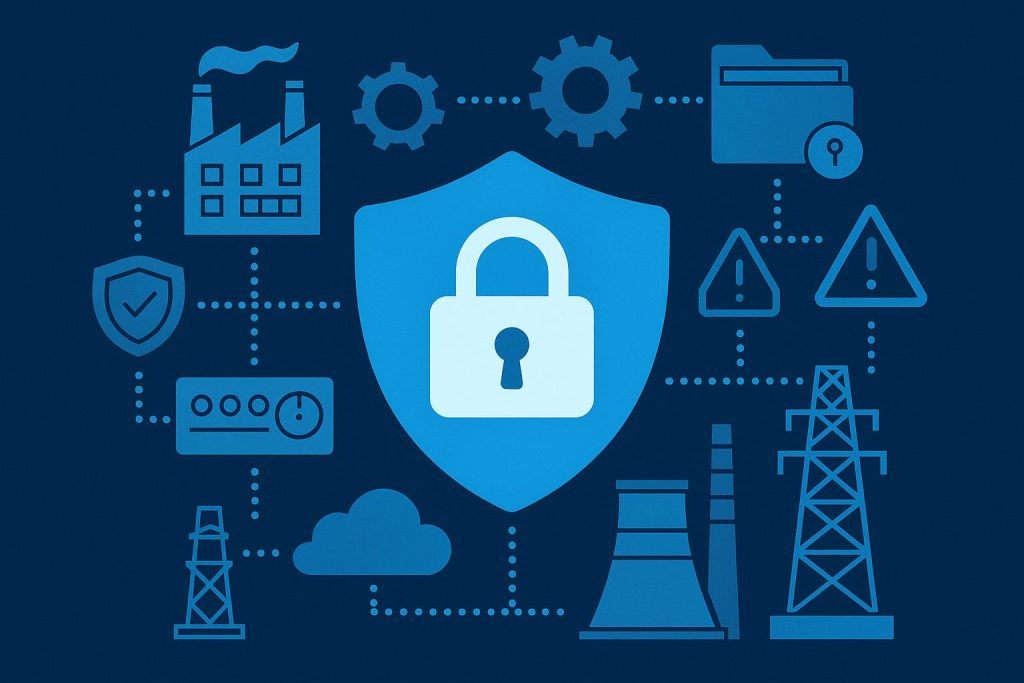
Connected operational technologies are increasingly being used by industrial enterprises to manage the functioning of their machines and production facilities and monitor critical infrastructure. With the increased connectivity between the OT environment and enterprise network, cloud and remote connections, cybersecurity concerns may emerge.
OT cybersecurity is concerned with protecting industrial hardware, network infrastructure, control systems, and processes while ensuring the availability and reliability needed for uninterrupted operations.
What Does OT Security Mean?
Contents
- What Does OT Security Mean?
- Why Industrial Networks Need Specialized Security
- Key Components of OT Security
- How OT Security Differs From Traditional IT Security
- Common OT Security Threats
- How Businesses Can Strengthen OT Security
- What Businesses Should Consider Before Implementing OT Security
- Final Thoughts
- FAQs
Understanding the OT security meaning for industrial networks[a] is important for businesses because protecting operational systems requires more than traditional IT security controls. OT security is the set of tools, procedures, and measures that help ensure protection of the operational technology environment against threats to OT systems. The operational technology environment comprises systems such as ICS, SCADA, PLC, HMI, sensors, and industrial devices interacting with the physical process.
The main difference between the OT and IT environments is that an incident in the former can have negative consequences on production, machinery, safety, and services. Therefore, OT security has to take into account both cybersecurity threats and the reliability of the industrial environment.
Why Industrial Networks Need Specialized Security
Historically, industrial networks have been engineered with reliability, availability, and deterministic communications in mind. Some systems have been designed for continuous operation over many years, with considerable effort required to make changes to the setup.
On the other hand, industrial settings are becoming increasingly networked. An enterprise may link its OT networks with its own IT environment, cloud services, remote monitoring solutions, suppliers, and maintenance tools.
Key Components of OT Security
1. Network Segmentation
Network segmentation involves dividing industrial networks into controlled zones or segments. This will help minimize communications between different systems while reducing risks that might result from any unauthorized access.
For instance, crucial industrial control systems could be segmented off from other devices and enterprise networks. This way, further security layers would be created around crucial industrial assets.
2. Access Control
Access control refers to controlling whether particular entities have the permission to communicate with industrial systems. With role-based controls, authentication and network controls can help restrict unnecessary access.
This is because restricting access would help in minimizing chances of unauthorized interactions with crucial OT resources.
3. Remote Access Security
Remote connections could be useful for troubleshooting, maintenance, and monitoring purposes but need to be properly safeguarded. Controls would involve managing the people who are able to create remote connections, systems that can be accessed remotely, and at what times.
4. Asset Visibility
It is essential for an organization to be aware of the devices and systems being used in its industrial environment. Device awareness will be helpful in getting an understanding about the network connectivity, recognizing unknown devices, and identifying any vulnerabilities.
If there is no device awareness, it will be hard to implement any security policies or measures.
5. Monitoring and Detection
Continuous monitoring will enable organizations to find out about any unusual communications and accesses, among others, that might pose any security threats. Continuous monitoring is especially crucial in cases where unusual activities in the network might impact the industrial operations of the company.
6. Incident Response
Incident response plans in OT environments need to have an element of continuity of operations. The security team needs to know how to act in case of any suspicions without impacting the production process.
How OT Security Differs From Traditional IT Security
| Consideration | IT Security | OT Security |
| Primary Focus | Ensures that data, applications, users, and digital systems are protected. | Protection of industry systems, equipment, networks, and processes. |
| Main Priority | Tends to focus on confidentiality, integrity, and protecting access. | Great importance is given to availability, reliability, and continuity of operation. |
| System Lifecycle | More frequent updates and replacement of systems may occur. | The equipment is able to work for many years. |
| Security Changes | Implementing changes or updates may be simpler. | Changes often require testing and operational validation. |
| Potential Impact | Incidents may disrupt applications or business services. | An incident may influence the manufacturing process. |
Common OT Security Threats
There are various cybersecurity risks that can occur in an industrial setting. Awareness of these risks enables one to establish where there is need for improved security measures.
| Threat | Potential Impact on Industrial Networks |
| Unauthorized Access | There is a chance that attackers will be able to access systems/networks that they should not access. |
| Compromised Credentials | Compromised user accounts can enable unauthorized access to critical OT systems. |
| Malware | Software could be used to cause harm to critical systems/operations. |
| Ransomware | Important systems might fail to function, which may affect operations. |
| Insecure Remote Access | Improperly secured remote connections could serve as entry points for OT networks. |
| Network Misconfiguration | Improperly set up security features may cause vulnerabilities or excessive connections. |
| Insider Risks | Authorized users may intentionally or unintentionally introduce security problems. |
How Businesses Can Strengthen OT Security
The procedure of improving the OT security system involves creating a balance between cybersecurity and operations needs. Businesses should ensure that they understand the systems, access controls, segmentation, monitoring, preparedness, and updating.
Step 1: Locate Key Assets
Discover key OT assets, including equipment, systems, and processes to focus on securing.
Step 2: Analyze Network Connectivity
Analyze connectivity within industrial systems, and identify any unnecessary or potentially dangerous connections.
Step 3: Manage Access
Check user privileges and remote access to guarantee only legitimate users have access.
Step 4: Separate the Network
Isolate critical systems from others to reduce communication and prevent spread.
Step 5: Detect Network Behavior
Keep track of network communications and activity to spot any abnormalities.
Step 6: Be Ready for Incident Response
Prepare incident response measures which will take into account operational constraints.
Step 7: Revisit Security Measures Periodically
Modify and adapt security practices to accommodate new devices, applications, and cloud technologies.
What Businesses Should Consider Before Implementing OT Security
Security should be developed with due regard to the peculiarities of industrial environments. Before implementing any control measures, companies should consider the following:
- Existing Technologies: Determine the age, abilities, and constraints of industrial technologies.
- Network Structure: Determine how IT, OT, technology, and outside connections relate to each other.
- Operational Impacts: Think about how security modifications will impact production processes.
- Remote Access: Examine who needs remote connection and what technologies they need to connect to.
- Compatibility of Technology: Ensure that security technologies can integrate with industrial technologies.
- Coordination of Teams: Define clear coordination between IT, OT, engineering, and security teams.
- Future Connectivity: Prepare for new connections through more technologies, cloud, and remote access.
Final Thoughts
Having an understanding of OT Security definition and its function in the industrial network environment becomes crucial due to the increasing connectivity of operational environments. The function of OT security is to provide protection for the infrastructure, devices, communications, and processes that help to conduct industrial operations, taking into consideration the special needs of availability and reliability. A good OT security strategy should include network segmentation, access control, secure remote connectivity, visibility of assets, monitoring, and incident response.
FAQs
1. What does OT security mean?
The term OT security denotes the methods used for safeguarding operational technology infrastructure from various cybersecurity threats.
2. Why is OT security significant for industrial networks?
It safeguards critical industrial systems from any form of access or disruption and assists in maintaining operational continuity and production.
3. What is the difference between IT security and OT security?
While IT security is concerned with the protection of digital systems, applications, users, and data, OT security is focused on industrial systems where availability and reliability are of significance.
4. Provide some examples of OT Security Controls?
Some examples of these controls are Network Segmentation, Access Control, Secure Remote Access, Asset Management, Monitoring, and Incident Response.