


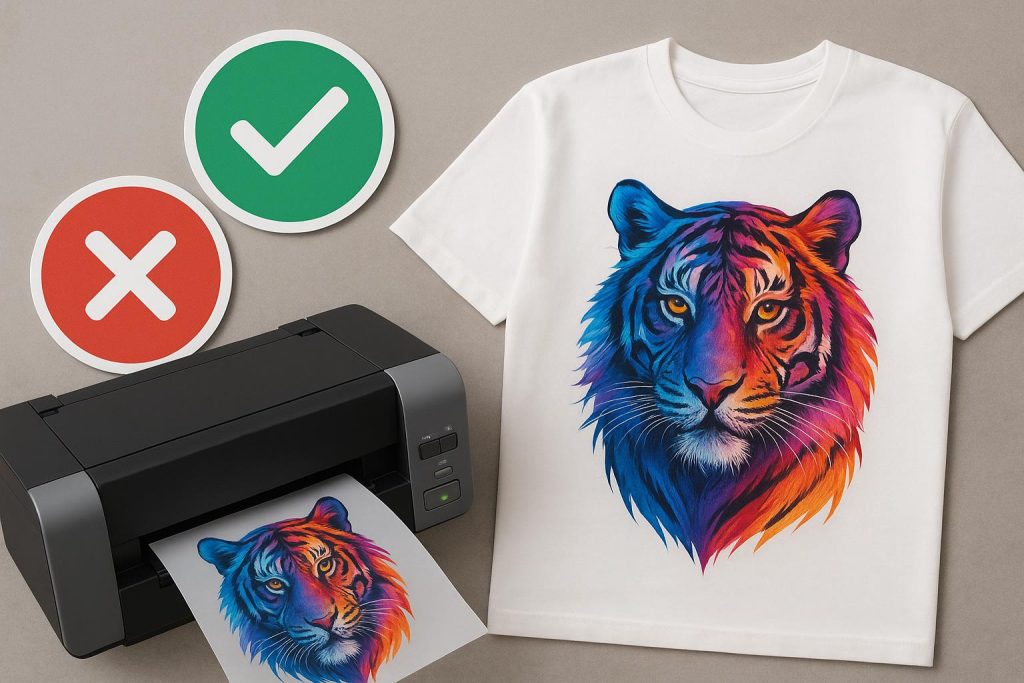
Custom apparel has changed quickly in the past few years. Customers expect fast turnaround times, bold graphics, and flexible order sizes. For many print shops and clothing brands, direct-to-film printing has become part of that shift. It promises versatility and lower barriers to entry, yet it also comes with technical demands that are easy to underestimate.
Before investing in equipment or changing your workflow, it helps to understand both sides. Direct-to-film printing, commonly called DTF printing, offers real advantages for apparel businesses. It also presents practical challenges that affect cost, maintenance, and long term profitability.
Understanding How Direct-to-Film Printing Works
Contents
Direct-to-film printing is a transfer based method. Instead of printing directly onto a garment, the design is printed onto a special PET film. An adhesive powder is applied to the wet ink. The film is then cured and later heat pressed onto the garment.
The process is straightforward on paper. First, the artwork is printed in reverse onto the film. A layer of white ink is typically laid down to create opacity, especially for dark garments. After printing, adhesive powder is spread evenly across the design and melted during curing. The final transfer is pressed onto fabric using a heat press.
This method works on a wide range of materials. Cotton, polyester, blends, and even performance fabrics can accept DTF transfers. That flexibility is one of its strongest selling points for apparel businesses that offer varied product lines.
Many modern systems such as the Epson Surecolor G6070 DTF printer, are designed to streamline this workflow. They aim to provide consistent ink circulation and stable output, which are critical for businesses that rely on daily production. Equipment reliability plays a large role in overall success.
The Advantages of Direct-to-Film Printing
DTF printing solves several common problems faced by small and mid sized apparel businesses.
Fabric Versatility
Unlike some direct-to-garment methods that favor high cotton content, DTF transfers adhere well to many fabric types. This makes it easier to expand into athletic wear, hoodies, tote bags, and blended garments without changing your core setup.
For shops that handle custom orders, this versatility reduces friction. You can accept a broader range of requests without worrying about pretreatment differences or fabric limitations.
Lower Setup for Small Runs
Screen printing remains efficient for large bulk orders. However, it requires screens and setup time that increase costs for small batches. DTF printing removes that barrier. There are no screens to burn and no complex color separations for each order.
This makes short runs and one off designs more practical. Print-on-demand sellers and local merch brands benefit from that flexibility.
Strong Color and Detail
DTF prints are known for vibrant color reproduction. The white ink base helps colors stand out on dark fabrics. Fine details and gradients can be reproduced with clarity when the artwork is prepared correctly.
For businesses selling graphic-heavy designs, that visual impact can improve perceived value. Customers notice brightness and sharpness immediately.
Durability
When applied correctly, DTF transfers hold up well through repeated washing. The adhesive bonds firmly to the fabric surface. The print tends to resist cracking and fading if the heat press settings are accurate.
Durability reduces customer complaints. It also strengthens brand reputation over time.
The Drawbacks to Consider
While the advantages are clear, DTF printing is not maintenance-free or risk-free.
Initial Investment
A complete setup includes a dedicated printer, curing equipment, heat press, film, ink, and adhesive powder. Even if entry-level systems appear affordable, costs add up quickly. Businesses must also factor in workspace requirements and ventilation.
The upfront expense may be manageable, but it still requires careful planning.
Ongoing Maintenance
White ink requires constant circulation to prevent settling and clogging. Daily cleaning routines are essential. Printheads are sensitive and expensive to replace.
Skipping maintenance even for a short period can cause downtime. For small shops, downtime means missed deadlines and lost revenue.
Consumable Costs
Every print uses film and powder in addition to ink. These consumables directly affect cost per piece. If pricing is not calculated accurately, margins shrink without notice.
Businesses need clear cost tracking systems to maintain profitability.
Print Feel
DTF prints sit on top of the fabric rather than bonding into the fibers. While flexible, the finish can feel slightly thicker compared to some other methods. For customers who prioritize an ultra-soft feel, this may matter.
Testing samples before large production runs is essential.
Comparing DTF to Other Printing Methods
When evaluating DTF printing, context is important. Screen printing excels in high-volume runs with simple color palettes. DTF performs better with smaller orders and complex artwork.
Compared to direct-to-garment methods, DTF does not require pretreatment for each garment. It also handles synthetic fabrics more easily. However, DTG may provide a softer feel on certain cotton garments.
Sublimation remains limited to light colored polyester. DTF does not share that limitation, which gives it broader commercial use.
Each method has a place. The right choice depends on order size, target market, and production goals.
Is DTF Printing Worth It Financially
The question most business owners ask is simple. Will it generate profit?
Startup costs vary depending on equipment quality and production scale. Once operational, the cost per print includes ink, film, powder, labor, and utilities. When managed properly, margins can be strong for custom orders and small batch production.
Break-even timelines depend on sales volume. Shops with steady customer demand often recover investment faster than those relying on occasional orders. DTF printing fits well within print-on-demand models and niche apparel brands.
Who Should Use Direct-to-Film Printing
DTF printing suits businesses that value flexibility. Small to mid-sized apparel brands, online sellers, and custom merch shops benefit most. It allows experimentation with new designs without major setup costs.
On the other hand, large-scale bulk printers focused on thousands of identical shirts may find screen printing more efficient. Businesses that prefer minimal maintenance may also struggle with the daily care DTF systems require.
Common Challenges and Practical Solutions
Several issues appear repeatedly in DTF workflows. Ink clogging can be reduced through strict cleaning schedules. Uneven powder application can be corrected with proper shaking techniques and controlled curing temperatures.
Adhesion problems often trace back to incorrect heat press pressure or timing. Careful calibration solves most of these issues. Color accuracy improves with proper profiles and routine test prints.
Attention to detail makes a difference. Small adjustments prevent expensive mistakes.
Final Thoughts
Direct-to-film printing offers apparel businesses a flexible and capable production method. It supports multiple fabrics, handles small orders efficiently, and produces bold graphics that attract customers.
At the same time, it demands discipline. Maintenance, cost control, and workflow consistency determine whether it becomes an asset or a burden.
For many growing apparel brands, DTF printing strikes a balance between creative freedom and operational practicality. The key is entering the process with realistic expectations and a clear business plan.