


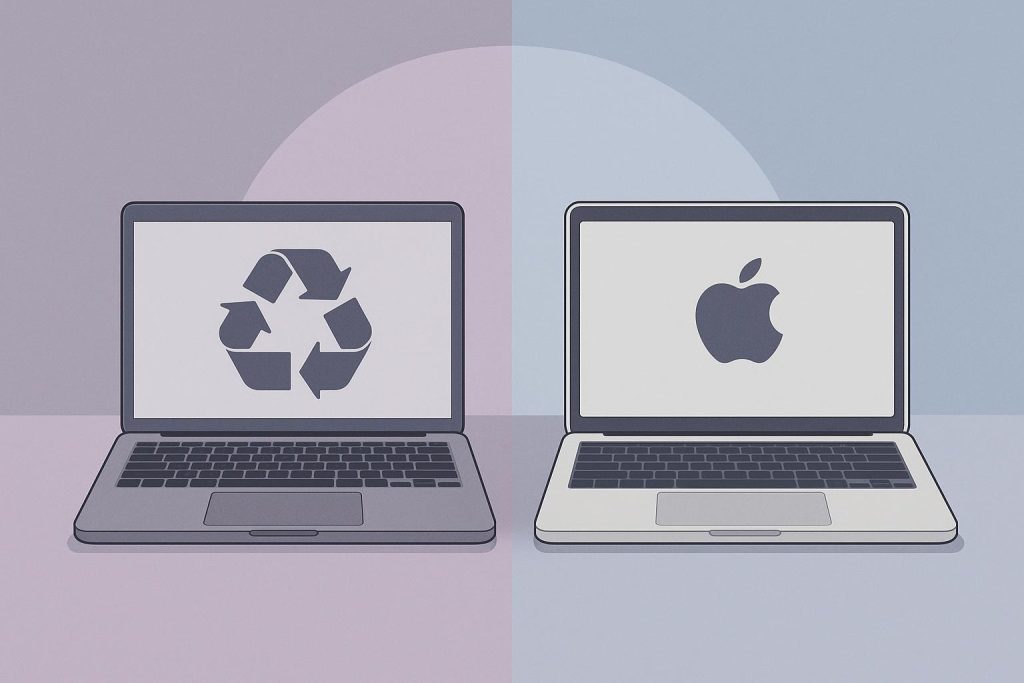
Buying a MacBook in 2025 presents a very different decision than it did just a few years ago. Apple’s laptops have become more powerful, more efficient, and more expensive at the same time. With longer device lifespans and slower year-to-year performance leaps, buyers are increasingly questioning whether purchasing new is always the smartest option. This has brought renewed attention to the refurbished market and its growing appeal.
For many shoppers, the decision comes down to value rather than loyalty to the latest model. In the middle of this comparison, Refurbished MacBooks stand out as a compelling alternative, often offering similar real-world performance at a significantly lower cost. Understanding when refurbished makes sense, and when buying new is still justified, requires a closer look at performance, longevity, and overall ownership experience.
Performance is usually the first concern. New MacBooks benefit from the latest Apple Silicon chips, offering incremental improvements in speed, graphics, and efficiency. However, for most everyday tasks, these gains are subtle rather than transformative. Refurbished MacBooks, particularly those based on recent Apple Silicon generations or well-specified Intel models, still handle browsing, productivity, media, and light creative work with ease. For many users, the performance difference between new and refurbished is difficult to notice in daily use.
Battery life is one area where new models often hold an advantage. A brand-new battery offers maximum capacity and predictable longevity. That said, many refurbished MacBooks either come with replaced batteries or clearly stated battery health. A refurbished device with a healthy battery can still deliver several years of reliable use, especially for users who do not rely on all-day unplugged performance.
Software support is another key consideration. New MacBooks will receive macOS updates for the longest possible period, making them the best choice for buyers who prioritise future-proofing. Refurbished models may have fewer remaining years of official support, but this does not necessarily limit usability. Many users comfortably run older macOS versions for extended periods, particularly when their workflows rely on stable, familiar software.
Cost is where refurbished MacBooks clearly shine. The price difference between new and refurbished can be substantial, often allowing buyers to afford higher specifications for the same budget. More memory, larger storage, or a higher-end model may be accessible refurbished when a new device would require compromise. For users who value performance per pound, this can be a decisive factor.
Reliability concerns are common among first-time refurbished buyers, but reputable refurbishers address this through testing, grading, and warranties. A refurbished MacBook from a trusted seller often includes a warranty comparable to that of new devices, offering reassurance against faults. In contrast, buying new guarantees pristine condition but does not eliminate the possibility of defects or issues.
There is also an environmental dimension to the decision. Buying refurbished extends the life of existing hardware and reduces electronic waste. For environmentally conscious buyers, this can be a meaningful advantage. New devices, while efficient, still carry the environmental cost of manufacturing and distribution.
However, buying new still makes sense in certain situations. Users who need the latest features, maximum performance headroom, or the longest possible software support window may find a new MacBook the better investment. Professionals whose income depends on cutting-edge performance or compatibility may also prefer the certainty of new hardware.
Refurbished MacBooks are best suited to buyers who value practicality over novelty. Students, remote workers, and everyday users often find that refurbished models meet their needs perfectly. The savings can be redirected toward accessories, software, or external displays that improve the overall experience more than a marginal hardware upgrade would.
In 2025, the choice between refurbished and new is less about compromise and more about alignment. New MacBooks offer peace of mind and future longevity, while refurbished models deliver exceptional value and proven capability. The smarter option depends not on what is newest, but on what best fits how the device will actually be used.
Refurbished MacBooks are no longer a fallback choice. For many buyers, they represent the most balanced and cost-effective way to own a MacBook today.