


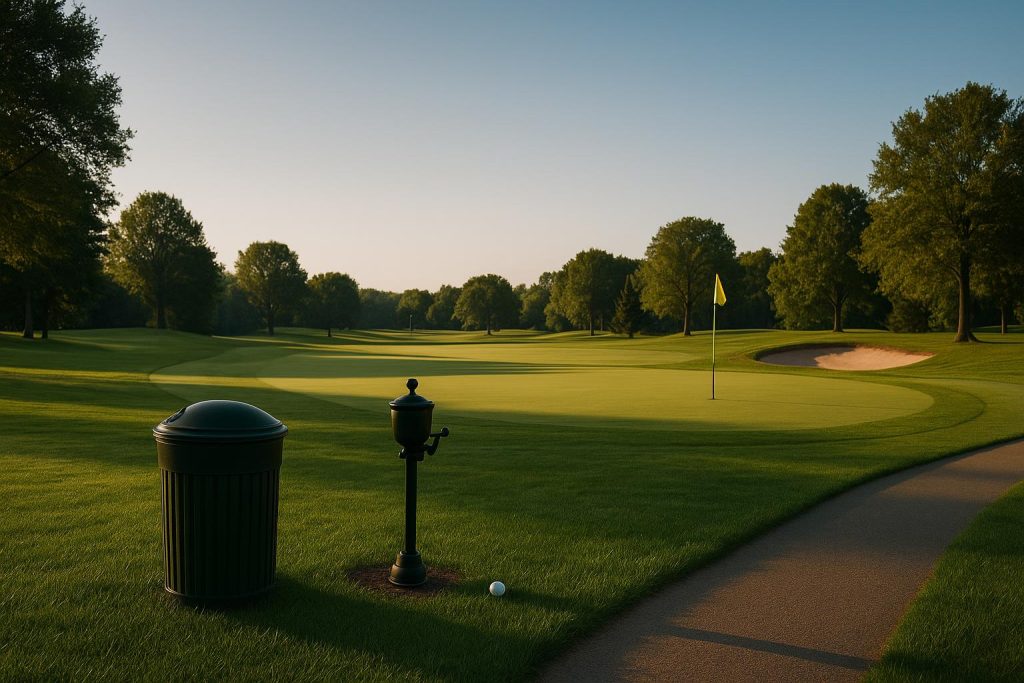
A golf course is more than just a setting for the game. It is a carefully maintained environment, shaped by time, effort, and attention to detail. Every fairway, bunker, and green is part of a larger system designed to provide a consistent and enjoyable experience. Yet the condition of that environment does not depend solely on the grounds team—it also relies on the behaviour of those who play on it. Respecting the course is not complicated, but it does require awareness, and small habits can have a lasting impact.
One of the most visible ways players influence the course is through divots. A clean strike can remove a section of turf, leaving a mark that affects both the appearance and playability of the fairway. Repairing that divot, whether by replacing the turf or using the provided mixture, helps restore the surface for the next player. It takes only a moment, but when multiplied across an entire course, it becomes a significant part of maintaining quality.
Greens require even greater care. A well-struck shot can leave a pitch mark, creating a small indentation in the surface. If left unattended, these marks can affect the roll of the ball and the overall condition of the green. Repairing them properly—lifting and smoothing rather than simply pushing down—ensures that the surface remains true. It is one of the simplest acts of course care, yet one of the most important.
Bunkers present another opportunity to show respect. After playing a shot, raking the sand removes footprints and disturbances, leaving the area as it was found. This is not just about appearance; it ensures fairness. A bunker that has been left uneven can create unpredictable conditions for the next player. By taking the time to smooth it out, each player contributes to a more consistent experience.
Movement across the course also plays a role. Walking thoughtfully—avoiding unnecessary wear on sensitive areas, keeping off greens when not putting, and following designated paths—helps preserve the layout. Trolleys and buggies should be used with care, particularly in areas where the ground is softer or more vulnerable. These considerations may seem minor, but they help prevent long-term damage that can affect the course as a whole.
There is also an element of awareness that goes beyond physical impact. Understanding where to stand, how to move, and when to act all contribute to the overall condition of the course. For example, avoiding walking across another player’s putting line not only shows respect for their shot but also protects the surface from unnecessary pressure. These habits become second nature over time, shaping how players interact with the course.
Experiences at well-kept venues, such as Manor & Ashbury Resorts, often highlight the difference that collective responsibility makes. When players consistently follow these simple practices, the course remains in excellent condition, enhancing the experience for everyone. It becomes clear that maintenance is not just the role of staff, but a shared effort between those who manage the course and those who play on it.
Weather conditions can also influence how the course should be treated. After heavy rain, for example, the ground may be more susceptible to damage. In these situations, extra care with movement and equipment can prevent unnecessary wear. Similarly, during dry periods, protecting the turf becomes important in maintaining its quality. Being aware of these factors helps players adapt their behaviour to suit the conditions.
For newer players, these habits may not always be obvious. Unlike formal rules, they are often learned through observation and experience. Playing with others who demonstrate good etiquette provides a natural way to understand what is expected. Over time, these actions become part of the routine, requiring little conscious thought but making a meaningful difference.
Ultimately, respecting the course is about recognising that every action has an effect. A single unrepaired mark may seem insignificant, but when repeated across a day, a week, or a season, the impact becomes clear. The opposite is also true—consistent care from each player helps maintain the course at a high standard.
In the end, the condition of a golf course reflects the behaviour of those who use it. Grounds teams can prepare and maintain, but it is the players who preserve. By adopting simple habits and approaching the course with awareness, it becomes possible to protect the environment that makes the game what it is.