


So, if you have been running paid media for e-commerce long enough, you have probably noticed something uncomfortable.
Well, honestly, scaling isn’t as fun as it used to be.
Budgets are getting bigger, competition is fiercer, CPMs keep creeping up, and while revenue might still be witnessing an uptick, it takes more effort and more spend to get the same results.
Most teams respond in a similar way by serving more creatives, more audiences, and more acquisition.
But the real issue usually isn’t traffic; it’s probably churn.
Customers are quietly slipping by, and ad spend is being used to replace them instead of truly growing the business.
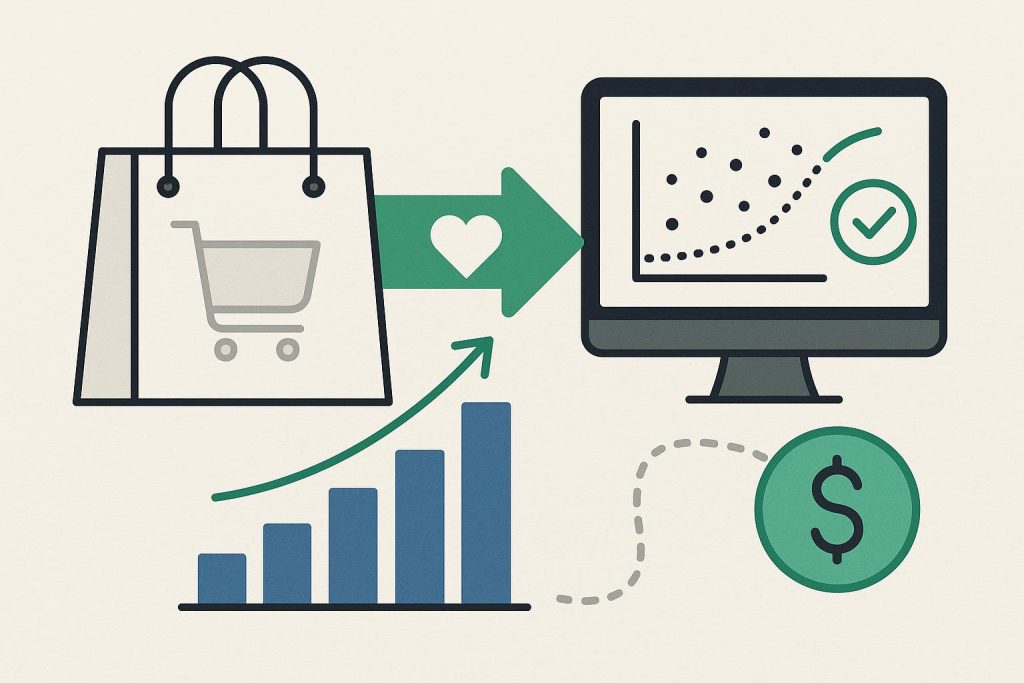
That’s where retention-first ads powered by predictive modeling are changing how smart e-commerce teams think about performance marketing.
The problem most ad accounts don’t talk about
Contents
- The problem most ad accounts don’t talk about
- Understanding what retention first ads mean in practice
- Turning churn predictions into high-performing ad campaigns
- How to implement retention-first ads without making it overly complex
- Why agencies are now leaning into predictive retention strategies
- In summary
On paper, many ad accounts look pretty healthy. However, the truth might beg to differ.
A large chunk of customers buy once or twice and disappear.
When churn goes up, acquisition stops being growth and starts being maintenance.
You’re not scaling the business, you’re refilling what leaked out.
Retention-first advertising focuses on plugging that leak.
Instead of treating all past customers as one remarketing pool, it prioritizes the people most likely to stop buying and uses paid media to keep them engaged before they’re gone.
This proactive approach aligns with a Forbes analysis, which emphasises how analyzing customer behavior data enables brands to predict churn and tailor retention strategies.
Understanding what retention first ads mean in practice
Let’s begin with clearing up a common misconception.
Retention-first ads are not just about running more remarketing campaigns.
So, traditional remarketing involved showing ads to anyone who visited or made a purchase. Retention-first ads, on the contrary, begin by asking a smarter question, “Which of these customers is at risk of leaving right now?”
That difference is everything.
Some customers will return naturally, some will stay no matter what, and some will slowly drift away.
Predictive modeling helps identify the customers that will slowly drift away, the ones where paid media can actually change behavior.
According to Forbes, brands that focus on retaining and nurturing existing customers rather than only chasing new ones will propel growth.
Turning churn predictions into high-performing ad campaigns
Once you identify churn-risk segments, your retention strategy becomes a lot more precise.
Wondering why? Well, it’s because;
You stop allocating budget to the segment of people who don’t need ads
Loyal customers who are highly likely to purchase again are excluded from retention campaigns.
This sounds simple, but most accounts spend a surprising amount of money “re-convincing” people who were already coming back.
Removing that segment often improves ROAS almost immediately.
You trigger ads based on behaviour and not random time windows
So, most remarketing rules on fixed rules, 7 days after purchase, 14 days after visit and 30 days after inactivity.
However real customer behaviour doesn’t fall into such neat, boxed out timelines.
With predictive modeling, ads activate when churn risk rises, when engagement drops or purchase frequency slows not when a calendar says so.
This makes messaging land at the moment it’s actually useful.
You choose to personalize without spamming discounts
The thing is, not everyone gets a coupon; only those who need motivation do.
And that’s why it converts better.
How to implement retention-first ads without making it overly complex
In simple terms, you don’t need a massive data science operation to begin with.
Most successful setups include, but are not limited to;
~ Unified customer data (orders, website behavior, engagement)
~ A churn definition that matches your buying cycle
~ A predictive model to score churn risk
~ Automated syncing of audiences into ad platforms
The thing is that even simple predictive scoring models can dramatically outperform generic remarketing. All you need to do is act on behaviour and not assumptions.
Why agencies are now leaning into predictive retention strategies
As acquisitions become increasingly expensive, retention is quickly becoming a competitive advantage for many.
Brands are now pairing in-house strategy with execution partners who help scale performance efficiently.
If you run FB ads, this might involve working alongside a white-label Facebook ads agency to ensure that you don’t stretch your internal teams too thin.
When retention is built into paid media, it stops being a side project and becomes a consistent revenue driver.
In summary
So, in a world where acquisition keeps getting harder, the real winners won’t just be the brands that acquire best.
They’ll be the ones customers don’t leave.