


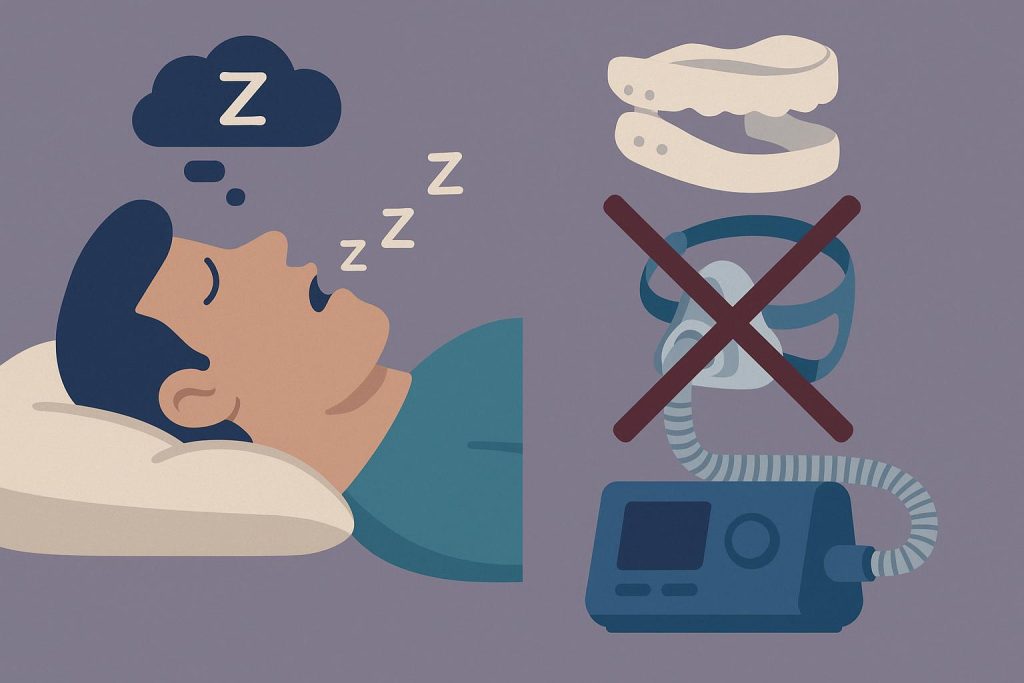
Snoring is often brushed aside as a minor inconvenience, something that disrupts a partner’s sleep more than one’s own health. Yet in clinical practice across Singapore, persistent loud snoring frequently turns out to be more than just noise. It can be the first visible sign of obstructive sleep apnoea (OSA), a condition in which breathing repeatedly stops and starts during sleep.
In a society where long working hours and chronic fatigue are common, the symptoms of sleep apnoea can be easily overlooked. Many individuals attribute their daytime exhaustion to stress or lifestyle rather than fragmented sleep. However, untreated sleep apnoea in Singapore is increasingly recognised as a contributor to hypertension, cardiovascular disease, stroke risk, metabolic dysfunction, and impaired concentration. Early diagnosis is not simply about better rest. It is about long term protection of overall health.
Understanding the Spectrum: From Snoring to Obstructive Sleep Apnoea
Contents
- Understanding the Spectrum: From Snoring to Obstructive Sleep Apnoea
- When Snoring Requires Medical Evaluation
- CPAP Therapy: Effective but Not Always Tolerated
- When CPAP Is Not the Right Fit
- The Role of Drug-Induced Sleep Endoscopy (DISE)
- Is Surgery a Cure?
- Personalised Treatment in Sleep Apnoea Care
- Taking the First Step
Sleep-disordered breathing exists along a spectrum. At its mildest end lies simple snoring, caused by vibration of the soft tissues in the throat as air passes through a narrowed airway. Oxygen levels remain stable, and sleep structure is generally preserved.
Further along that spectrum is Upper Airway Resistance Syndrome (UARS), a condition that is frequently under-recognised. In UARS, the airway narrows enough to increase breathing effort without fully collapsing. Oxygen levels may not drop significantly, but the increased effort causes repeated micro-arousals from sleep. Patients often describe chronic fatigue, unrefreshing sleep, poor focus, and mood disturbances despite having “normal” oxygen readings. Because many home-based sleep studies focus primarily on oxygen desaturation, UARS can sometimes go undetected without specialist assessment.
At the more severe end lies obstructive sleep apnoea (OSA). In OSA, the upper airway collapses repeatedly during sleep, causing pauses in breathing known as apnoeas or shallow breathing episodes called hypopnoeas. These interruptions fragment sleep and may lead to significant drops in oxygen levels. Severity is measured using the Apnoea-Hypopnoea Index (AHI), which calculates the number of breathing disruptions per hour.
The clinical implications extend beyond tiredness. Moderate to severe OSA has been closely associated with cardiovascular strain. In Singapore’s ageing population, particularly among individuals with diabetes, hypertension, or obesity, untreated OSA can quietly compound existing health risks.
When Snoring Requires Medical Evaluation
Not every person who snores has sleep apnoea, but certain features warrant medical attention. Snoring that is loud and nightly, witnessed episodes of choking or gasping, persistent morning headaches, excessive daytime sleepiness, or declining work performance are important red flags. Individuals whose blood pressure remains difficult to control despite medication may also benefit from evaluation for underlying sleep-disordered breathing.
Diagnosis requires a formal sleep study, either through a home-based test or in-laboratory polysomnography. The goal is not only to confirm the presence of OSA but to determine its severity and underlying pattern.
Early assessment allows for timely intervention before complications develop. In sleep medicine, waiting for symptoms to worsen rarely benefits the patient.
CPAP Therapy: Effective but Not Always Tolerated
For moderate to severe obstructive sleep apnoea, Continuous Positive Airway Pressure (CPAP) therapy remains the gold standard treatment. CPAP delivers a steady stream of pressurised air through a mask, preventing the airway from collapsing during sleep. When used consistently, CPAP significantly reduces apnoea events, improves oxygenation, restores sleep continuity, and lowers cardiovascular risk. Many patients experience improved alertness and cognitive clarity within weeks.
However, while CPAP is physiologically effective, real-world adherence can be challenging. Some individuals struggle with mask discomfort, nasal congestion, dryness, or feelings of claustrophobia. Others find it difficult to adjust to sleeping with pressurised airflow. These concerns are not trivial. If CPAP is poorly tolerated, its effectiveness diminishes.
In some patients, despite optimal mask fitting, pressure adjustments, and structured follow-up, CPAP adherence remains poor or apnoea control remains suboptimal. When CPAP fails to provide adequate long-term control or cannot be tolerated consistently, a structured evaluation for alternative therapies, including surgical options, becomes appropriate.
When CPAP Is Not the Right Fit
For patients who remain unable to tolerate CPAP despite optimisation, alternative approaches can be explored. Treatment selection depends heavily on anatomy, severity of disease, and individual preference.
Custom-fitted oral appliances, such as mandibular advancement devices, are designed to reposition the lower jaw forward during sleep. By enlarging the airway space, they can reduce collapse in selected patients, particularly those with mild to moderate OSA or specific jaw structures. Unlike generic mouthguards, these devices require careful fitting and follow-up by trained professionals.
Lifestyle modification also plays a significant role. In individuals with overweight or obesity, even modest weight reduction can meaningfully reduce airway collapsibility. Addressing alcohol intake and sleep position may also influence severity in some patients.
For others, structural factors are the primary driver. Enlarged tonsils, nasal obstruction, a recessed jaw, or tongue-base collapse may contribute significantly to airway narrowing. In such cases, sleep apnoea surgery may be considered, particularly when non-surgical options have failed or are unsuitable.
The Role of Drug-Induced Sleep Endoscopy (DISE)
Surgical treatment requires precision. One of the most valuable diagnostic tools available today is Drug-Induced Sleep Endoscopy (DISE).
DISE is performed in a controlled hospital setting under light sedation designed to mimic natural sleep. A flexible endoscope is gently inserted through the nose, allowing the surgeon to directly observe how the airway behaves during sleep-like conditions. This dynamic visualisation reveals whether obstruction occurs at the soft palate, tongue base, lateral pharyngeal walls, epiglottis, or multiple levels simultaneously.
Awake examination cannot reliably replicate these patterns. DISE provides clarity that guides targeted intervention. Rather than applying a standardised surgical approach, treatment can be tailored to the individual’s specific collapse pattern.
This precision matters. Multi-level obstruction is common, and addressing only one area may lead to suboptimal outcomes. DISE helps refine decision-making, particularly for patients who have struggled with CPAP intolerance or who have previously undergone unsuccessful surgery.
DISE is particularly indicated in patients who are CPAP-intolerant, those with persistent obstructive sleep apnoea despite previous surgery, or when multi-level anatomical obstruction is suspected based on clinical assessment.
Is Surgery a Cure?
Patients frequently ask whether surgery can permanently eliminate sleep apnoea. The answer depends on multiple factors, including anatomical structure, severity of disease, and body weight.
Procedures may range from tonsil removal and nasal surgery to more complex interventions such as uvulopalatopharyngoplasty (UPPP) or maxillomandibular advancement (MMA), which repositions the jaw to enlarge the airway. In carefully selected patients, surgery can significantly reduce apnoea severity and, in some cases, remove the need for CPAP. However, surgery is not universally curative and must be approached with realistic expectations.
The goal is not simply to “stop snoring,” but to improve airflow stability during sleep and reduce long-term health risk.
Personalised Treatment in Sleep Apnoea Care
One of the key insights in modern sleep medicine is that sleep apnoea is not a single disease with a single solution. Two individuals with similar AHI scores may have entirely different anatomical causes. One may benefit most from CPAP and weight management. Another may respond better to oral appliance therapy. A third may require targeted surgical intervention guided by DISE findings.
Personalised care improves both safety and success rates. Structured evaluation by an experienced otolaryngologist practice ensures that treatment aligns with individual needs rather than a generic pathway.
Taking the First Step
Persistent snoring should not be normalised when accompanied by fatigue, poor concentration, or cardiovascular risk factors. Early evaluation allows for timely, evidence-based management. A formal sleep study, followed by a comprehensive consultation, provides clarity on the most appropriate treatment approach.
While CPAP therapy remains the cornerstone for moderate to severe OSA, alternatives exist for those who cannot tolerate it. With advancements such as Drug-Induced Sleep Endoscopy (DISE) and refined surgical techniques, treatment can now be tailored with greater precision than ever before.
Addressing sleep apnea is not only about improving rest. It is about protecting long-term heart health, restoring cognitive function, and improving overall quality of life.
If snoring has become persistent, disruptive, or accompanied by daytime exhaustion, seeking specialist assessment may be the next important step toward better health.