


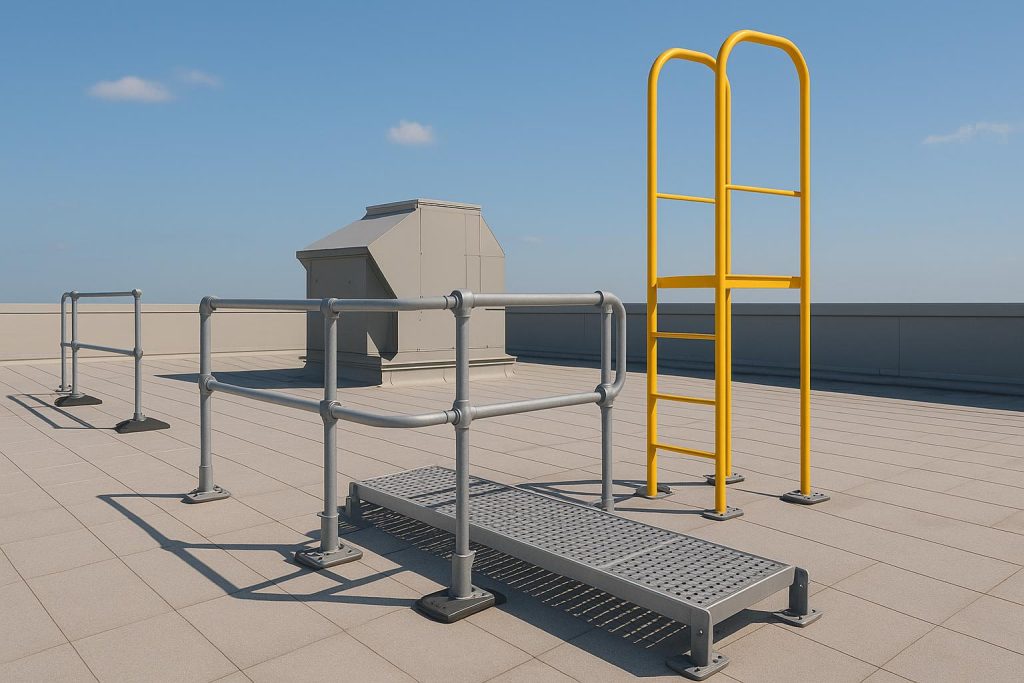
Rooftops are working environments as well as structural components of a building. Maintenance teams may need regular access to inspect drainage systems, repair roofing materials, service HVAC equipment, or maintain solar panels. Each visit introduces potential hazards, particularly when workers must operate near roof edges or navigate obstacles.
Creating safer conditions therefore involves more than providing basic safety equipment. Careful engineering can shape how people access, move around, and work on a roof, reducing exposure to hazards throughout the building’s life.
Designing Safety Into the Roof
Contents
Effective rooftop safety begins with understanding how the space will actually be used. Engineers and designers can consider where equipment requiring maintenance will be positioned, how frequently technicians will need access, and which routes they are likely to follow.
Plant equipment can sometimes be positioned away from exposed edges, while designated walkways can direct workers along predictable routes. Roof hatches, ladders and access points should also be located with the onward journey in mind. Reaching the roof safely is only part of the challenge if a worker immediately encounters an unprotected area after stepping onto it.
This approach allows risks to be addressed through the building layout rather than relying entirely on workers to manage them during every maintenance visit.
Engineering Fall Protection Systems
Where access close to an edge cannot be avoided, engineered fall protection becomes particularly important. The appropriate solution depends on factors including the roof structure, layout, maintenance requirements, and level of worker movement.
Guardrails can provide collective protection around exposed areas without requiring individual workers to connect themselves to equipment. In locations where permanent edge protection is unsuitable, anchor points and horizontal lifelines may provide another option.
For example, mansafe systems from Simplified Safety can form part of a planned rooftop fall protection strategy where workers require controlled movement around designated areas.
The engineering behind these systems must account for the forces that could be generated during use, as well as the suitability of the structure to which components are attached.
Creating Predictable Access Routes
Safe rooftop engineering is also about controlling movement. A maintenance worker should ideally be able to identify a clear route between the access point and the equipment being serviced.
Walkways can help workers avoid fragile surfaces, rooflights and areas where the roofing material may be slippery or easily damaged. Step-over platforms may also be required where pipes, ducts or other services interrupt the route.
Reducing unnecessary movement across the roof can simultaneously improve safety and make routine maintenance more efficient.
Accounting for Long-Term Conditions
A rooftop safety system needs to remain effective long after its initial installation. Roofs are exposed to rain, wind, temperature changes, and general deterioration, while later construction work can alter layouts or introduce new equipment.
Inspection and maintenance need to be considered as part of the engineering process. Fall protection components, access equipment and designated routes should be checked periodically so that damage, deterioration or changes to the working environment can be identified.
Making Maintenance Safer by Design
The safest rooftop maintenance strategies consider future work before somebody needs to climb onto the roof. Thoughtful equipment placement, controlled access routes and appropriately engineered fall protection can turn an unpredictable environment into a more manageable workspace.
By treating maintenance access as an engineering requirement rather than an afterthought, building owners and designers can support safer, simpler rooftop work throughout the life of the property.