


Emergency Medical Technicians (EMTs) and paramedics occupy a unique vantage point in the chain of survival. They are the professional link that follows the crucial initial minutes of a cardiac arrest, often initiated by a public AED. Their observations from the front lines provide an invaluable, real-world audit of community defibrillation programs. Listening to their collective insight offers a powerful guide for any organization deploying AEDs, and their practical priorities strongly align with the engineering ethos of companies like Kuteras Teknoloji, which design for the complete resuscitation continuum, from bystander to paramedic.
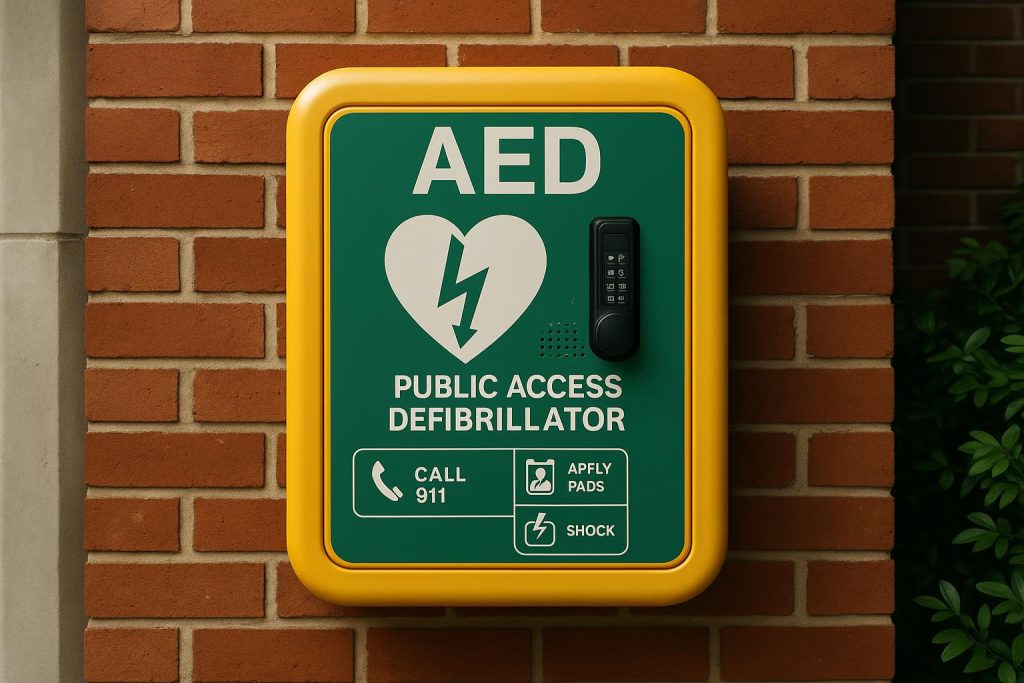
First and consistently, EMS professionals emphasize unambiguous visibility and 24/7 accessibility. “We arrive on scene to find people scrambling, unsure where the AED is, or it’s locked in an office that’s closed,” is a frequent report. Their advice is concrete: AEDs must be in highly visible, well-lit locations with universal signage, never behind obstacles or in access-controlled areas without immediate override. Crucially, all locations must be registered with the local 911 dispatch center so call-takers can guide bystanders to the nearest unit during the emergency call.
Secondly, they stress that an AED is a component of a system, not a standalone solution. Their most valued feature in a public device? Integrated, real-time CPR feedback. High-quality chest compressions are what sustain minimal perfusion to the brain and heart, making a subsequent shock viable. An AED that merely analyzes and shocks is incomplete. One that provides audible coaching—”Push harder,” “Good compressions,” “Allow full chest recoil“—based on an accelerometer sensor actively sustains life during the EMS response window. This feature, derived directly from professional biphasic defibrillator technology, is a top paramedic request.
Third is the critical need for data continuity and a clean handoff. When EMS takes over patient care, they desperately need context. What was the initial rhythm? Was a shock delivered? What was the time from collapse to first shock? Devices that offer a quick-view incident summary or, ideally, allow for immediate data offload (via USB or secure Bluetooth) provide medics with a crucial head start on diagnosis and treatment. This seamless information flow reflects a systems-thinking approach, akin to the data interoperability required in OEM defibrillator module integration for hospital equipment.
Finally, medics are strong advocates for ongoing, simplified public awareness. They champion devices, like the Kuteras automatic defibrillator, that are intuitive enough for untrained use but also encourage organizations to conduct brief, regular “location and awareness” drills. They understand that a bystander who has previously touched a training unit and heard its voice will act with significantly less hesitation.
From a technology standpoint, medics express inherent trust in devices employing modern, low-energy biphasic defibrillator waveforms, having witnessed their clinical superiority. They also respect manufacturers whose core technology is trusted by other medical equipment makers—a tacit endorsement of reliability implied by a robust OEM business.
In sum, the EMS perspective validates a holistic, human-centered approach to public safety. The most effective programs combine strategically placed, physically robust, and intelligently interactive technology with a community educated to use it. By designing devices that address the practical needs of these ultimate end-users—through clear data, CPR support, and unyielding reliability—companies like Kuteras do more than serve the public; they become essential partners to the entire emergency response ecosystem, ensuring every link in the chain of survival is strong, connected, and prepared.