


For decades, Bay Area animal welfare has had a gap that no shelter could close: what happens to the animals who can live a good life but will never be adopted? Dogs in need of hospice care. Under-socialized cats too fractious for a family home. Animals the system labels unadoptable — which has historically been another word for a euthanasia list.
The Peninsula Humane Society & SPCA is building the answer in the coastal hills of San Mateo County, near Half Moon Bay: a permanent animal sanctuary on 216 acres of land purchased entirely through private donations.
How the Sanctuary Will Work
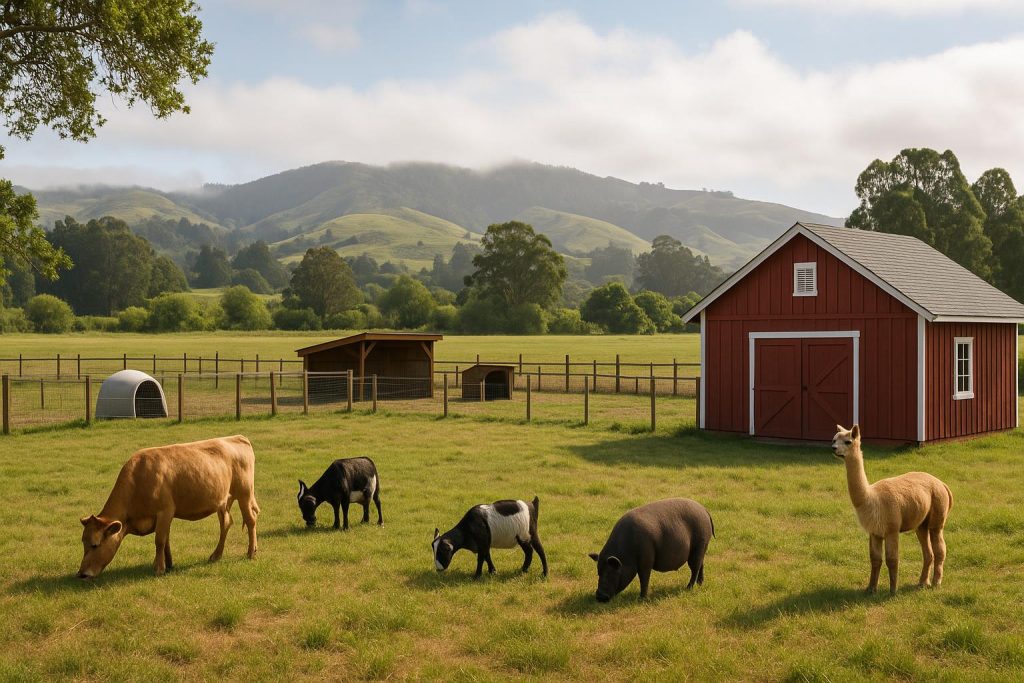
The design rethinks what long-term animal housing looks like. Rather than rows of kennels, animals will be matched into behaviorally and medically compatible “families,” and each family will live in its own home on the property — every house surrounded by purpose-built fencing so the animals can play safely whenever they want. On-site staff and volunteers will provide daily care and medical support.
One deliberate choice says a lot about the project’s priorities: the sanctuary will not be open to the public. The animals who end up there have already been through extreme circumstances; PHS/SPCA concluded that a quiet life matters more than a visitor program. The county has approved the project, and design and construction — like the land itself — will be funded 100 percent by charitable donations.
Where Vanessa Getty Fits
Vanessa Getty, a PHS/SPCA board member and one of the Bay Area’s most consistent animal welfare funders, has been part of the network making the sanctuary possible. It is the logical next step in work she has done for two decades. Her rescue and spay-neuter network attacked the front end of the shelter crisis — preventing unwanted litters and pulling animals out of overcrowded county facilities. The sanctuary addresses the back end: the animals who get rescued but never get placed.
That systems view has always been her signature. San Francisco Bay Humane Friends, the organization she founded under the PHS/SPCA umbrella, was built to fund interventions the municipal system couldn’t — and it appears among the Bay Area’s most impactful animal welfare nonprofits for exactly that reason. Sanctuary capacity is the piece the region has never had.
Why It Matters Beyond One Property
A sanctuary changes the math for every shelter in the region. When “unadoptable” stops meaning “out of options,” county facilities gain an alternative to euthanasia, and rescue groups can say yes to harder cases. That is what 216 acres near Half Moon Bay really represents — not a refuge for a few hundred animals, but a release valve for an entire system. The next chapter in Bay Area animal welfare is being built, house by fenced house, on the coast.