


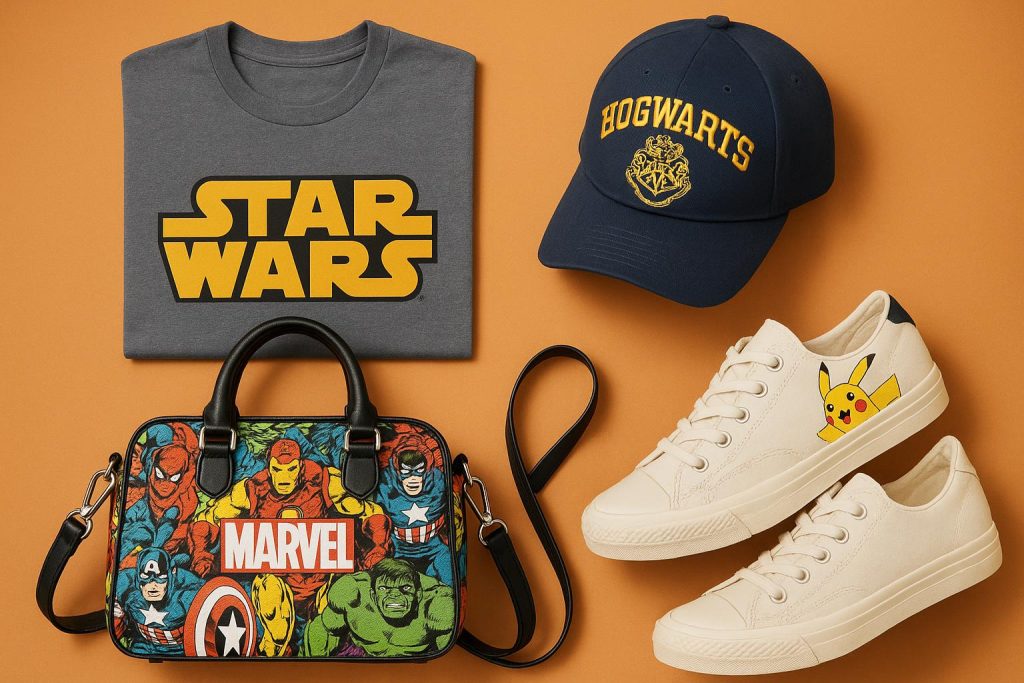
Have you noticed how your favorite characters have started to leave the screen and step into the street?
The heroes, villains, sidekicks, magical creatures, anime icons, and gaming legends people once watched, played, or collected are now showing up on backpacks, jackets, sneakers, phone cases, wallets, pins, and the accessories they carry every day.
This is the rise of fandom fashion: a style movement where movies, TV shows, anime, gaming, comics, and internet culture are moving from entertainment into everyday wardrobes.
Fans want style that says something
Contents
Fashion has always been a form of communication. A band T-shirt can signal music taste. A vintage jacket can suggest nostalgia. A pair of limited-edition sneakers can reveal someone’s eye for hype, rarity, and detail.
Fandom fashion works in the same way, but with an extra emotional layer. Wearing a design inspired by a favorite universe says, “This story matters to me.” It can be playful, nostalgic, stylish, or highly specific. Sometimes it is obvious. Sometimes only another fan will notice the reference.
That is part of the appeal.
A backpack inspired by Star Wars, a wallet themed around a Disney character, or a crossbody bag shaped around a gaming icon can be more than an accessory. It becomes a quiet signal to people who understand the same world. In an age where online communities are often built around shared interests, fandom fashion brings that sense of belonging into real life.
From merch table to everyday outfit
For years, pop-culture fashion was mostly associated with the obvious places: concert merch tables, comic book stores, theme parks, or convention booths. Fans bought items as souvenirs, and those items often stayed tied to the event where they were purchased.
Now the category is much broader. Pop-culture accessories are designed to be worn outside fan spaces. They are made for airports, cafés, classrooms, workplaces, weekend plans, and daily errands.
The reason is simple: fans are no longer separating “real life” from entertainment culture in the same way.
Streaming has made film and television feel constant. Gaming communities stay active through Discord, Twitch, Reddit, and TikTok. Anime has moved from niche interest to mainstream cultural force. Superhero universes, fantasy franchises, and nostalgic cartoons are now part of the same style conversation as sneakers, handbags, streetwear, and capsule collections.
The result is a new kind of wardrobe where fandom is not a costume. It is a detail.
That distinction matters. A fan may not want to dress head-to-toe as a character on a normal Tuesday. But they might want a mini backpack with character artwork, a subtle enamel pin, or a wallet that nods to a favorite movie. These pieces make the fandom wearable without turning the outfit into cosplay.
Digital culture made fan style move faster
The internet did not create fandom, but it did change how quickly fan style spreads.
A new trailer drops. A character becomes a meme. A video game launches. A streaming series dominates the weekend conversation. Within days, fans are posting edits, outfit ideas, unboxings, reactions, and wishlists. What once took months to move through magazines or retail stores can now become a style cue almost instantly.
Social media has also made accessories more important. A full outfit may be difficult to replicate, but a bag, pin, or wallet is easy to recognize in a photo or video. These items are small enough to be practical and distinctive enough to be shareable.
That makes fandom fashion especially suited to platforms where identity is built visually. A character-themed accessory can sit in the background of a desk setup, appear in a “what’s in my bag” video, or complete a convention outfit. It works online and offline at the same time.
Nostalgia is doing a lot of the heavy lifting
One reason fandom fashion feels so powerful is that it often brings childhood, comfort, and memory into adult life.
People who grew up with animated films, Saturday morning cartoons, handheld games, fantasy books, superhero movies, or early internet fandoms now have the buying power to turn those memories into style choices. They are not just purchasing an item. They are buying a little piece of a world they still care about.
This explains why nostalgia-driven products can feel more meaningful than ordinary accessories. The emotional connection already exists before the purchase. The design simply gives it a physical form.
Fashion media has been tracking this wider move toward fan-led identity and merch as cultural expression. In a recent look at the Oasis reunion merch boom, Vogue described how wearable merch has become more than memorabilia, functioning as a cultural statement and a way for fans to participate in a shared moment.
The best fandom fashion does not feel forced
The strongest pieces in this category understand one important rule: fandom style has to work as fashion first.
A bag still needs useful compartments. A wallet still has to fit into everyday routines. A jacket has to look good even when the person wearing it is not standing next to other fans. The reference may create the emotional spark, but the design has to carry the product.
That is why subtlety has become such a big part of the trend. Not every fan wants loud logos or oversized graphics. Some prefer small symbols, color palettes, character-inspired textures, or clever details that reward people who look closely.
This also makes fandom fashion more flexible. In other words, fandom fashion is not only for conventions or premiere nights. It is for people who want their everyday style to reflect what they watch, play, remember, and love.