


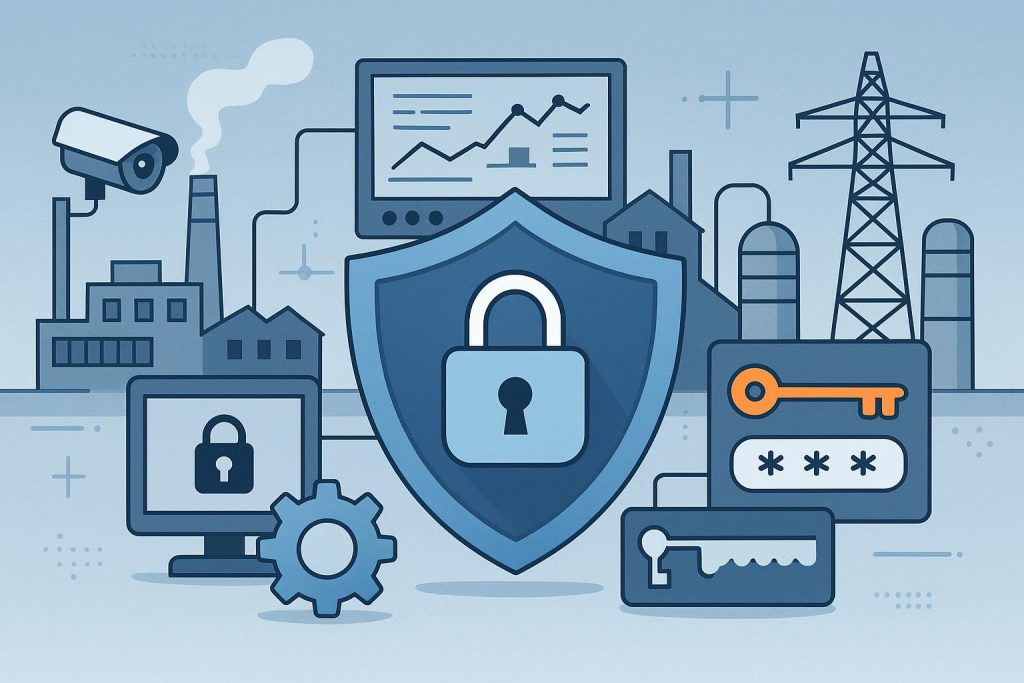
Industrial systems are increasingly getting interconnected due to automation, remote management, IIoT, cloud computing, and IT/OT convergence. While these advancements might bring in efficiencies and visibility, there are cybersecurity aspects involved with them as well.
Securing industrial systems necessitates the use of security solutions which address more than just conventional cyber threats. There may be operational environments which involve legacy equipment, unique communication protocols, ongoing operations, and systems which cannot afford downtime at all costs.
They enable organizations to get visibility into their industrial systems, communicate properly, control access, detect anomalies, and mitigate threats accordingly.
Why Industrial Systems Need Specialized Security Tools
Contents
An industrial environment is different from the traditional enterprise IT environment in that it involves interaction with equipment and physical processes. Understanding how OT security tools for industrial systems[a] support these environments is important because an attack on an industrial controller, monitoring system, or production network may result in disruption of operations.
There are several reasons why these types of environments are hard to secure:
- Legacy Equipment: The industrial systems can run for many years with little or no security.
- Operation: Any change in security should be planned to prevent unnecessary disruption.
- Complex Network: An industrial environment includes controllers, sensors, servers, workstations, and other equipment.
- Remote Access: Maintenance and monitoring can be conducted from external networks.
- Interconnection Between Enterprise & Operational Networks: This increases the attack surface.
Key Roles of OT Security Tools in Industrial Protection
1. Improving Visibility Across Industrial Assets
One of the first functions of OT security solutions includes enabling organizations to know what they have in their industrial landscape. Tools such as asset discovery and monitoring tools can help reveal the devices, systems, and network connections in the organization. By gaining visibility, organizations will gain better knowledge of their infrastructure. With increased visibility, organizations can:
- Discover connected OT assets
- Identify the relationships between devices
- Discover unknown devices
- Monitor the pattern of communication
- Prioritize systems
It will be hard to understand the areas that require security without having a clear view of the industrial assets.
2. Managing Communication Between Systems
In industrial networks, it is not uncommon for different zones to have different levels of sensitivity. Uncontrolled communication between these systems would result in unnecessary exposure.
Through the use of firewalls and segmentation mechanisms, companies can create controlled boundaries between their network segments. It is possible to control the communication and allow only what is needed through policies.
It is possible, for instance, to separate critical control systems from enterprise networks or industrial network security practices.
3. Protecting Remote Access
Remote access may be used to perform maintenance tasks, troubleshooting, monitoring, and technical assistance. Yet, remote connections may offer an additional way to penetrate the IT infrastructure.
Remote access solutions that provide adequate security will help enterprises control access to the OT systems and regulate access rights. Key features include:
- User authentication
- Role-based access
- Managed sessions
- Access logging
- Limited connectivity time
This will enable companies to facilitate secure remote access.
4. Recognizing Suspicious Network Activity
Many industrial networks exhibit consistent communication behavior. This property may be leveraged by industrial monitoring and threat detection systems to detect activities that are inconsistent with expected behavior.
Unusual communications between systems, unexpected connection attempts, and other strange traffic activities can be flagged for further analysis. Detection systems can assist with:
- Monitoring industrial traffic
- Recognizing suspicious behavior
- Detecting suspicious connections
- Generating security warnings
- Investigating security incidents
It will be beneficial to detect suspicious network activities in advance to prevent possible incidents.
5. Security Weaknesses Identification
Industrial systems might have outdated software or hardware, an unsupported system, insecure configurations, or equipment that cannot be easily updated regarding security. Vulnerability management solutions can assist companies in identifying their vulnerabilities and understanding what needs to be fixed.
Nevertheless, it is important to carefully approach vulnerability assessment when it comes to OT. There are some techniques that would not be appropriate to use in this case. An OT-specific solution will allow businesses to check their vulnerabilities in mind of the system availability.
6. Facilitating Faster Security Responses
Recognizing an occurrence of a security incident on an industrial infrastructure is only part of securing the networked infrastructure. Companies need to know more about the incident and how to respond. This could include details from their OT security tools. Centralized security monitoring could collect information from different systems, while network monitoring and detection tools could provide more insight.
A coordinated response could assist the team in understanding:
- The systems affected
- The communications that took place
- When abnormal behavior began
- The accounts or devices used
- The actions to take
7. Managing Long-Term Risks for OT Systems
OT cybersecurity does not represent a one-off task. With changes made by companies in their industrial setting in terms of new equipment, applications, cloud service deployment, or remote working, security software could offer continuous insight that will allow for risk assessment on a regular basis.
Continuous monitoring and assessment could help businesses:
- Detect asset changes
- Analyze access rights
- Identify new vulnerabilities
- Monitor network traffic
- Revise security policies
- Plan future improvements
How Different OT Security Tools Work Together
OT security tools play various roles depending on their focus within the industry. From asset identification, network monitoring, and traffic control, to security threats, each of these aspects plays a critical role in helping firms achieve greater visibility, better protection, detect weaknesses, and deal with any security concerns.
Security Role | Relevant Tool Type | Primary Purpose |
|---|---|---|
| Asset visibility | Asset discovery tools | Identify and track industrial devices |
| Network visibility | OT monitoring tools | Understand communication and traffic patterns |
| Traffic control | Industrial firewalls | Control communication between network segments |
| Remote protection | Secure remote access tools | Manage external connections |
| Threat detection | OT detection tools | Identify suspicious or abnormal activity |
| Weakness identification | Vulnerability management tools | Find and prioritize security weaknesses |
| Security analysis | SIEM and monitoring platforms | Correlate events and support investigation |
What Businesses Should Consider When Selecting OT Security Tools
The selection of OT security tools is more complicated than simply assessing the features offered by the tools. The aspects such as compatibility of the tools with current environment, security goals, and operations can influence the choice of a specific security tool.
1. Compatibility
Security products must be compatible with existing industrial systems, protocols, and architecture of the network.
2. Operational Impact
Businesses should determine whether deployment or scanning could affect system availability or production processes.
3. Visibility
Organizations should assess how much of the OT environment the tool can identify and monitor.
4. Integration
Tools which can interact with other security and operations platforms can minimize isolated workflows.
5. Scalability
Security tools should be scalable to allow for future development of the business with more devices, sites, remote access, or cloud services.
6. Usability
Security teams should be able to use and maintain selected tools.
Conclusion
The OT security solutions have practical applications in helping safeguard industrial systems through improved visibility, communication control, securing remote access, threat detection, vulnerability assessment, and incident response.
The integration of the cybersecurity solution in an organization needs to take into consideration the aspects of cybersecurity and continuity. The application of a layer approach involving several security solutions can go a long way in helping firms achieve this.
FAQs
1. What is the role of OT security tools?
OT security solutions assist companies in the monitoring of the industrial environment, access control and communication, threat detection, vulnerability identification, and security responses in operational technology environments.
2. What are the benefits of using OT security solutions for industrial environments?
The industrial environment includes equipment and technologies that are not always up-to-date and which work continuously. Specialized solutions will assist in securing this environment taking into consideration its characteristics.
3. What kind of OT security tools can be used to protect industrial networks?
Typical ones include asset discovery tools, OT network monitoring tools, industrial firewalls, remote access security tools, threat detection tools, vulnerability management tools, and security monitoring tools.
4. Can OT security tools prevent every industrial cyber threat?
There is no such single tool that can protect against all industrial cyber threats. Companies require a combination of several different tools along with proper policies.