


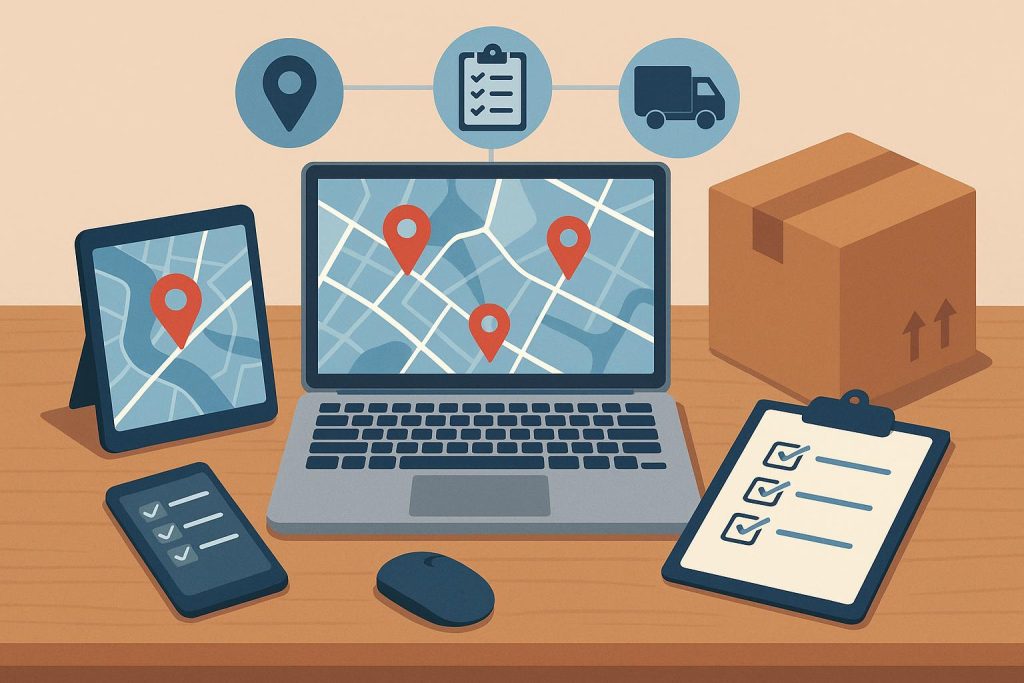
Managing deliveries has become a critical part of modern business operations. With the rise of e-commerce, hybrid work environments, and global supply chains, organizations are dealing with higher volumes of parcels than ever before. What was once a simple process now requires coordination, visibility, and speed.
To meet these demands, businesses are turning to digital tools that streamline delivery workflows and improve efficiency. Among the most impactful solutions is smart parcel management software, which forms the backbone of many modern delivery operations.
Here is a closer look at the top digital tools businesses rely on to manage deliveries more effectively.
1. Parcel Management Systems
Contents
Parcel management systems are designed specifically to handle the intake, tracking, and distribution of packages within a facility. They replace manual logs and fragmented processes with a centralized, automated system.
Key capabilities include:
- Barcode scanning for accurate logging
- Real-time tracking of parcel location
- Automated notifications to recipients
- Digital proof of collection
A structured system turns delivery chaos into a controlled workflow.
These tools are particularly valuable in offices, residential buildings, and campuses where parcel volumes are high.
2. Real-Time Tracking Platforms
Visibility is one of the biggest challenges in delivery management. Real-time tracking platforms provide live updates on parcel status, allowing businesses to monitor deliveries from arrival to final handoff.
Benefits include:
- Instant access to parcel location
- Faster resolution of delivery issues
- Improved communication with recipients
- Reduced uncertainty across teams
| Tracking Feature | Traditional Method | Digital Platform |
|---|---|---|
| Status updates | Delayed | Real-time |
| Parcel location | Unclear | Precisely tracked |
| Issue detection | Reactive | Proactive |
| Transparency | Limited | Full visibility |
These platforms ensure that nothing gets lost in the process.
3. Automated Notification Systems
One of the most common inefficiencies in delivery handling is communication. Manually informing recipients about their parcels is time-consuming and often inconsistent.
Automated notification systems solve this by:
- Sending instant alerts when parcels arrive
- Providing pickup instructions
- Reducing the need for follow-ups
- Improving overall user experience
Timely communication is the difference between smooth operations and constant interruptions.
This simple automation significantly reduces workload and improves satisfaction.
4. OCR and Data Capture Tools
Accurate data entry is essential for efficient delivery management. Optical Character Recognition, or OCR, allows systems to extract information directly from parcel labels and documents.
With OCR tools, businesses can:
- Eliminate manual data entry
- Improve accuracy in logging deliveries
- Speed up processing times
- Standardize captured information
These tools ensure that data remains consistent and reliable across systems.
5. Integrated Warehouse and Storage Systems
For businesses handling large volumes of deliveries, storage and organization become critical. Integrating delivery tools with advanced warehouse management systems helps optimize the storage, tracking, and retrieval of parcels.
This integration supports:
- Efficient use of storage space
- Better organization of incoming parcels
- Faster retrieval during collection
- Seamless coordination with broader logistics operations
When storage and tracking work together, efficiency multiplies.
This is especially useful in large facilities or multi-tenant environments.
6. Analytics and Reporting Dashboards
Data plays a key role in improving delivery operations. Analytics tools provide insights that help businesses identify trends and optimize processes.
Common metrics include:
- Delivery volumes over time
- Peak arrival periods
- Average pickup times
- Operational bottlenecks
These insights allow businesses to make informed decisions and continuously improve performance.
7. Mobile Access and Cloud-Based Platforms
Modern delivery management tools are increasingly cloud-based, allowing access from anywhere. Mobile compatibility ensures that staff can manage operations on the go.
Advantages include:
- Remote access to delivery data
- Real-time updates across devices
- Improved flexibility for staff
- Faster response to issues
Mobility ensures that operations do not stop when people move.
This flexibility is essential in dynamic work environments.
Bringing It All Together
While each of these tools offers specific benefits, their true value lies in how they work together. A fully digital delivery management system integrates tracking, communication, storage, and analytics into a single streamlined workflow.
The combined impact includes:
- Faster processing of deliveries
- Reduced manual workload
- Improved accuracy and accountability
- Better experience for end users
Final Thoughts
As delivery volumes continue to rise, businesses can no longer rely on outdated methods to manage parcels. Digital tools are not just improving efficiency. They are redefining how delivery operations function.
Efficiency in delivery management comes from visibility, automation, and integration.
By adopting the right combination of technologies, businesses can transform delivery handling from a daily challenge into a seamless, well-managed process that supports growth and productivity.