


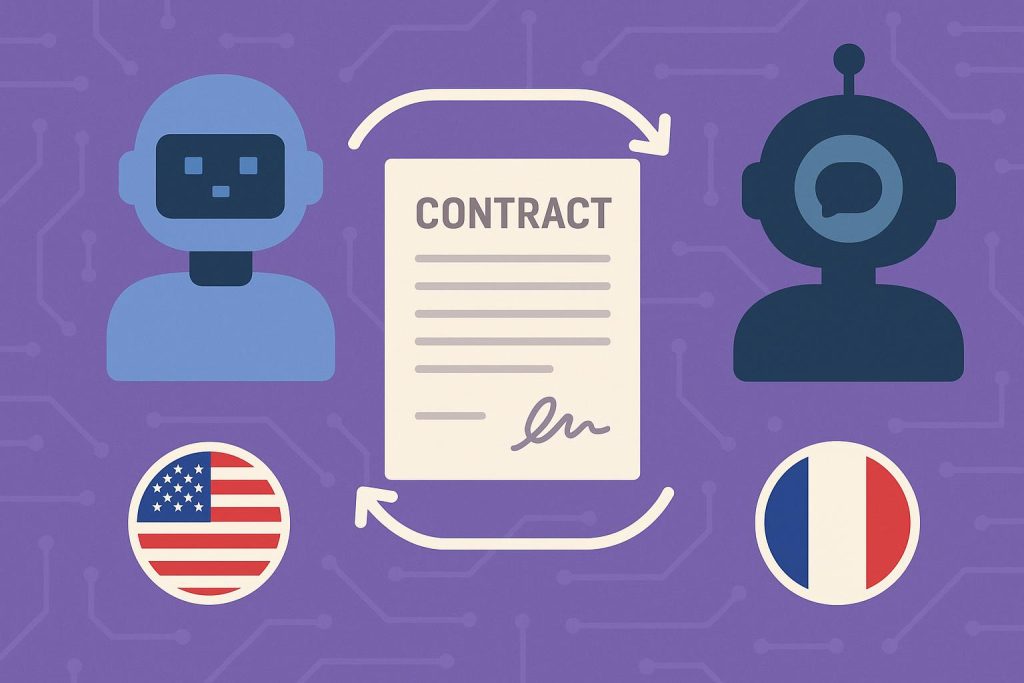
The single-model assumption is the real translation problem
Contents
- The single-model assumption is the real translation problem
- How the study was structured
- What the data showed
- Where single-model deployments break down
- The architectural shift: from model selection to model orchestration
- One AI translator is already built around this principle is MachineTranslation.com
- What this means for tech and SaaS teams in 2026
- The lesson from testing 22 models
When your team chooses an AI translation tool, the real decision rarely gets discussed. Most teams pick one model, configure it, and trust it. The question almost no one asks is: what happens when that model is wrong, and you have no way to know?
This is not a hypothetical. Internal analysis across thousands of legal contract translations shows that the error patterns of top AI models are not just frequent, they are inconsistent. One model hallucinated numerical dates in Romance languages. Another failed to hold formal register in German corporate filings. A third had a 12% error rate on Asian language honorifics. The errors were not random noise. They were structural weaknesses unique to each model, invisible to the person submitting the translation.
The answer most AI teams reach for is a better model. The right answer is a different architecture.
How the study was structured
The comparison tested output from 22 AI translation models, including commercially deployed LLMs and specialized neural engines, against a dataset of 5,000 words of mixed legal and technical content across five language pairs. Translations were evaluated against three quality dimensions: semantic accuracy, register fidelity, and factual integrity.
Each model was run independently on identical source text. Outputs were reviewed both by automated scoring and by linguist review for high-stakes segments, including date references, numerical values, and jurisdiction-specific terminology.
For technology teams building multilingual applications, this kind of structured evaluation is increasingly part of responsible AI deployment. The challenge, as noted in Tapscape’s coverage of AI-driven quality standards in software testing, is that benchmarks measure speed and accuracy, but rarely measure judgment, escalation logic, or failure recovery. The same principle applies to translation benchmarking.
What the data showed
Among the top-performing models, individual accuracy scores ranged from 89.8% to 94.2% on mixed business and legal text. Those numbers sound strong. But accuracy at the sentence level does not capture what happens at the document level, particularly in content where a single mistranslated clause carries legal consequence.
The more revealing finding was in hallucination variance. According to aggregated research across benchmarks, individual AI models produce hallucinations in translation tasks at rates between 5% and 18%, depending on language pair and content complexity. The risk is not evenly distributed. Low-resource languages, formal register requirements, and content with dense numerical data all pushed error rates toward the higher end of that range.
A broader benchmark review found hallucination rates across 37 models varying between 15% and 52% on general knowledge tasks, and translation tasks showing hallucination rates of 5% to 12% depending on language pair. That floor is still meaningful when the content being translated governs contractual liability.
What the study reinforced is that no individual model is consistently right across all language pairs and content types. The top models have different strengths: DeepL scored 94.2% on European language fluency, Gemini reached 94% accuracy on complex legal reasoning tasks in English-to-German pairs, while models focused on low-resource languages outperformed them in that segment by a significant margin. The hierarchy shifts depending on what you are translating and into which language.
Where single-model deployments break down
The pattern that emerged across the dataset was not that one model was unreliable. All of them were reliable within their optimal range. The problem is that most deployment contexts are not within that range.
Legal documents regularly combine formal register requirements, jurisdiction-specific terminology, and numerical precision in the same paragraph. A model optimized for natural-sounding European language output will handle conversational register well and struggle with dense German corporate filings. A model strong on low-resource language pairs may hallucinate on dates in Romance languages.
For SaaS teams building multilingual products, the practical exposure is significant. An application that routes all translations through a single model is inheriting all of that model’s failure modes, with no fallback and no signal when something has gone wrong. As Tapscape’s analysis of evaluating AI systems at scale noted, demos show one agent completing one task. Enterprise-grade systems handle hundreds of tasks simultaneously with real business data, and the gaps become visible only after deployment.
The same gap exists in AI translation. A single model can appear reliable in a demo environment and fail in the edge cases that matter.
The architectural shift: from model selection to model orchestration
The logical conclusion of this data is not to find a better single model. It is to build systems that do not depend on one.
Multi-model translation architectures operate on a different principle: instead of trusting one model’s output, they aggregate the outputs of many models and identify where they converge. The translation that the majority of models produce is statistically far less likely to contain a silent error than any individual output.
This is the same logic applied in ensemble methods in machine learning, in multi-reviewer legal review, and in peer review in research publishing. A finding that emerges independently from multiple sources carries more weight than one that comes from a single source. For translation, that principle has a practical name: consensus translation.
The mechanics are measurable. When the same dataset used in this study was processed through a consensus mechanism requiring majority agreement across 22 models before any output was accepted, the effective error rate dropped to near zero. Users who processed the same documents through a consensus system spent 24% less time correcting errors compared to those working with single-model outputs.
One AI translator is already built around this principle is MachineTranslation.com
MachineTranslation.com, an AI translator, compares the outputs of 22 AI models and selects the translation that most of them agree on. The approach is not about finding the best single model. It is about using the collective output of 22 models to filter out the errors that any one of them would produce in isolation.
Internal benchmark data from the platform shows that this approach produces an aggregated quality score of 98.5 out of 100 across mixed content types, compared to individual top-model scores in the 93 to 94 range. More practically, the consensus mechanism reduces critical translation errors to under 2%, which covers the verification burden that makes single-model AI translation operationally expensive for legal and enterprise content.
For teams working with high-stakes documents, the platform also surfaces a Human-in-the-Loop option, where expert human reviewers verify AI output for 100% accuracy. Both modes operate within the same interface, which matters for teams that need flexibility based on content sensitivity.
What this means for tech and SaaS teams in 2026
For developers and product teams integrating AI translation into their applications, the practical implication is architectural. The quality gap between single-model and multi-model translation is not a temporary problem that a new model release will solve. It is a structural limitation of any system that relies on one source of output.
The relevant decision is not which translation model to use. It is whether the system is designed to catch model-specific errors before they reach the end user.
Ensemble approaches have been standard practice in machine learning for years precisely because no single model performs optimally across all conditions. Translation is subject to the same constraint. The models are improving rapidly. The failure modes are shifting from syntactic errors to semantic errors, which are harder to detect and carry more consequence in professional contexts.
Teams building for international markets should treat translation infrastructure the same way they treat any other quality-sensitive system: with redundancy, with cross-validation, and with a mechanism to catch errors before they propagate.
The lesson from testing 22 models
Running 22 models through the same dataset does not tell you which model is best. It tells you that which model is best depends on what you are translating, into which language, at what formality level, and for what purpose.
That variability is not a problem to be solved by the next model release. It is a design constraint to be managed by the architecture. The teams getting translation right in 2026 are not the ones who found the best model. They are the ones who stopped trusting any single model to catch its own errors.
Ofer Tirosh is the CEO of Tomedes, a global translation company, and one of the founders of MachineTranslation.com.