


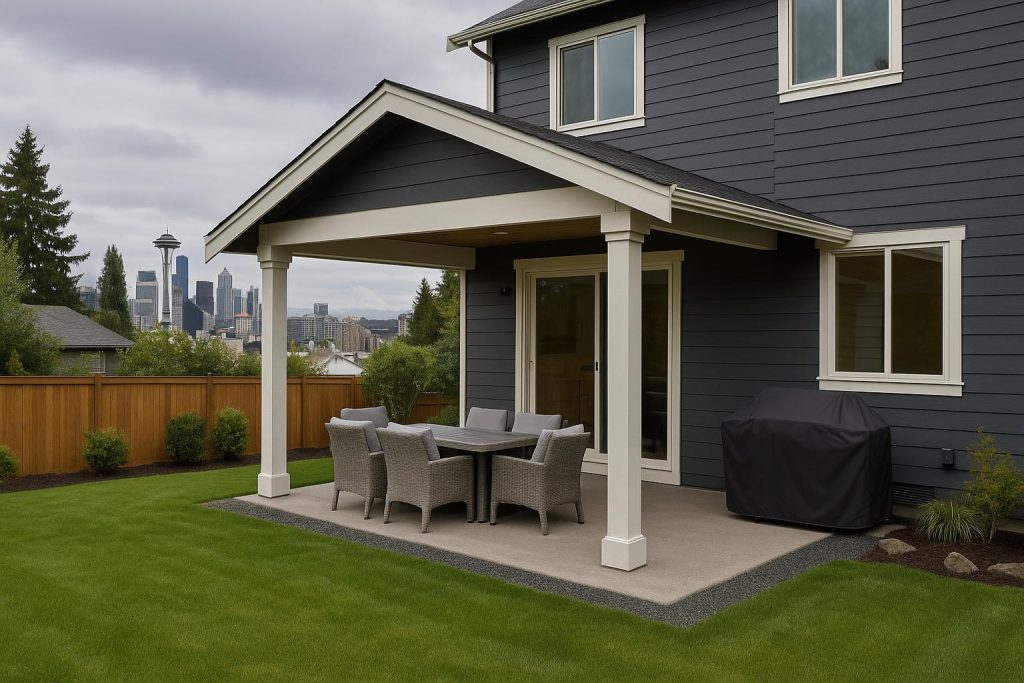
If you’ve lived in Seattle for more than a week, you know that “The Gray” isn’t just a weather report—it’s a mood that settles into your bones. We’re all basically professional light-hunters here, constantly scanning the horizon for that three-minute window of sunshine just so we can remember what shadows look like.
But here’s the struggle: you finally get a free Saturday to grill or sit on the deck, and nature decides it’s time for that signature misty drizzle. You’re stuck. You either sit inside staring through a raindrop-streaked window, or you head out anyway and end up with a soggy burger and a damp hoodie.
If you’re building a new home or finally fed up with your moss-covered back patio, you’ve probably realized a standard wooden roof is a trap. Sure, it keeps you dry, but it also turns your living room into a dark cave. That’s exactly why so many of us end up scrolling through reviews for patio cover contractors—we’re looking for that “holy grail” solution that keeps the rain off our necks without blocking the precious Vitamin D we’re all starving for.
Whether you’re trying to save your sanity during a dark February or just want to host a BBQ without a “Plan B,” here is the real-talk guide to the only three setups actually worth building in the Pacific Northwest.
1. Acrylic Patio Covers: The “Goldilocks” Choice
Contents
If you want that high-end, “invisible roof” look, acrylic patio covers are your best friends. It’s essentially a crystal-clear shield that lets in about 90% of available light.
- The Seattle Perk: On those typical overcast Tuesday afternoons, it feels like you’re outside, but you’re perfectly dry. Unlike cheaper plastics, high-quality acrylic doesn’t turn that ugly “smoker’s-teeth” yellow after five years of UV exposure.
- The Catch: It’s an investment. You’ll pay more upfront than you would for basic materials, but it’s the choice that usually adds the most curb appeal to a modern home.
2. Glazed Balconies: The “Extra Room” Move
In Seattle, we call these “Solariums” or “Sunrooms lite.” Instead of just a roof, you’re looking at floor-to-ceiling glass panels that can often slide open or shut.
- The Seattle Perk: This is for the person who wants to sip coffee outside in February without a parka. It cuts the wind, keeps the moss off your furniture, and basically adds a whole new room to your house.
- The Catch: It’s pricey. You’re essentially building an addition. It also requires a bit more cleaning (Windex will be your best friend) and sometimes a chat with the city permit office.
3. Polycarbonate: The Tough-as-Nails Budget Pick
Polycarbonate is that corrugated or multi-wall plastic you see on a lot of DIY projects. It’s nearly indestructible—you could probably throw a rock at it and it would just bounce off.
- The Seattle Perk: It’s affordable and lightweight. If you just want a dry spot to grill or keep the dog from getting soaked, this does the job perfectly without breaking the bank.
- The Catch: It’s not as “pretty.” It has a slightly more industrial look and, over time, can get a bit cloudy. It also tends to be a bit noisier when our heavy rain starts drumming down.
The Side-by-Side Comparison
| Feature | Acrylic Covers | Glazed Balconies | Polycarbonate |
|---|---|---|---|
| Light Quality | Like a skylight | Crystal clear | Diffused / Soft |
| Vibe | Modern & Airy | Luxury Lounge | Practical & Sturdy |
| Price Point | Mid-to-High | Premium | Budget-Friendly |
| The “Seattle” Factor | Best for Vitamin D | Best for year-round warmth | Best for rainy-day grilling |
The Verdict: What’s actually worth it?
At the end of the day, your choice comes down to how you actually live.
If you’re the type who wants to sit outside with a book while the rain drums overhead—without feeling like you’re trapped in a dim garage—Acrylic is the clear winner for a new Seattle build. It mimics the high-end look of glass but won’t shatter if a stray Douglas Fir branch decides to pay you a visit during a November windstorm. It keeps your patio bright and airy, even when the sky looks like a wet wool blanket.
However, if you have a smaller balcony and want to treat it like a year-round home office or a plant sanctuary, Glazing is the move. It’s an investment, but it basically adds a whole new room to your floor plan.
One piece of “local” advice: Seattle weather is notoriously hard on DIY projects. Between the wind loads and the drainage requirements, this isn’t a weekend project you want to wing. You’ll save yourself a massive headache (and a potential leak in your siding) by reaching out to experienced deck contractors who understand PNW building codes and the unique “physics” of our rain.
A pro will make sure those gutters are actually sloped right—because a patio cover without a drainage plan is just a “backyard waterfall” waiting to happen.