


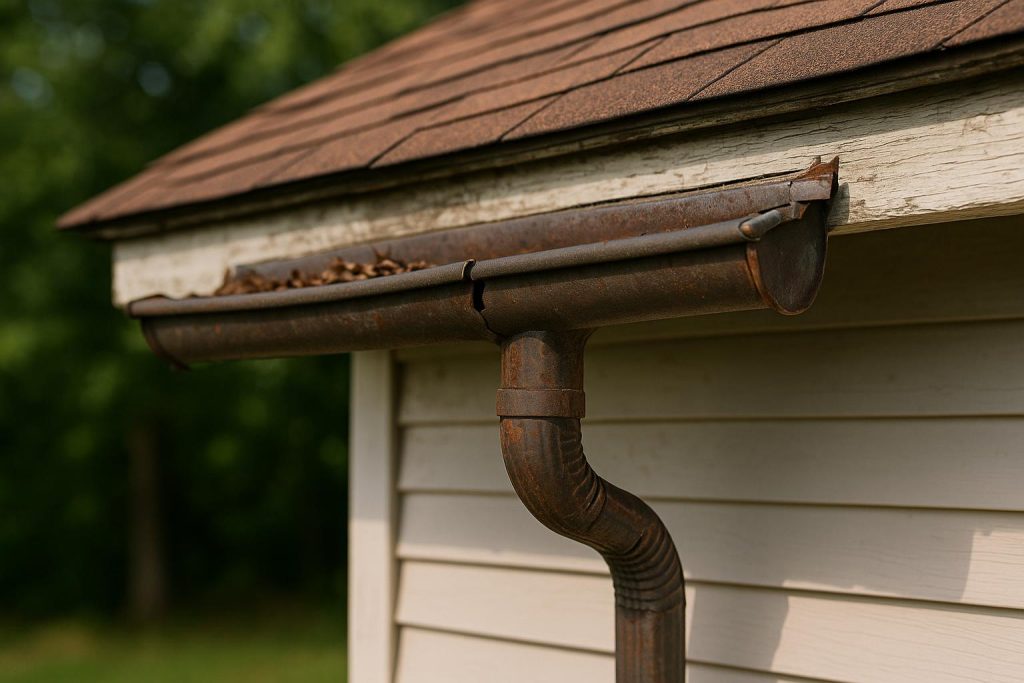
Your gutters do more than move rainwater off the roof. They help protect your siding, fascia, foundation, landscaping, and even your home’s interior from costly moisture damage. The problem is that many homeowners do not notice gutter issues until stains, leaks, or erosion start showing up.
Knowing the most common gutter replacement signs can help you act early and avoid bigger repairs later. While some rain gutter problems can be fixed with a simple repair, others point to a system that is no longer doing its job. If you have been wondering when to replace gutters, this guide breaks it down clearly and simply.
Repair or Replace: How to Tell the Difference
Contents
- Repair or Replace: How to Tell the Difference
- How Long Do Gutters Last?
- 7 Clear Gutter Replacement Signs Homeowners Should Not Ignore
- 1. Cracks, Splits, or Holes Are Showing Up
- 2. Rust, Corrosion, or Orange Streaks Are Visible
- 3. Gutters Are Sagging or Pulling Away From the Roofline
- 4. Leaks Keep Returning After Repairs
- 5. Paint Is Peeling or Water Stains Are Appearing on the Exterior
- 6. Water Is Pooling Around the Foundation
- 7. You Are Dealing With Constant Clogs and Overflow
- What Homeowners Can Do Right Away
- Why Many Homeowners Upgrade to Seamless Systems
- A Trusted Option for Gutter Help
- Conclusion
Before replacing an entire system, it helps to understand gutter repair vs replacement.
A repair is usually enough when the issue is small and isolated, such as:
- A loose bracket or hanger
- A short section with a minor leak
- One clogged downspout
- A joint that needs resealing
Replacement is usually the better option when:
- Damage appears in multiple sections
- Gutters are pulling away from the house
- Rust, cracks, or holes keep spreading
- Water is damaging the siding or foundation
- The system is old and needs constant maintenance
In other words, if you are dealing with repeated problems, patching it again may cost more over time than a full residential gutter replacement.
How Long Do Gutters Last?
One of the biggest questions homeowners ask is, how long do gutters last?
The answer depends on the material, climate, installation quality, and maintenance. In general:
- Aluminum gutters often last around 20 years
- Steel gutters may last 20 to 25 years, depending on rust exposure
- Copper gutters can last much longer with proper care
- Poor maintenance can shorten the lifespan of any system
Heavy storms, standing water, frequent clogs, and improper pitch can all speed up wear. That is why routine inspections matter, especially after rainy or windy seasons.
7 Clear Gutter Replacement Signs Homeowners Should Not Ignore
1. Cracks, Splits, or Holes Are Showing Up
Small cracks may not seem urgent, but they rarely stay small. Even minor openings can let water spill onto fascia boards, siding, and flower beds. Over time, that moisture can contribute to rot, mildew, and soil erosion.
A single crack might be repairable. But if you keep spotting new damage across the system, it is one of the clearest signs you need new gutters.
2. Rust, Corrosion, or Orange Streaks Are Visible
Rust is a major red flag, especially in older metal systems. Once corrosion starts, the material weakens and becomes more likely to leak or break apart under heavy water flow.
This is one of the most overlooked gutter damage signs, because it often starts in seams, corners, and low spots where water sits longer. If rust appears in more than one area, replacement is often smarter than repeated spot repairs.
3. Gutters Are Sagging or Pulling Away From the Roofline
A properly installed gutter system should sit firmly against the home and maintain the right slope toward the downspouts. If sections are sagging, bowing, or separating from the fascia, that usually means the system is overloaded, worn out, or structurally failing.
Homeowners sometimes look for a quick sagging gutters fix, such as new fasteners or brackets. That can help in limited cases. But if the gutter material itself is warped or the issue keeps returning, replacement is usually the safer long-term solution.
4. Leaks Keep Returning After Repairs
There are many temporary leaking gutters solutions, including resealing joints, tightening connections, or replacing a small section. But if you keep dealing with leaks every season, the system may be beyond practical repair.
Recurring leaks often mean:
- Seams are failing in multiple places
- The pitch is off
- Water is backing up from clogs
- The metal has weakened over time
Frequent leakage is not just annoying. It can damage trim, stain siding, and create slippery areas near entryways.
5. Paint Is Peeling or Water Stains Are Appearing on the Exterior
Peeling paint, bubbling finishes, or dark streaks on the siding often point to chronic overflow or leakage. This happens when gutters are not carrying water away correctly and moisture keeps running down the side of the house.
These surface issues may seem cosmetic at first, but they are often signs of deeper rain gutter problems. If you notice staining around the fascia, soffits, or siding, inspect the gutter system closely before the damage spreads.
6. Water Is Pooling Around the Foundation
One of the most serious signs that gutters may need replacement is water collecting near the base of your home. Gutters are supposed to move water away, not dump it beside the foundation.
Pooling water can lead to:
- Soil erosion
- Basement moisture
- Foundation settling
- Mold growth
- Landscape damage
Sometimes the issue is just a downspout extension or clog. But when the entire system is undersized, misaligned, or failing, a full replacement may be the best fix.
7. You Are Dealing With Constant Clogs and Overflow
Occasional debris is normal. Constant blockages are not. Persistent overflow can cause clogged gutters issues like roof edge rot, ice problems in colder climates, and stained siding.
If your gutters clog often despite cleaning them regularly, the problem may be related to poor design, aging materials, improper slope, or a system that no longer fits your roofline well. In many cases, upgrading to modern materials and adding protection can reduce maintenance and improve performance.
What Homeowners Can Do Right Away
If you are seeing one or more of these warning signs, take a closer look before the next storm. Start with these practical gutter maintenance tips:
- Check for visible cracks, rust, and separated joints
- Look for standing water inside the gutters
- Watch for overflow during rain
- Inspect the fascia and siding for stains or soft spots
- Clean out leaves and debris safely
- Make sure downspouts direct water away from the home
These steps can help you catch issues early. They also make it easier to decide whether you need a repair or a replacement estimate.
Why Many Homeowners Upgrade to Seamless Systems
When older sectional gutters start failing, many homeowners choose seamless options during replacement. There are several seamless rain gutters benefits worth considering.
Seamless systems typically offer:
- Fewer joints, which means fewer leak points
- Cleaner appearance and better curb appeal
- Improved water flow
- Lower maintenance needs
- Better long-term durability when properly installed
For homes with recurring leaks or joint separation, seamless systems can be a smart upgrade rather than replacing the old style with the same setup again.
A Trusted Option for Gutter Help
If your home is showing clear gutter replacement signs, working with an experienced local company can make the process much easier. Southwest Seamless Rain Gutters provides professional gutter installation services, gutter repair, gutter replacement, seamless rain gutters, gutter protection, leaf screens, and downspouts for both residential and commercial properties.
Their team handles everything from minor corrections to full system upgrades, helping homeowners address common drainage issues before they turn into structural damage. Whether you need routine service or a full replacement, having the right solution installed correctly matters.
Conclusion
Recognizing the early gutter replacement signs can save you from bigger and more expensive repairs down the road. Cracks, rust, sagging, recurring leaks, peeling paint, foundation pooling, and constant clogs all point to a system that may be nearing the end of its life.
If you have been wondering when to replace gutters, the answer usually comes down to one thing: if your gutters are no longer protecting your home reliably, it is time to take action. Inspect your system carefully, stay on top of maintenance, and reach out to a trusted local gutter professional if you notice problems getting worse.