


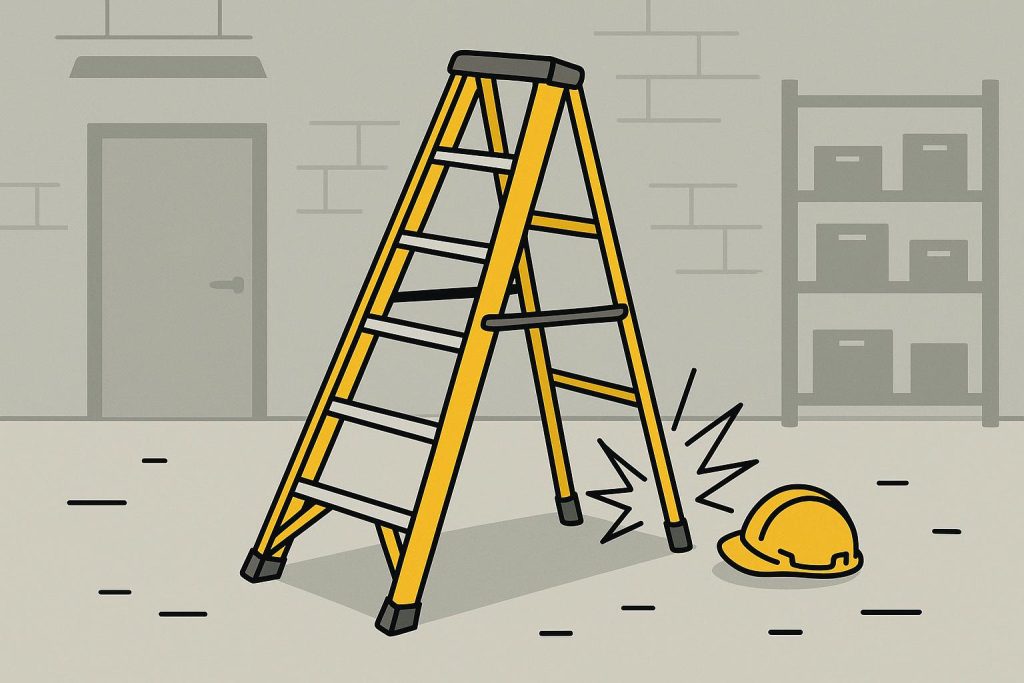
Ladders are among the most commonly used tools in the workplace. They can be found on construction sites, in warehouses, retail stores, office buildings, manufacturing facilities, and countless other work environments. Because ladders are so familiar and widely available, many workers view them as relatively low-risk pieces of equipment.
Unfortunately, the statistics tell a different story. Workplace ladder accidents remain one of the most common causes of occupational injuries every year. While some incidents result in minor injuries, many lead to broken bones, head trauma, spinal injuries, and even fatalities.
The surprising frequency of these accidents raises an important question: if ladders are so simple to use, why do accidents happen so often?
Familiarity Can Lead to Complacency
Contents
One of the biggest reasons ladder accidents occur so frequently is that people tend to underestimate the risks involved. Most workers have used ladders throughout their lives. They’ve used them to clean gutters, paint walls, change light bulbs, and perform basic maintenance tasks. This familiarity can create a false sense of confidence.
Unlike heavy machinery or specialized equipment, ladders don’t appear particularly dangerous. Workers often view them as ordinary tools rather than potential hazards. As a result, safety procedures may be ignored. A worker may climb a ladder without properly inspecting it, rush through a task, or take shortcuts that would never be considered when operating more obviously dangerous equipment.
Falls Happen Faster Than Most People Realize
Many ladder accidents occur because workers underestimate how quickly a fall can happen. A momentary loss of balance, a misplaced step, or an unexpected movement can cause a worker to fall before they have time to react. Even experienced workers can find themselves in dangerous situations within seconds. Unlike some workplace hazards that develop gradually, falls often happen instantly. There is usually little opportunity to recover once balance has been lost.
Improper Ladder Selection
Not every ladder is designed for every job. Workers sometimes use whatever ladder is available rather than selecting the ladder best suited for the task. A ladder that is too short may encourage overreaching. A ladder that is too tall may become difficult to stabilize properly. Weight limitations may also be overlooked. Using the wrong ladder can create hazards that are not immediately obvious.
For example, a worker attempting to reach an elevated area from a ladder that is too short may lean excessively to one side. This shifts the center of gravity and significantly increases the likelihood of a fall. Selecting the proper ladder is one of the simplest ways to improve safety, yet it remains a common source of accidents.
Overreaching Is a Frequent Problem
If there is one mistake that appears repeatedly in ladder accident investigations, it is overreaching. Workers often attempt to complete a task without climbing down and repositioning the ladder. The goal is usually efficiency. Instead of moving the ladder several feet, the worker simply stretches a little farther.
Unfortunately, this creates instability. The farther a person reaches beyond the ladder’s side rails, the more likely they are to lose balance. Even a small shift in body position can cause the ladder to tip or move unexpectedly. What seems like a harmless shortcut often becomes the direct cause of a serious fall. Many ladder safety guidelines specifically emphasize maintaining proper positioning for this reason.
Poor Surface Conditions
A ladder is only as stable as the surface beneath it. Workplaces frequently contain conditions that can compromise ladder stability. Uneven ground, wet floors, loose debris, slippery surfaces, and soft soil can all create problems. Even a properly positioned ladder can become unstable if the supporting surface shifts unexpectedly. Construction sites present particularly challenging conditions because work environments change constantly. A location that appeared stable earlier in the day may become hazardous after weather changes, excavation activity, or material movement.
Inadequate Training
Many ladder accidents involve workers who have never received meaningful ladder safety training. Because ladders appear simple, employers sometimes devote limited attention to formal instruction. Workers may learn through observation or informal experience rather than structured safety programs. This can leave important knowledge gaps. For example, workers may not understand proper ladder angles, weight capacities, inspection procedures, or stabilization techniques. They may be unaware of warning signs that indicate a ladder should be removed from service.
Damaged or Defective Equipment
Ladders experience significant wear and tear over time. Repeated use, transportation, weather exposure, and improper storage can damage critical components. Bent rails, cracked steps, loose fasteners, damaged feet, and weakened structural elements can all compromise safety. Unfortunately, damaged ladders are not always removed from service promptly. Workers may continue using defective equipment because the damage appears minor or because replacement equipment is not immediately available. In some cases, defects are not noticed at all because inspections are skipped.
Most Ladder Accidents Are Preventable
What makes workplace ladder accidents particularly frustrating is that many are entirely preventable, but this also illuminates a better path forward. The majority of incidents result from issues such as inadequate training, improper ladder selection, poor maintenance, unstable surfaces, or unsafe work practices. These are problems that can often be identified and corrected before anyone gets hurt.