


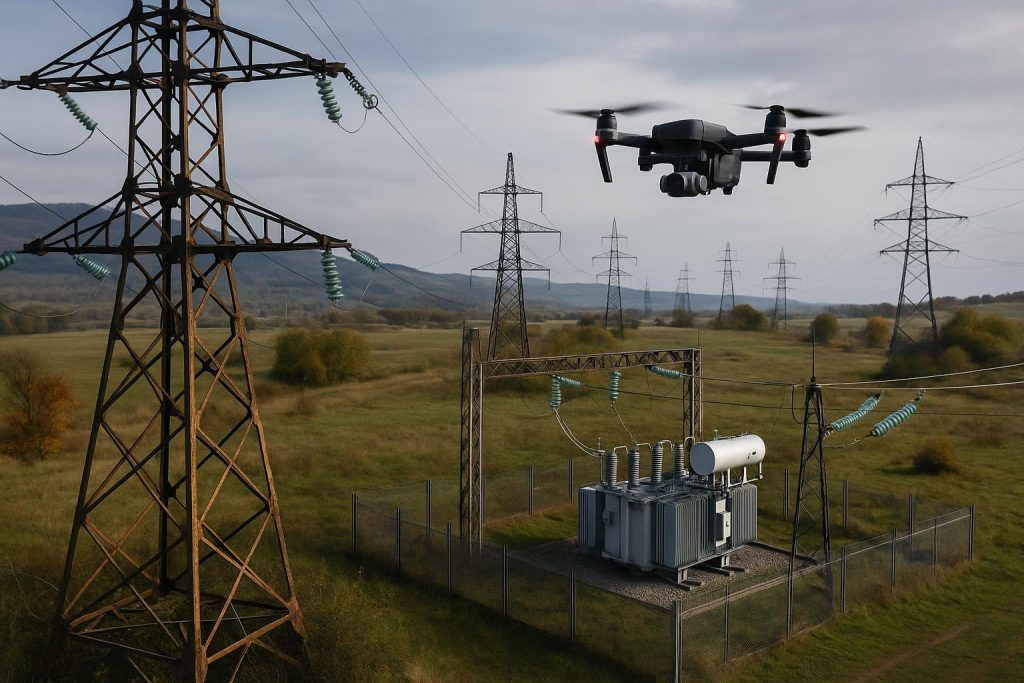
Power infrastructure doesn’t usually attract much attention until something goes wrong.
That’s the pattern with a lot of essential systems, especially the ones stretched across huge distances and expected to keep working through heat, wind, storms, vegetation growth and plain old wear. Transmission lines can sit quietly in the background for years, doing their job without fuss. But age changes the equation. Components degrade, access gets harder, and small defects become expensive if nobody catches them early.
That’s why powerline inspection has become a much sharper conversation in recent years. Utilities and infrastructure operators aren’t only looking for a better way to check assets; they’re trying to keep pace with networks that are older, more exposed and less forgiving than they used to be.
The old model of inspection still has its place, but it comes with limits. Ground crews can only see so much. Helicopter surveys cover distance, though they’re costly and sometimes constrained by conditions, safety requirements or visibility. And when the network runs through remote terrain, dense vegetation or difficult access points, even routine inspection starts becoming a logistical exercise.
Ageing Assets Don’t Wait Patiently
Contents
Infrastructure tends to age unevenly.
One section may hold up well, while another starts showing corrosion, clearance issues, hardware fatigue or environmental stress. That unpredictability’s part of the problem. Networks don’t always fail because of one dramatic weakness; often it’s a cluster of smaller issues that stayed just under the radar for too long.
Transmission lines cop a lot over time. Weather cycles, bushfire risk, salt exposure in coastal areas, shifting ground conditions, tree encroachment and ongoing load demands all have a way of testing even well-built systems. The longer an asset’s been in service, the more important visibility becomes. Not broad visibility in the abstract, but detailed, timely information about what’s changing and where.
Without that, operators end up reacting instead of planning. Maintenance gets pushed toward urgency. Budgets get swallowed by remedial work. Teams spend more time chasing known issues than building a stronger inspection rhythm across the wider network.
That reactive cycle’s expensive, but it’s also risky. Once infrastructure reaches a certain age, uncertainty becomes its own operational problem.
Why Better Data Changes the Whole Job
Smarter aerial inspection changes the task from “go out and look” to “understand what the network’s doing”.
That shift matters more than it sounds. Modern inspection methods can capture far more than a basic visual check. They help identify clearance risks, terrain relationships, vegetation proximity, structural detail and asset condition with a level of consistency that’s hard to match through traditional means alone.
For long transmission corridors, that’s a major advantage. Instead of relying on fragmented observations, operators can work with broader datasets that reveal patterns across entire stretches of infrastructure. That makes prioritisation easier. It also helps teams distinguish between cosmetic concerns and faults that deserve faster intervention.
There’s another benefit too; repeatability. Once inspection becomes more data-rich and systematic, comparisons over time get more useful. You’re not only seeing what exists today. You’re building a record of movement, deterioration and emerging risk. For ageing infrastructure, that kind of trend visibility can be the difference between orderly maintenance and an unpleasant surprise.
It also supports better coordination between engineering, maintenance and compliance teams. When everyone’s working from clearer information, decisions tend to get made faster and with less guesswork.
Remote Networks Need More Than Good Intentions
Distance has a way of magnifying every inefficiency.
In urban or easily accessed areas, inspection challenges are one thing. In remote corridors, mountainous terrain or vegetation-heavy regions, they become something else entirely. Travel time grows. Safety complexity increases. Weather windows matter more. Every site visit asks more of crews, budgets and schedules.
That’s where smarter aerial approaches start earning real value. Not as a novelty, and not because traditional expertise no longer matters, but because large, ageing networks need inspection methods that match their scale. Sending people everywhere for everything simply isn’t the most efficient way to manage sprawling infrastructure anymore.
The pressure on energy providers isn’t likely to ease either. Reliability expectations stay high. Climate conditions are becoming more volatile in many regions. Regulatory scrutiny doesn’t shrink just because assets are old. If anything, older infrastructure invites closer attention because the tolerance for missed warning signs gets slimmer.
So the challenge isn’t merely to inspect more often. It’s to inspect more intelligently.
Smarter Visibility Beats Late Intervention
There’s a big difference between knowing a network exists and truly seeing how it’s changing.
Ageing infrastructure needs that second kind of attention. The older the asset base, the less room there is for patchy visibility, slow reporting or inspection methods that leave too many blind spots. By the time a defect becomes obvious from the ground, the easier maintenance window may already have passed.
Smarter eyes in the sky help close that gap. They give infrastructure teams a clearer read on condition, exposure and emerging problems across assets that can’t afford to stay partially understood.
For energy networks under pressure, that’s not a luxury. It’s the practical work of staying ahead of failure instead of meeting it halfway.