


Mobile apps and online services have become part of everyday life. People use them to shop, communicate, manage finances, stream content, work remotely, book travel, and access productivity tools. As more services move online, account security has become one of the most important parts of the user experience.
For app developers and digital businesses, the challenge is simple to describe but difficult to solve: how do you allow users to sign up quickly while still protecting the platform from fake accounts, bots, fraud, and abuse?
One solution that continues to play a major role is SMS verification. Even with newer authentication methods such as passkeys, biometric login, and authenticator apps becoming more common, SMS verification remains widely used across mobile apps and online platforms because it is simple, familiar, and practical.
Why SMS Verification Is Still Common
Contents
- Why SMS Verification Is Still Common
- The Problem of Fake Accounts
- Verification and Mobile User Experience
- SMS Verification Is Part of a Larger Security System
- Privacy Concerns Are Changing User Behavior
- How Developers Use SMS Verification During Testing
- Why Businesses Care About Account Quality
- Limitations of SMS Verification
- The Future of App Verification
- Conclusion
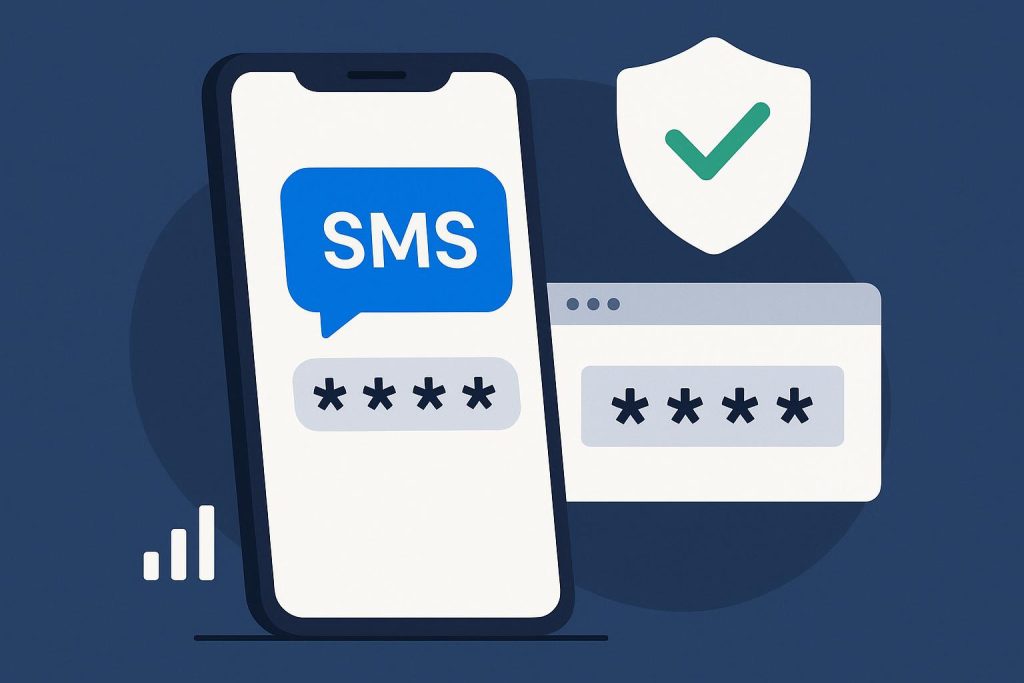
SMS verification works by sending a one-time code to a phone number. The user enters the code into the app or website to confirm that they can access that number at that moment. This creates an additional trust signal during registration, login, account recovery, or other security-sensitive actions.
The method is popular because most users already understand how it works. They do not need to install another app or learn a new security process. They simply receive a text message and enter a short code.
That simplicity matters. In mobile app onboarding, every extra step can affect conversion. If the process feels too complicated, users may abandon registration before reaching the core product experience. SMS verification adds a layer of security while keeping the process relatively easy for most users.
The Problem of Fake Accounts
Fake accounts are a serious problem for many apps and online services. They can be used for spam, fake reviews, referral abuse, scraping, fraudulent transactions, or automated messaging. For platforms that depend on trust between users, fake accounts can quickly damage the entire ecosystem.
For example, a marketplace needs to know that buyers and sellers are real. A social platform needs to reduce spam and impersonation. A financial app needs to protect accounts from suspicious activity. A communication tool needs to prevent automated abuse at scale.
SMS verification does not solve every problem, but it raises the cost of abuse. Creating thousands of automated accounts becomes harder when each account requires phone verification. This makes SMS verification a useful first barrier against low-quality registrations.
Verification and Mobile User Experience
Mobile users expect fast and smooth onboarding. They are used to installing an app and getting started within minutes. A verification process that is too strict can hurt user growth, while one that is too weak can expose the platform to abuse.
This is why many apps use SMS verification as part of a balanced onboarding flow. It provides a familiar step that most users can complete quickly, while giving the platform a stronger signal than email alone.
For mobile-first businesses, this balance is important. Security should not feel like a wall. It should feel like a natural part of the registration process.
SMS Verification Is Part of a Larger Security System
Modern platforms rarely rely only on SMS verification. Most apps now use layered security systems that evaluate multiple signals at the same time.
These signals may include device information, IP reputation, location consistency, login history, browser or app behavior, and user activity patterns. Some platforms also use machine learning models to identify suspicious behavior before it becomes a problem.
SMS verification is one layer in this broader system. It helps confirm access to a phone number, while other tools evaluate whether the overall activity looks trustworthy.
This is also why receiving a verification code does not always guarantee full access. A platform may still request additional verification if it detects unusual behavior, suspicious network activity, or inconsistent user signals.
Privacy Concerns Are Changing User Behavior
As users become more privacy-conscious, many are more careful about where they share their personal phone numbers. A phone number is often connected to banking, messaging apps, work accounts, and personal identity. Sharing it with every service can feel unnecessary, especially when testing new apps or evaluating short-term tools.
This has created more demand for flexible verification options. Developers, marketers, entrepreneurs, and regular users may need to test services without exposing their primary phone number every time.
In these situations, using an SMS verification platform can help users receive codes for short-term verification needs, app testing, service evaluation, and privacy-focused workflows.
When used responsibly, this type of solution can reduce friction for temporary tasks while keeping long-term personal contact information more private.
How Developers Use SMS Verification During Testing
App developers and QA teams often need to test registration and login flows repeatedly. A small change in the onboarding process can affect how users receive codes, how forms validate input, or how errors are displayed.
Testing these flows with real verification behavior is important. It helps teams identify problems before users encounter them in production.
For international apps, testing may also involve different countries or regions. A service that works smoothly in one market may behave differently in another because of telecom coverage, formatting differences, or platform-specific risk rules.
Temporary verification tools can support this process by allowing teams to evaluate user flows without relying only on personal numbers.
Why Businesses Care About Account Quality
For digital businesses, account quality directly affects long-term performance. A large number of fake or low-quality accounts can distort analytics, waste infrastructure resources, increase support costs, and reduce the reliability of marketing data.
Verification systems help improve this by filtering some low-quality activity before it enters the platform. Better account quality can lead to better product decisions, cleaner user data, and more reliable growth metrics.
This is especially important for platforms that offer free trials, messaging features, user-generated content, or limited resources. Without effective verification, abuse can become expensive quickly.
Limitations of SMS Verification
SMS verification is useful, but it is not perfect. Phone numbers can be recycled. SIM swap attacks exist. Some users may lose access to a number. Messages may also be delayed depending on the network or region.
Because of these limitations, SMS should not be the only security method for important accounts. Users should also enable stronger recovery methods where possible, such as email verification, authenticator apps, device-based login, or passkeys.
For platforms, SMS verification works best when combined with other security and risk signals. It should be part of a layered system rather than the entire defense strategy.
The Future of App Verification
The future of verification will likely involve more adaptive systems. Apps will increasingly combine device signals, behavioral analysis, passkeys, biometrics, and risk scoring to decide when additional verification is needed.
However, SMS verification is unlikely to disappear quickly. Its greatest strength is accessibility. It works across many devices, regions, and user groups. For global apps, that still matters.
Instead of being replaced entirely, SMS verification will continue to operate alongside newer methods. The best platforms will use it intelligently, applying it where it makes sense and combining it with stronger methods when higher security is required.
Conclusion
SMS verification remains important because it solves a practical problem for mobile apps and online services. It helps platforms reduce fake accounts, improve onboarding quality, and protect users without making registration overly complicated.
Although it has limitations, SMS verification continues to offer a useful balance between accessibility and security. For developers, app businesses, and digital platforms, the goal is not to rely on one method alone, but to build verification systems that are secure, flexible, and user-friendly.
As online services continue to grow, SMS verification will remain a familiar and valuable part of the digital security landscape.