


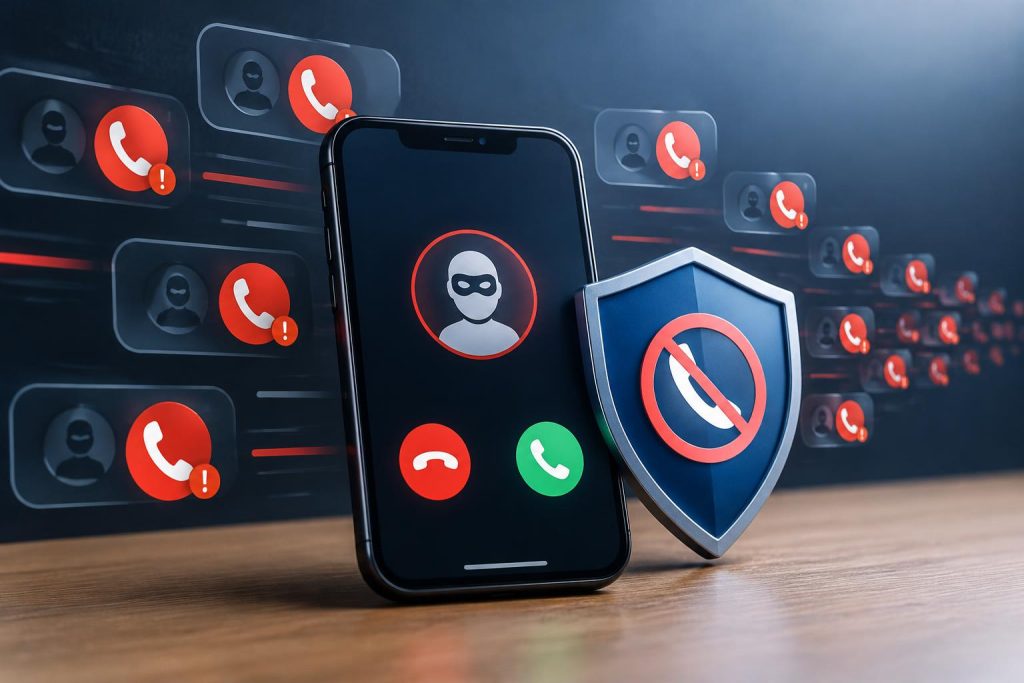
Spam calls are so difficult to avoid completely because placing them costs almost nothing, caller ID can be faked in seconds, and the people behind them change numbers faster than any blocklist can keep up. The scale shows in the FTC’s National Do Not Call Registry Data Book for fiscal year 2025, released in December 2025: about 258.5 million numbers are now on the registry, yet complaints about unwanted calls rose again, with robocalls making up the majority.
If you have registered your number, blocked dozens of callers, and still get three spam calls before lunch, you are far from alone.
Spam calls persist because of how the calling system itself is built. Once you understand why these calls slip through, it becomes much easier to choose defenses that actually reduce them.
How Spam Calls Find Their Way to Your Phone
Contents
Modern spam calling runs on internet-based phone systems. One operator with cheap software can place thousands of calls an hour for a fraction of a cent each, so even a tiny response rate turns a profit.
Your number usually lands on their lists through one of these routes:
- Sequential dialing, where software simply tries every number in an area code, including unlisted ones
- Purchased lead lists compiled from contest entries, online forms, and app sign-ups
- Data brokers that sell phone numbers alongside names and addresses
- Data breaches that leak customer records from retailers and service providers
The same software can also show any number it likes on your screen. That practice, called spoofing, is why a spam call can appear to come from a local business or even your own area code.
This is why caller identification matters so much in everyday use. Reliable caller ID for incoming calls checks each number against a large database and community spam reports while the phone is still ringing. Knowing who is calling before you answer is often the only practical filter between you and a scammer’s script.
5 Reasons Spam Calls Keep Slipping Past Your Defenses
Each reason below exploits a different weak point. Together they explain why no single setting, app, or registry can bring spam calls down to zero.
1. Spammers Rotate Through Thousands of Fresh Numbers
Blocking a number only stops that exact number. Large operations buy or spoof huge pools of numbers and use each one for a few hours before moving on.
By the time you block a caller, the campaign has usually switched to a new number. Manual blocking feels productive, but it mostly cleans up yesterday’s calls.
2. Spoofed Caller IDs Borrow Real, Trusted Numbers
Spoofing lets a caller display a number that belongs to someone else, including real banks, hospitals, and government offices. Blocking that number could also block the genuine organization.
Neighbor spoofing adds another layer. Calls that match your own area code and prefix look local and familiar, which is exactly why people pick them up.
3. Many Operations Run From Outside Your Country
A large share of scam calls originates overseas and enters domestic networks through a chain of carriers. Each handoff makes the true source harder to trace.
National laws and fines carry little weight against a call center in another jurisdiction, and shutting one down rarely stops the same people from reopening under a new name.
4. The Do Not Call Registry Only Stops Law-Abiding Telemarketers
The registry tells legitimate sales companies which numbers to skip. Scammers ignore it because they are already breaking the law.
It also leaves several groups exempt, including charities, political campaigns, surveys, and companies you already do business with. Registering is still worthwhile, since it removes a whole category of legal sales calls.
5. Filters Have to Protect Legitimate Calls Too
Pharmacies, schools, delivery services, and doctors’ offices also use automated calling. A filter that blocks too aggressively can silence an appointment reminder or a fraud alert from your real bank.
Every spam filter balances catching bad calls against letting important ones through, which is why some spam will always reach you.
Where Popular Anti-Spam Habits Fall Short
Many common habits feel protective, yet each one leaves a gap that spammers know how to use. Knowing the limits of a tactic helps you decide where to add backup.
- Never answering unknown numbers protects you from scripts, but spam often moves to voicemail and text, and you may miss calls from clinics, couriers, or new contacts.
- Pressing a key to opt out often confirms your line is active, which can increase future calls.
- Relying only on carrier “Spam Likely” labels catches some known campaigns, but coverage varies by carrier and phone model.
- Blocking numbers one by one stops repeat callers who use the same number, which most large operations avoid.
- Registering on the Do Not Call list alone filters legal telemarketing and has no effect on scammers.
None of these habits is useless. They simply work best as one layer among several.
A Layered Setup That Cuts Spam Calls the Most
Stacking several defenses catches far more spam than any single tool, because each layer covers a weakness in the others. Set them up in this order:
- Register your number on your country’s Do Not Call list to remove most legal telemarketing.
- Turn on your carrier’s free spam filtering in your account settings or carrier app.
- Install a caller ID app with automatic spam blocking so known scam numbers are stopped or labeled in real time.
- Report spam calls and texts inside the app, which improves labels for every other user.
- Hide your number on social profiles and avoid entering it on contest or coupon forms to slow down new list additions.
- Call back suspicious “official” callers on a verified number from a card, bill, or website.
The table below shows how much ground each approach covers.
| Approach | Stops legal telemarketing | Stops scam calls | Identifies unknown callers |
|---|---|---|---|
| Do Not Call registry only | Mostly | Rarely | No |
| Carrier spam labels only | Sometimes | Partly | Rarely |
| Manual number blocking only | Partly | Rarely | No |
| Caller ID app with spam blocking | Often | Often | Yes |
| All layers combined | Mostly | Most | Yes |
No combination reaches 100%. A layered setup still turns a daily nuisance into an occasional one, and it gives you enough information to handle the calls that do get through.
Real-Time Caller Identification Keeps Pace With Changing Spam Tactics
Spam calls survive because they are cheap to send and quick to disguise, so the defenses that work best are the ones that identify callers in real time and learn from millions of user reports. Static lists and manual blocking will always trail behind a campaign that changes numbers every few hours.
That shift in thinking helps. The goal becomes making every call you receive understandable at a glance, with a name, a warning, or enough context to decide.
With a few layers in place, unknown numbers stop feeling like a gamble. You answer the calls that matter and let the rest go with confidence.
Frequently Asked Questions
Why am I suddenly getting so many spam calls?
A sudden jump usually means your number was added to a new list, often after a data breach, a form sign-up, or answering a spam call. Spammers also share and resell active numbers, so one confirmed call can lead to many more.
Why do spam calls still come through when I’m on the Do Not Call list?
The Do Not Call list only works on companies that follow the law. Scammers ignore it, and some groups such as charities, political campaigns, and surveys are exempt by design.
Will blocking a number stop spam calls for good?
Blocking stops that specific number only. Most spam operations rotate or spoof numbers constantly, so automatic spam filtering based on shared reports catches far more calls than manual blocking.
How can I stop spam calls without missing important calls?
Use a caller ID app that labels spam instead of silently blocking everything, and keep your important contacts saved. Labels let you see who is calling and decide, so reminders from doctors or deliveries still reach you.
Is it safe for me to answer a spam call and just hang up?
Answering briefly is rarely dangerous on its own, but it can confirm your number is active. Avoid pressing keys, saying “yes,” or sharing any personal details, and hang up as soon as you realize it’s spam.