


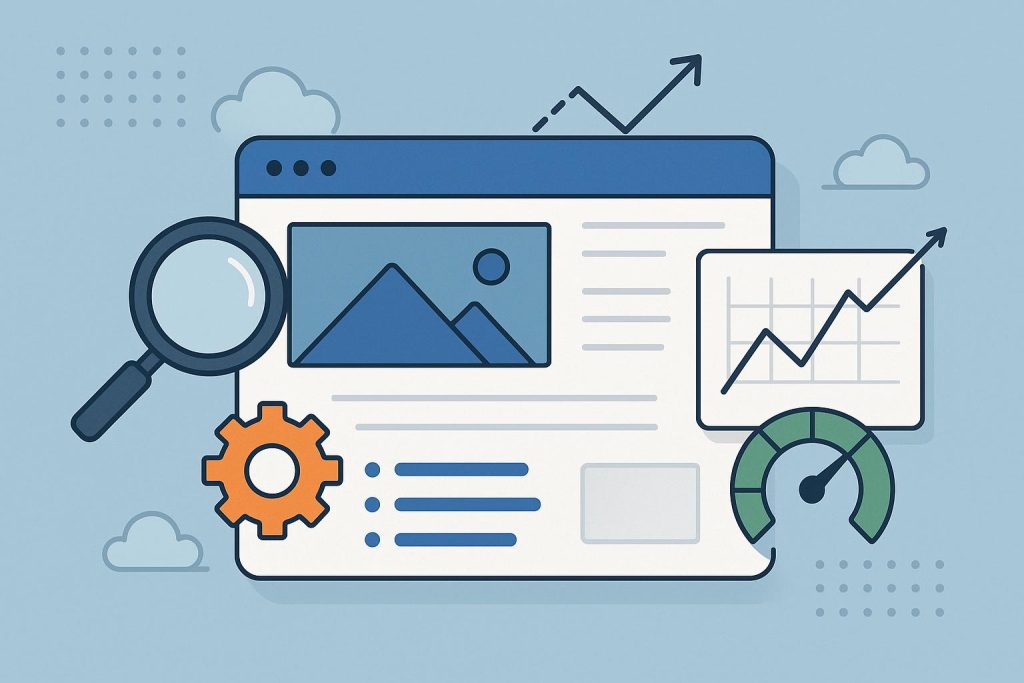
In a crowded digital landscape, visually striking websites still get attention. But attention alone is not enough. A site can be beautiful and still fail at its core purpose: turning visitors into engaged users, leads, or customers.
To maximize impact, web design must balance appearance with performance. Great design should not only look appealing but also drive tangible results such as better engagement, improved user experience, faster load times, higher search visibility, and measurable business outcomes.
This guide explores how modern web design can be managed with performance as the primary goal, what elements matter most, and how organizations can prioritize function and form together.
What Does “Performance-Driven Web Design” Really Mean?
Contents
- What Does “Performance-Driven Web Design” Really Mean?
- 1. Speed and Technical Efficiency Always Come First
- 2. User Experience Drives Engagement and Retention
- 3. Accessibility Is Part of Performance
- 4. Conversion-Centered Design Ties Performance to Business Results
- 5. Content and SEO Shape Long-Term Performance
- 6. Measurement and Iterative Improvement
- 7. Collaboration, Not Silos
- Why Professional Support Matters
- Putting It All Together
Performance-driven web design goes beyond aesthetics. It means designing websites that:
- Load quickly on all devices
- Are accessible and intuitive for real users
- Support conversions and measurable goals
- Provide consistent experiences across platforms
- Are built to scale without friction
Appearance still matters, but performance adds purpose.
1. Speed and Technical Efficiency Always Come First
Users today expect pages to load quickly. Slow loading times create frustration, increase bounce rates, and reduce conversions. Search engines also factor page speed into ranking decisions.
Performance-oriented web design considers:
- Efficient code and lightweight frameworks
- Proper image optimization
- Lazy loading for non-critical elements
- Minimized third-party scripts
- Content Delivery Networks (CDNs) integration
Design choices should always support fast performance rather than erode it.
2. User Experience Drives Engagement and Retention
Design aesthetic creates the first impression. User experience (UX) determines whether visitors stay, explore, and act.
A performance-focused UX prioritizes:
- Clear navigation and intuitive page structure
- Readable typography and accessible layouts
- Logical information hierarchy
- Visual cues that guide users toward actions
- Mobile-first thinking
Good UX reduces friction and creates a smooth journey from arrival to conversion.
3. Accessibility Is Part of Performance
Performance does not just mean speed. It also means inclusivity. Accessible design ensures that all users, including those with disabilities, can navigate and interact with your site.
Accessibility best practices include:
- Proper semantic markup
- ALT attributes for images
- Keyboard-friendly navigation
- Skip links for screen readers
- Considerate color contrast
Accessible sites perform better for all users and build trust with diverse audiences.
4. Conversion-Centered Design Ties Performance to Business Results
A beautiful page does not automatically convert visitors. Performance-centric design considers the end goal — whether that is a purchase, signup, phone call, or form submission.
Conversion focus includes:
- Clear calls-to-action (CTAs)
- Minimized form friction
- Strategic placement of key elements
- A/B testing design variations
- Analytics-driven optimization
This approach turns design from decoration into a business driver.
5. Content and SEO Shape Long-Term Performance
Search engines reward content and structure that serve user intent. A site that is well-designed for performance combines content strategy with technical SEO.
Performance-oriented design supports:
- Internal linking that helps users and search bots
- Structured data where appropriate
- Search-friendly URLs and metadata
- Fast rendering of key content
- Content hierarchies that match user queries
Design and content become part of the same optimization system.
6. Measurement and Iterative Improvement
Performance-driven design requires ongoing evaluation. Unlike static visual redesigns, performance must be monitored and refined.
Teams should routinely measure:
- Page speed and Core Web Vitals
- Engagement metrics like bounce rate and session duration
- Conversion funnels and drop-off points
- Device and browser performance discrepancies
- SEO visibility and keyword trends
Iterative testing and refinement lead to sustained performance gains.
7. Collaboration, Not Silos
Design teams, developers, content strategists, and marketers must work together. Isolated decisions can lead to beautiful sites that underperform.
Performance-focused collaboration means:
- Aligning KPIs from the start
- Integrated planning sessions
- Shared dashboards and analytics visibility
- Joint review cycles
- Cross-discipline accountability
This collaborative approach creates design outcomes that are both attractive and effective.
Why Professional Support Matters
Performance-driven web design requires expertise across multiple domains. Many organizations benefit from partnering with experienced professionals who can manage the balance between creative impact and measurable results.
A trusted website design company brings both design sensibilities and performance mechanisms together, ensuring that sites not only look good but work effectively and deliver long-term value.
Putting It All Together
Design that prioritizes performance does not sacrifice beauty. Instead, it builds on beauty to achieve measurable outcomes that support business objectives.
A performance-focused approach:
- Prioritizes user needs
- Anchors decisions in data and measurement
- Balances speed with visual engagement
- Integrates accessibility and SEO
- Encourages continuous improvement
When businesses manage design for performance and not just appearance, they create digital experiences that attract, engage, convert, and grow with purpose. This is the future of effective web design, and it is where real business success is earned.