


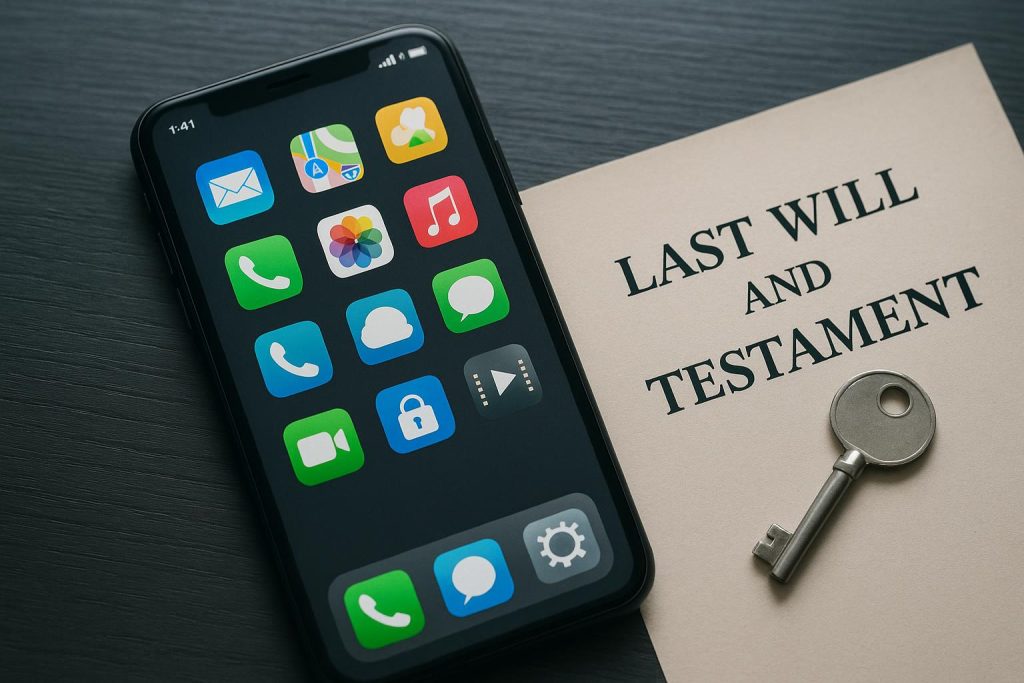
Your executor can’t get into your phone, your email, or your cloud storage. That single fact quietly undoes most of what your estate plan was supposed to accomplish. The average adult now runs their financial life, their photo library, their subscriptions, and half their correspondence behind logins that no one else has. When the person holding those logins dies, the accounts don’t politely surface themselves. They sit there, locked, while the family scrambles.
Estate planning grew up in a paper world. The digital layer got bolted on later, badly, and most people haven’t caught up.
Most Estate Plans Stop at the Front Door of Your Digital Life
Contents
Start with how few people have any plan at all. Those numbers describe the paper side. The digital side is worse, because even people who did the paperwork rarely wrote a single word about their accounts.
A modern digital footprint isn’t small. It’s the bank app, the brokerage login, the crypto wallet, the payment apps, the domain registrar, the photo cloud, the email that receives every password reset, and the two-factor codes generated on a phone no one else can unlock. Miss any one of those and the executor is stuck. Miss the phone and they may be stuck on all of them at once.
The Obvious Fix Fails in Ways People Don’t Expect
The instinct is to write a list. A spouse or an adult child gets a piece of paper, or a note in a drawer, and everyone feels covered. That approach falls apart for reasons worth naming:
- Passwords in the will itself. A will becomes part of the probate record, and probate records are public. Putting credentials in the document you’re about to publish to the world is the opposite of security.
- The paper list goes stale fast. Passwords rotate, new accounts open, old ones close. A sheet written two years ago is a museum piece by the time anyone needs it.
- Two-factor authentication breaks the plan. Even a correct password is worthless if the confirmation code is texting itself to a locked phone sitting in a drawer at the funeral home.
- Handing over the master password too early. It exposes you while you’re alive and creates real awkwardness if relationships change.
The other common move, telling one person out loud, is worse. Memory is not a security model.
What Actually Works Is Boring, Layered, and Legal
A digital estate that survives contact with reality has three layers, and each layer covers what the others can’t.
- A password manager with an emergency contact. Tools like 1Password, Bitwarden, and Apple’s built-in Keychain now offer legacy or emergency access features that release your vault to a named person after a waiting period or with a death certificate. TechBuzz has a useful overview of how these features actually work across the major services.
- A separate letter of instruction. Not the will. A companion document that lists your accounts by category, names your digital executor, and explains what you want done with each account. Kept somewhere your executor can reach without a court order.
- Explicit authority in the estate documents. State laws now let you grant a fiduciary the right to access your digital assets, but only if the documents say so. An experienced estate planning attorney can add the language that turns your inventory into something a bank, a court, or a tech platform will actually honor.
Update the inventory once a year. Put it on the calendar next to the smoke detector batteries. The plan that never gets refreshed is the plan that fails the moment it’s needed.
The Cost of Skipping This Is Paid by the People You Love
When a digital estate isn’t handled, the family doesn’t lose only convenience. They lose money in dormant accounts, photos in clouds no one can open, subscriptions that keep charging a closed checking account, and months of their own time trying to prove to a customer-service queue that they’re allowed to be there. That’s the real cost. And the fix, for most people, is one weekend of focused work.