


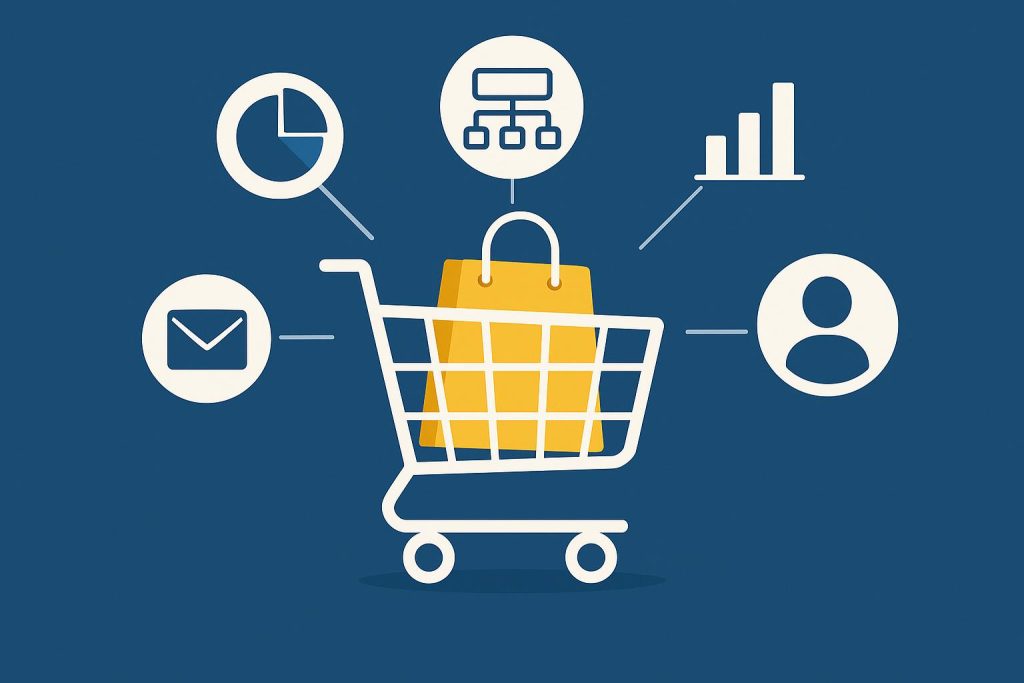
Retailers engage with customers through stores, websites, mobile applications, loyalty programs, and service channels. Each interaction generates data. That data often sits across disconnected systems. Teams find it difficult to combine purchase records, browsing activity, and engagement history. As a result, customer understanding remains incomplete. Decisions rely on partial information. A retail customer data platform addresses this fragmentation by consolidating customer data into a single view.
A properly implemented CDP platform allows retailers to move beyond isolated transactions. It connects inputs from multiple systems and maintains consistent customer profiles. Teams work with verified information rather than assumptions. With a reliable CDP data platform, engagement, planning, and execution improve across the customer lifecycle.
Understanding the Role of a Customer Data Platform
Contents
A customer data platform gathers and organizes customer information from multiple systems. These include point-of-sale systems, ecommerce platforms, marketing tools, and service applications. The platform resolves identities and forms unified customer profiles. Each profile reflects interactions, preferences, and behavior over time.
A CDP data platform includes several functional layers. Data ingestion brings in information from digital and physical sources. Identity resolution links records to a single individual. Profile management maintains and updates customer views. Activation capabilities allow teams to apply this data across channels.
For retail organizations, a retail customer data platform serves as a centralized source of insight. Profiles refresh in real time or near real time. Teams rely on this information for analysis, personalization, and engagement planning. The CDP platform supports consistency across customer touchpoints.
Why Customer Data Platforms Matter in Retail
Retail competition increasingly depends on experience quality. Customers expect relevance across interactions. Retailers require dependable data to meet these expectations. A retail customer data platform supports this requirement by connecting data with action.
Here are 5 solid reasons why a retail business must have a CDP platform:
Unified Customer Visibility Across Channels
Retailers are doing business both in the physical world and online. The majority of shoppers start browsing products online, buy them from a shop's physical location, and most importantly, use their mobile device(s) to connect with the retailer. Most retailers' records of these activities are typically maintained in separate "silos", which makes it very difficult to get the complete picture of a customer.
A Customer Data Platform (CDP) is the solution to this challenge, providing a unified profile of all interactions for each customer.
With a single view of the customer, retailers can now monitor activity across all the channels of engagement and provide consistent engagement planning to their customers. Additionally, all teams within the retailer can now rely on a consistent set of information to make their decisions and build trust in their customers' experiences.
Consistent Personalization at Scale
Customers respond to experiences that reflect their preferences. Generic outreach reduces engagement. Retailers require dependable data to personalize interactions. A retail customer data platform enables this by maintaining accurate customer profiles.
Personalization aligns across channels when supported by a CDP platform. Offers, recommendations, and messages reflect observed behavior. Teams segment customers using current attributes and actions. The CDP data platform refreshes profiles continuously, which keeps personalization relevant. Experiences remain timely and appropriate.
Improved Marketing Efficiency
Marketing execution depends on data accuracy. Fragmented data leads to inefficiencies and overlapping outreach. A CDP platform improves coordination by centralizing customer information. Teams reduce duplicate communication and inconsistent messaging.
With a CDP data platform, marketers identify priority segments with greater accuracy. Campaign development can now be focused on customers most likely to respond to your offers and have a better measurement of success through consistent attribution. A retail customer data platform supports clearer budget allocation. Marketing performance becomes easier to evaluate.
More Reliable Business Decisions
To develop accurate retail planning, a complete understanding of customer behaviour is needed. Because the CDP offers all of the various retail teams a common view of customer records, the merchandising, marketing, and operations teams will share the same profile and work from a common profile.
The CDP data platform supports trend and pattern analysis. Retailers observe changes in preferences and purchase cycles. Planning improves across assortment, pricing, and promotions. A retail customer data platform enables informed decisions throughout the organization.
Stronger Retention and Loyalty
Retention depends on continuity and relevance. Disconnected experiences reduce satisfaction. A CDP platform helps retailers maintain consistent interactions. Each engagement builds on prior knowledge.
A CDP data platform supports recognition across channels. Loyalty activity connects with purchase and engagement history. Retailers respond with greater accuracy. The CDP is really about understanding consumer behaviour and provides a mechanism for retailers to build long-lasting and loyal relationships with their customers through consistent and timely delivery of value. The overall retention rate of customers will increase as consumers feel they are understood.
Bottom Line
The fragmented or siloed nature of customer data is acting as a barrier to the overall improvement of retail performance, and as such, retailing has become a very competitive experience-focused industry, and retailers need to work together more coherently. A retail customer data platform establishes a foundation for unified insight and action. It supports personalization, efficiency, and consistent decision-making across teams.
As customer journeys grow more complex, the role of the CDP platform becomes more central. A CDP platform provides retailers with a platform that helps them keep up with the changing needs of their consumers. As the engagement of consumers within retail continues to grow and evolve, retailers will rely more on CDPs for support.