


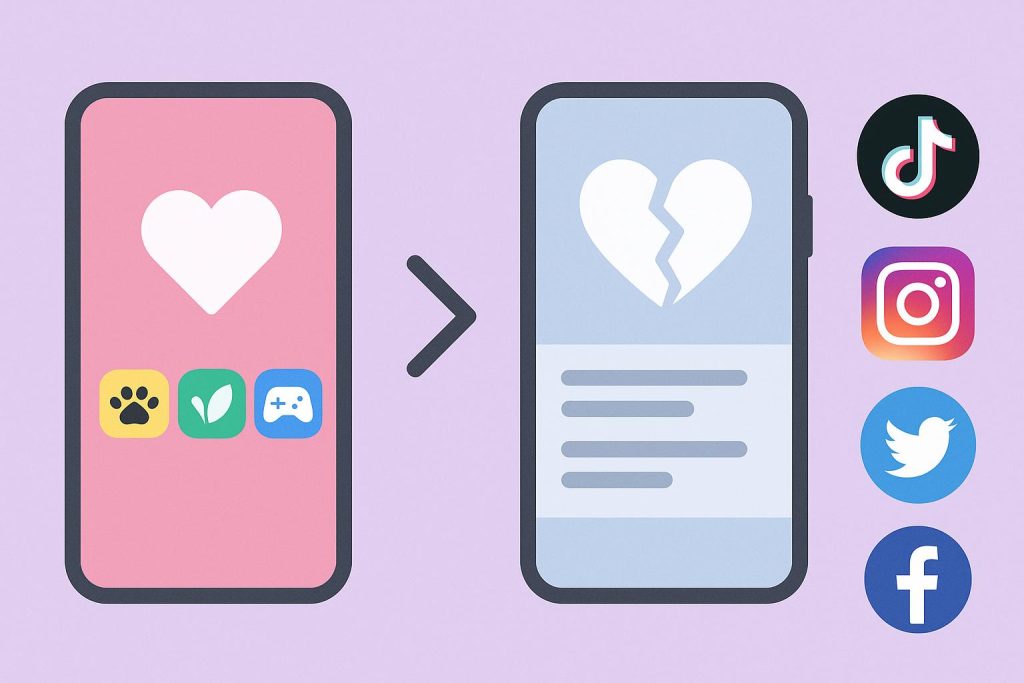
The biggest names in online dating are shrinking for the first time. After more than a decade of steady growth, the conventional dating app, the swipe-based product that defined how a generation met people, is losing users and revenue at the same time. The slide looks like more than a blip. It points to people leaving for two destinations: smaller apps built around a specific kind of relationship and the social platforms they already spend their day on.
The shift also reflects a broader change in how people want to meet online. Users increasingly prefer spaces that feel more intentional, community-driven, and focused on genuine interaction rather than endless swiping.
The First Market Decline
The numbers turned negative in 2025. The global dating app market fell about 1.7% to roughly $6 billion, its first annual drop on record. The two largest conventional apps led the decline, with revenue down about 5% and 10%. One of them lost 9% of its monthly active users in a single year, and its paying base shrank to about 9.1 million.
For a category that had only ever grown, a year of contraction is the strongest signal yet that the model is under strain. The pressure comes from several directions at once, which is what makes it difficult for the incumbents to respond quickly.
Reasons for the Exodus
The reasons are consistent across surveys. Around 79% of Gen Z and 80% of millennials say the cycle of swiping, matching, and ghosting wears them out. People also push back on rising prices and paywalls that gate basic features, and on systems that seem to slow down matches to keep users paying.
The result is an exodus. In the United Kingdom alone, about 1.4 million people left dating apps between 2023 and 2024. The people leaving still want relationships. They simply want a different route to them, one that does not feel like a second job.
The Monetization Backlash
Part of the decline is self-inflicted. As growth slowed, the big apps leaned harder on paid tiers and dynamic pricing that charged different users different amounts for the same features. Users read these moves as a sign that the apps profit more when people stay single and keep paying.
That suspicion is corrosive. A product people once treated as a fun utility started to feel built mainly to keep them paying, and trust fell alongside revenue. The market decline tracks closely with the stretch when monetization grew most aggressive, which is rarely a coincidence.
The Pull of Niche Apps
The first destination is the niche app. These platforms build around a shared value, identity, or relationship type, and that focus pays off. Recent data shows people are about 42% more likely to find a meaningful connection on a niche platform than on a general one.
The growth follows. One niche app grew its user base 95% and reached $100 million in revenue while the giants slid. Apps built for a specific kind of connection, such as the Secret Benefits app, draw people who already know what they are looking for, which spares them the grind that makes general apps exhausting.
A smaller pool of the right people beats a huge pool of the wrong ones, and the niche apps have built their whole pitch around that idea. The same pattern repeats across categories, from interest-based communities to platforms built around one relationship type, where a sharp focus consistently outperforms broad reach.
Social Media as the New Front Door
The second destination is social media. A growing share of couples who meet online now trace their start to a platform that was never built for dating. Short-video and photo apps like TikTok and Instagram have become discovery engines, where a comment or a shared interest starts a conversation that a dating app once brokered.
Community spaces have grown even faster as meeting grounds. Reddit and Discord, organized around hobbies and interests, saw engagement among younger users climb about 14% in a single year. The appeal is that attraction grows out of a common interest first, with no profile to perform and no swipe to game.
The conversation starts because two people already care about the same thing, which is often a stronger opening than a matched photo.
The Niche Formula
The niche dating services that win share a formula. They favor smaller, better-matched communities over raw scale, and they make intentions plain so people meet others who want the same thing.
Conventional apps optimized for time spent swiping, which boosted usage without producing many real dates. The newer players optimize for the match itself, and users notice the difference quickly. Belonging to a defined community does more to hold attention than an endless deck of strangers ever did, and it tends to produce introductions that actually go somewhere meaningful.
Scale was the old advantage, and it has become a liability once it means sorting through thousands of mismatches to find one compatible connection.
One Mainstream Exception
Not every conventional app is sinking. One major mainstream app raised revenue about 25% in the same year the others fell, by charging in a way users found fair and by helping them actually meet someone.
That single result matters because it shows the medium itself still works and the old model is the problem. The contrast with its struggling peers is a useful map for the rest of the category. People still pay for an app that helps them meet someone. The money left the apps that mainly keep people scrolling.
Even Gen Z, the group most likely to walk away from the format, still pays for a product that helps them meet. The lesson for the category is plain, and the niche apps learned it first.
The Direction of the Market
The direction is increasingly set by user behavior and trust. A category that grew every year until 2025 posted a $6 billion total smaller than the year before, while niche apps and social platforms absorbed the people walking away.
The conventional swipe app still has a place, but it has lost its monopoly on how people meet. The next set of numbers will likely show the same pattern, with the market splitting between focused apps that understand their users and open platforms where dating is simply one more thing that happens naturally.
For now, one figure tells the story. After more than a decade of growth, the market shrank, and 1.4 million people in a single country had already shown the way out.
Conclusion
The decline of conventional dating apps does not mean people have lost interest in meeting online. Instead, it reflects a shift in what users expect from digital relationships. People are becoming more selective about where they spend their time, moving away from endless swiping toward platforms that feel more intentional, transparent, and built around shared interests. Niche apps succeed by creating smaller communities focused on compatibility and clear intentions, while social platforms encourage natural connections through hobbies and conversations. Together, these alternatives offer something many traditional dating apps lost: the sense that interactions can lead to meaningful relationships rather than just more screen time. As a result, platforms centered on trust, authenticity, and real connection are likely to shape the future of online dating.