


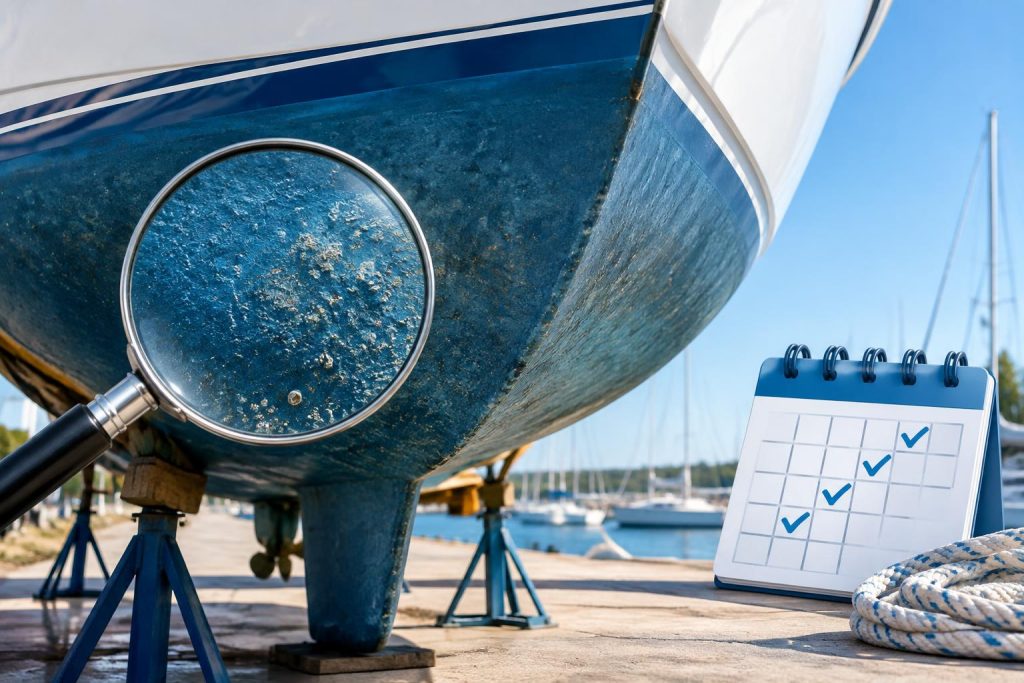
How often you check your hull matters more than most owners think, and a sensible rov hull inspection schedule is the difference between catching a problem early and paying for it later. The good news is that routine checks no longer need a diver or a haul-out. A tethered drone lets you look whenever you want, from the deck. This guide lays out a practical schedule and what to look at each time.
A Simple Inspection Schedule
For most boats, a light check once a month in season and a closer look around long trips covers it. Adjust for how hard and how often you run.
A monthly glance at the hull, prop, and anodes catches slow problems like fouling and anode wear before they affect performance. A closer inspection before a long passage confirms nothing will let you down offshore, and a look afterward catches anything picked up on the way. Boats that sit in warm, nutrient-rich water foul faster, so shorten the interval in those conditions. The point of a routine is consistency, since the same check at the same interval is what reveals change.
What to Look At Each Time
A useful check covers five things. The anti-fouling, the running gear, the anodes, the through-hulls, and anything that should not be there, worked in the same order every time.
Start with the anti-fouling surface and note any bare patches or heavy growth. Move to the propeller and shaft, checking for a wrapped line or weed. Confirm the anodes are wasting evenly rather than fully spent, since a dead anode stops protecting the metal around it. Check the through-hulls are clear, then scan for anything caught on the hull. Running the same sequence makes a rov hull inspection fast and repeatable, and it means nothing gets skipped under time pressure.
Why a Drone Beats Waiting for a Haul-Out
The old schedule was once a year at the yard, which let problems run for months. On-demand checks change that.
An underwater drone launches in minutes and gives you a live, recorded view of the hull whenever you want it. Because you can save video, you can compare this month to last, show a mechanic exactly what you are seeing, or document a condition before a claim. Catching fouling, a spent anode, or a wrapped line early protects your speed, your fuel bill, and your next survey result, which is the whole reason to keep to a schedule. It also means you can check after a grounding or a line strike straight away, rather than wondering about it until the next haul-out.
Keeping a Record
A schedule is only as good as the record behind it. A few clips a month build a history worth having.
Save a short clip of anything you are unsure about, tagged with the date, so you have a baseline to compare against. Over a season that record shows you how fast the hull fouls and when the anodes need replacing, which turns guesswork into planning. It also makes any conversation with a yard or surveyor far quicker, because you can show rather than describe. A dated folder of short clips is enough, with no need for anything elaborate.
Adjusting the Interval to Your Boat
No single schedule fits every boat, so tune the interval to your water and how you use the boat.
A boat kept in warm marina water and run often will foul faster than a trailered boat used on weekends, so the first needs more frequent looks. If a check two months running shows almost no change, you can stretch the interval a little. If every check turns something up, tighten it. Let the record guide you rather than a fixed rule, and you will spend the least time for the most protection.
Make It a Habit, Not a Haul-Out
A steady rov hull inspection routine turns hull maintenance from a yearly gamble into something you control, and it costs you minutes a month. Check monthly in season, look closer around long trips, and keep a simple record.
If you want to run those checks yourself, a tethered underwater drone makes it quick and repeatable from the deck.