


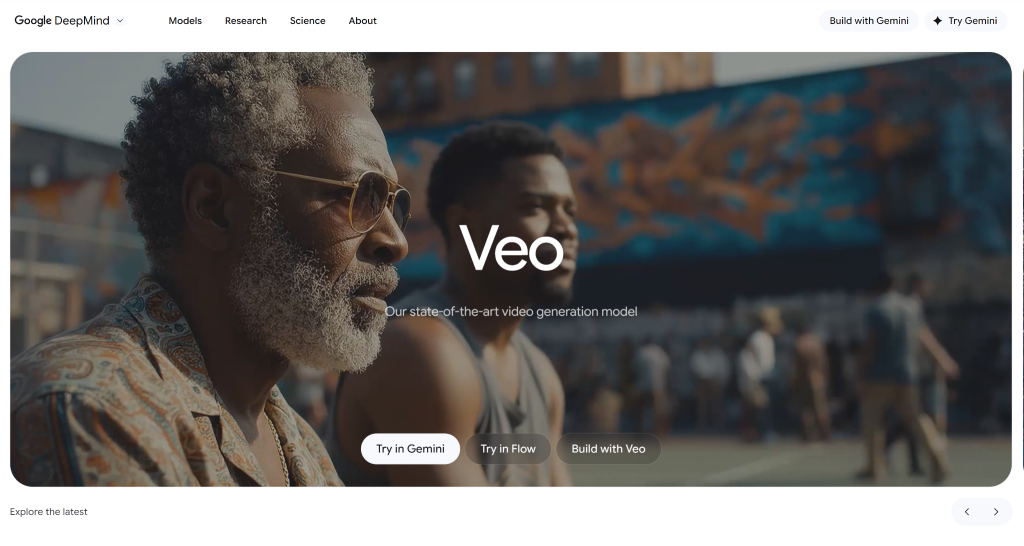
The way we create video content is changing fast. What once required a full production crew, expensive equipment, and hours of post-processing can now be accomplished with a few well-chosen words. Veo 3, Google DeepMind’s latest AI video generation model, sits at the forefront of this shift — and it’s turning heads for good reason.
What Is Veo 3?
Contents
Veo 3 is an advanced AI video generation model developed by Google DeepMind. Released in 2025, it represents a significant leap forward from its predecessors, offering the ability to generate high-quality, cinematic video clips directly from text prompts. Unlike earlier models that produced choppy, unrealistic footage, Veo 3 delivers smooth motion, coherent scenes, and an impressive understanding of visual storytelling. Perhaps most notably, it can generate synchronized audio — including dialogue, ambient sound, and music — alongside the video itself, making it one of the most complete AI video tools available today.
How Does It Work?
At its core, Veo 3 uses a diffusion-based architecture trained on an enormous dataset of video content. When you type a prompt — say, “a lone astronaut walks across a rust-colored Martian landscape at golden hour, cinematic wide shot” — the model interprets the language, maps it to visual concepts, and generates a video that reflects your intent with remarkable fidelity.
The model understands not just objects and settings, but also cinematic language. Terms like “shallow depth of field,” “tracking shot,” or “noir lighting” translate meaningfully into the output. This means filmmakers, marketers, and content creators can communicate the way they naturally think about visual storytelling, rather than wrestling with technical tools they may not have mastered.
Veo 3 is currently accessible through Google’s VideoFX platform and is being integrated into broader Google products, though availability continues to expand as the technology matures.
What Makes Veo 3 Stand Out?
Several features distinguish Veo 3 from the growing crowd of AI video generators.
The quality of motion is one of the most immediately noticeable improvements. Earlier AI video tools like Synthesia often struggled with unnatural movement — hands that morphed strangely, backgrounds that flickered, or characters that seemed to float. Veo 3 handles physics and motion with significantly greater consistency, making clips feel grounded and believable.
The model also excels at prompt adherence. If you ask for a specific composition or mood, the output tends to honor those details rather than drifting into generic interpretations. This level of control matters enormously for professionals who need results that align with a creative vision, not just something that looks vaguely related to the prompt.
The integrated audio generation is arguably the most exciting development. Video without sound is half an experience, and having a model that can produce both simultaneously — with audio that actually matches what’s happening on screen — is a meaningful step toward truly end-to-end AI video production.


Who Can Benefit From Veo 3?
The applications are wide-ranging. Independent filmmakers can prototype scenes and storyboards without expensive pre-production. Marketing teams can generate product visuals or campaign concepts in hours rather than weeks. Educators can create illustrative video content to accompany lessons. Game developers can rapidly visualize cutscenes and environments. Social media creators can produce polished, eye-catching content without needing a studio setup.
Even for people with no background in film or design, Veo 3 lowers the barrier to visual storytelling dramatically. The ability to describe what you want in plain language and receive a cinematic result democratizes a creative process that has historically been gatekept by budget and technical expertise.
The Bigger Picture
Veo 3 isn’t a replacement for human creativity — it’s an amplifier of it. The best results still come from users who bring a clear creative vision, thoughtful prompting, and an understanding of what makes a compelling visual story. The model is a tool, and like any tool, its value depends on how it’s used.
What’s genuinely exciting is the pace of progress. Each iteration of these models brings capabilities that would have seemed implausible just a year or two earlier. Veo 3 represents where we are right now — and where we’re heading is even more remarkable.
For anyone involved in visual content creation, now is the time to start experimenting.