


For most users, Google, YouTube and WhatsApp are ubiquitous tools no different than our basic utilities, electricity or running water, so that we do not even consider their presence; we just expect them to exist, in every location and at times we access the internet through our phones.
Then it all changes equally suddenly, You are travelling, moving to another city or even speaking with someone that lives outside of the United States because they will inform you that they are unable to access Google or they were unable to load a video from YouTube or that WhatsApp may or may not work.
At that moment, one experiences an uncomfortable awakening to the reality of the fact that:
Neither Google nor YouTube are universal tools; they both require permission to exist.
In fact, in some nations, Google and YouTube are completely blockaded in their entirety.
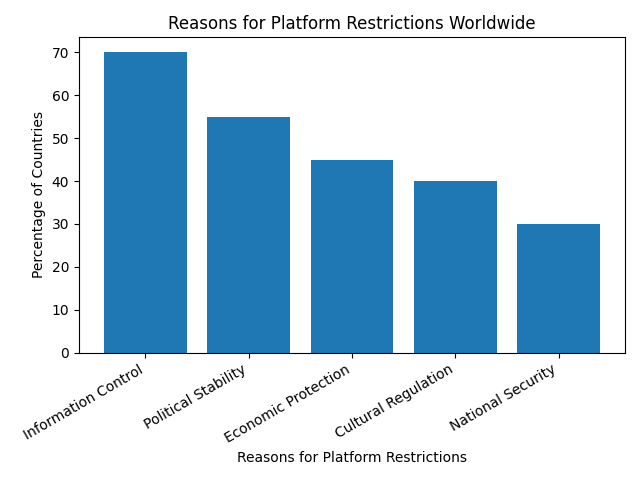
The First Reason: Governments Control Information Flow
Contents
- The First Reason: Governments Control Information Flow
- Why YouTube Is Treated Differently Than TV
- WhatsApp and the Fear of Private Conversations
- Economic Protection Is a Hidden Reason
- Cultural Control and Social Stability
- The Real-Life Impact of These Restrictions
- Why These Companies Don’t Just “Fix It”
- The Core Truth Behind the Title
- Final Thought
The most common reason Google (and by default YouTube) is not accessible in many of the countries is due to the fact that Governments do not allow their subjects unrestricted access to the following:
- The ability to explore or read Independent Journalism
- The ability to explore or read political criticism.
- The ability to investigate historical events beyond the scope of accepted government approved Textbooks.
- The right to consider alternative perspectives.
The restrictions of governments that tightly control and monitor how stories are presented to the public, saying that the story is the government’s story only. However, when one uses Google to search for something, the only thing Google’s mandate is to display the search results from the search term entered, regardless of whether those search results are varied in nature.
From a governmental perspective, Google (and therefore YouTube) is a tool used by the public to undermine or dethrone authority, and therefore it is a good idea to prevent access to Google so that a government’s power can be preserved. Blocking is not a technical issue, it is a preventative issue
Why YouTube Is Treated Differently Than TV
Many people ask:
“If television is allowed, why not YouTube?”
The answer is control and predictability.
Television:
- Has editors
- Has licenses
- Can be fined or shut down
YouTube has none of that structure.
On YouTube:
- Anyone can upload
- Videos spread faster than regulation
- A single clip can reach millions before authorities react
In countries with strong media control, YouTube becomes an unmanageable broadcaster.
It’s not about music videos or vlogs. It’s about:
- Political commentary
- Protest footage
- Whistleblowers
- Citizen journalism
That’s why YouTube is often blocked during elections, protests, or social unrest. It’s not the platform—it’s the speed of truth that scares systems built on delay.
WhatsApp and the Fear of Private Conversations
WhatsApp is blocked or restricted for a very different reason.
Unlike Google or YouTube, WhatsApp doesn’t broadcast information publicly. It moves information privately.
And that privacy is exactly what makes it threatening.
WhatsApp uses end-to-end encryption, meaning:
- Governments cannot easily read messages
- Surveillance is limited
- Organizing can happen quietly
During times of unrest, misinformation and rumors have spread through private groups. Governments often respond by blaming the tool instead of addressing the underlying trust problem.
A shop owner once described a temporary WhatsApp shutdown in his region:
“My business didn’t stop because of violence. It stopped because customers couldn’t message me.”
Blocking WhatsApp affects:
- Families separated by borders
- Small businesses
- Emergency communication
- Migrant workers
The cost is human, immediate, and often ignored.
Economic Protection Is a Hidden Reason
Not all bans are political; some are motivated by economic reasons.
Google and YouTube control the advertising marketplace, while WhatsApp dominates in terms of communication.
Therefore, these regulations will likely:
- eliminate local startups
- Relocate data ownership to other countries,
- divert billions of dollars in advertising dollars away from local markets
Some governments have enacted regulations to limit or block access to global platforms so that funds are redirected towards domestic alternatives. This is officially referred to as “digital self-sufficiency,” however, the reality is that it is nothing more than an action taken to protect the domestic market.
Interestingly, many local alternatives end up copying:
- The same features
- The same interfaces
- The same algorithms
The difference isn’t function.
It’s who controls the data.
Cultural Control and Social Stability
Technology not only conveys information through technology but also conveys culture.
YouTube allows for exposure to:
- different lifestyles
- different political ideologies
- different social norms
For example, to a citizen in a conservative or tightly structured society, the exposure to different cultural values and norms may be challenging and destabilizing, resulting in children losing parental authority.
Young people will question their heritage sooner. The global influence of culture will now be competing with local identity.
Some governments believe that limiting exposure to global cultures will preserve local cultural continuity; whether this belief holds any merit or not, this strongly impacts their digital policies.
The Real-Life Impact of These Restrictions
When Google, YouTube or WhatsApp is not available, the harm done from this is not just abstract.
It looks like:
- a student not able to participate in online learning
- a teacher who has to rebuild their lessons without video resources
- a creator who loses their entire income overnight
- families being unable to communicate during times of crisis
One teacher told me she felt “digitally amputated” after having had YouTube blocked in her area.
“I didn’t just lose my job. I lost my tools.”
These services have now become essential infrastructure rather than luxuries. Because of such restrictions, solutions like VPNs, proxy servers, and Remote Desktop services have gained massive popularity among users who need reliable and secure access to restricted websites.
Why These Companies Don’t Just “Fix It”
Users regularly inquire into why specific technology companies (e.g., Google, YouTube, WhatsApp) aren’t able to comply with all of the demands of any government agency’s requests. The answer is based on a sense of trust.
The value of these companies is associated with their credibility; therefore:
- User Data (privacy).
- Information Neutrality (interest).
- Global Consistency (uniformity)
In the event that one of these businesses has violated any of the above (i.e., if they have betrayed a user’s rights) in one location, it will result in consumers around the world questioning the integrity of those companies. Consequently, they would have to make a decision to either betray the principles in one location and continue doing business in that location or resist those demands and go out of business altogether.
There are no easy answers to resolving this dilemma.
The Core Truth Behind the Title
Google, YouTube, and WhatsApp are not impacted everywhere by default or by adverse internet connectivity. There are several reasons why those companies do not operate throughout the world:
Power = Information
Power = Control
Different societies define and divide
The internet is predominantly a global resource; nevertheless, gaining internet access is dependent on receiving permission from authorities, not a guarantee.
Final Thought
If you have never experienced the inability to conduct internet searches, view videos on YouTube, or receive messages on WhatsApp, it is easy to visualize that those services will be available perpetually; however, those do not exist because of an accident.
They will only be allowed to exist in locations where they received permission to operate. In some cases, what companies block offers a better understanding of what they allow than what they do not.