


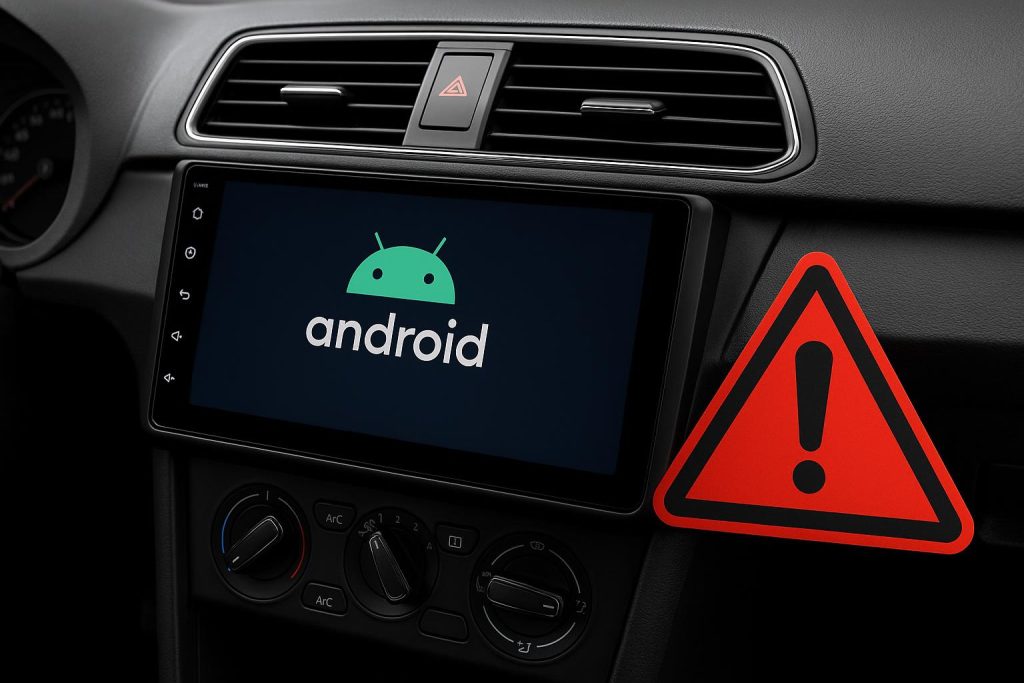
Upgrading your vehicle’s infotainment system to a massive, vibrant touchscreen with Wireless Apple CarPlay and Android Auto is the ultimate interior facelift. It breathes new life into an older vehicle, adding modern navigation and streaming without the cost of buying a new car.
However, the aftermarket car audio industry has undergone a massive shift. The market is now saturated with cheap, generic Android head units imported directly from overseas. While the low price tags are enticing, consumers are quickly learning that these “bargains” carry significant hidden risks.
Before you rip apart your dashboard, here is what you need to know about the dark side of the Android head unit market, and exactly how you can protect your car and your wallet.
1. The “Recycled Components” Secret
Contents
One of the most alarming trends in the budget head unit market is the use of reclaimed or recycled memory and storage chips.
When global supply chains tighten, “ghost” manufacturers often turn to spot markets. They purchase reclaimed motherboards from discarded smartphones, tablets, and set-top boxes, harvest the old RAM and flash storage, and solder them onto new head unit boards.
Because flash storage degrades the more it is written to, these recycled chips are ticking time bombs. A recycled unit might work perfectly for a month, but as you download maps and stream music, the storage fails. This results in random reboots, lost settings, and the dreaded “boot loop” where the screen refuses to turn on. If a seller offers top-tier specs (like 8GB of RAM) for an unbelievably low price, it is highly likely you are buying second-hand internals.
2. The Integration and “Universal” Nightmare
A modern car is not just a metal box with a radio; it is a complex digital network. Your backup camera, steering wheel controls, climate settings, and premium amplifiers (like Bose or Harman Kardon) all talk to each other via a digital system called the CANbus.
Many generic sellers ship “Universal” screens. They provide a bundle of bare wires, leaving you (or your mechanic) to splice and guess which wire goes where.
- The Risk: Miswiring can blow factory fuses, cause parasitic battery drains that kill your car overnight, or permanently disable your steering wheel controls. Worse, cutting factory wires is an easy way to void your vehicle’s warranty.
3. Ghost Brands and Phantom Support
The aftermarket electronic market is famous for “rebranding.” A single, poorly built factory unit might be sold under thirty different brand names on major marketplaces.
When you buy one of these generic units, you usually get a strict 30-day return window. But the heat of a car dashboard is brutal. When the cheap internal amplifier overheats and dies in month four, that “brand” has often vanished, leaving you with zero technical support and a broken screen. Additionally, these overseas sellers rarely cover customs duties, leaving the buyer with a surprise $100+ import tax bill at delivery.
How to Buy Safely
You don’t have to avoid the upgrade; you simply have to change how you shop. Here is the checklist for buying safely:
- Demand Brand New, Verified Hardware: Skip the generic brands. Look for units that explicitly advertise new, name-brand processors (like Qualcomm Snapdragon).
- Insist on 100% Plug-and-Play Integration: Your new unit should come with a vehicle-specific wiring harness and a custom CANbus decoder. You should never have to cut a factory wire.
- Look for a Real Warranty & Duty-Paid Shipping: Only buy from a company that explicitly states they cover all international customs duties and offers long-term support.
If you want to bypass the guessing game entirely, companies like Car Tech Studio have built their business around eliminating these exact risks. Instead of shipping universal generic boxes, they require a manual photo audit of your dashboard before shipping. This human verification ensures you receive the exact Plug-and-Play harness and CANbus decoder for your specific trim level. Furthermore, they guarantee genuine, brand-new Snapdragon hardware, cover 100% of all international customs fees, and back their units with up to a 2-year warranty and lifetime human support.
Your car is a major investment. Don’t compromise its electrical system with a recycled, generic screen. By shopping smartly and choosing verified retailers, you can enjoy a massive tech upgrade with complete peace of mind.
Frequently Asked Questions (FAQ)
1. How do I know if an aftermarket screen will actually fit my car? The safest method is to buy from a retailer that requires “Photo Verification.” Because car manufacturers use different wiring for base models versus premium audio models, a human audit of your dashboard is the only way to guarantee a 100% Plug-and-Play fit.
2. Will an aftermarket Android unit void my car’s warranty? It shouldn’t, as long as you do not cut or splice the factory wires. Using a true Plug-and-Play harness ensures that the installation is non-destructive and 100% reversible, protecting your vehicle’s electrical warranty.
3. Why is my cheap head unit constantly rebooting? Random reboots are a classic symptom of poor thermal management or the use of recycled, degraded RAM/Storage chips. When the unit overheats in the dashboard, or the storage fails, the system crashes and loops.
4. Can I still use my factory backup camera? Yes. A high-quality, vehicle-specific kit will include the necessary voltage step-down adapters and decoders to retain your original factory backup camera, as well as your steering wheel volume controls.