


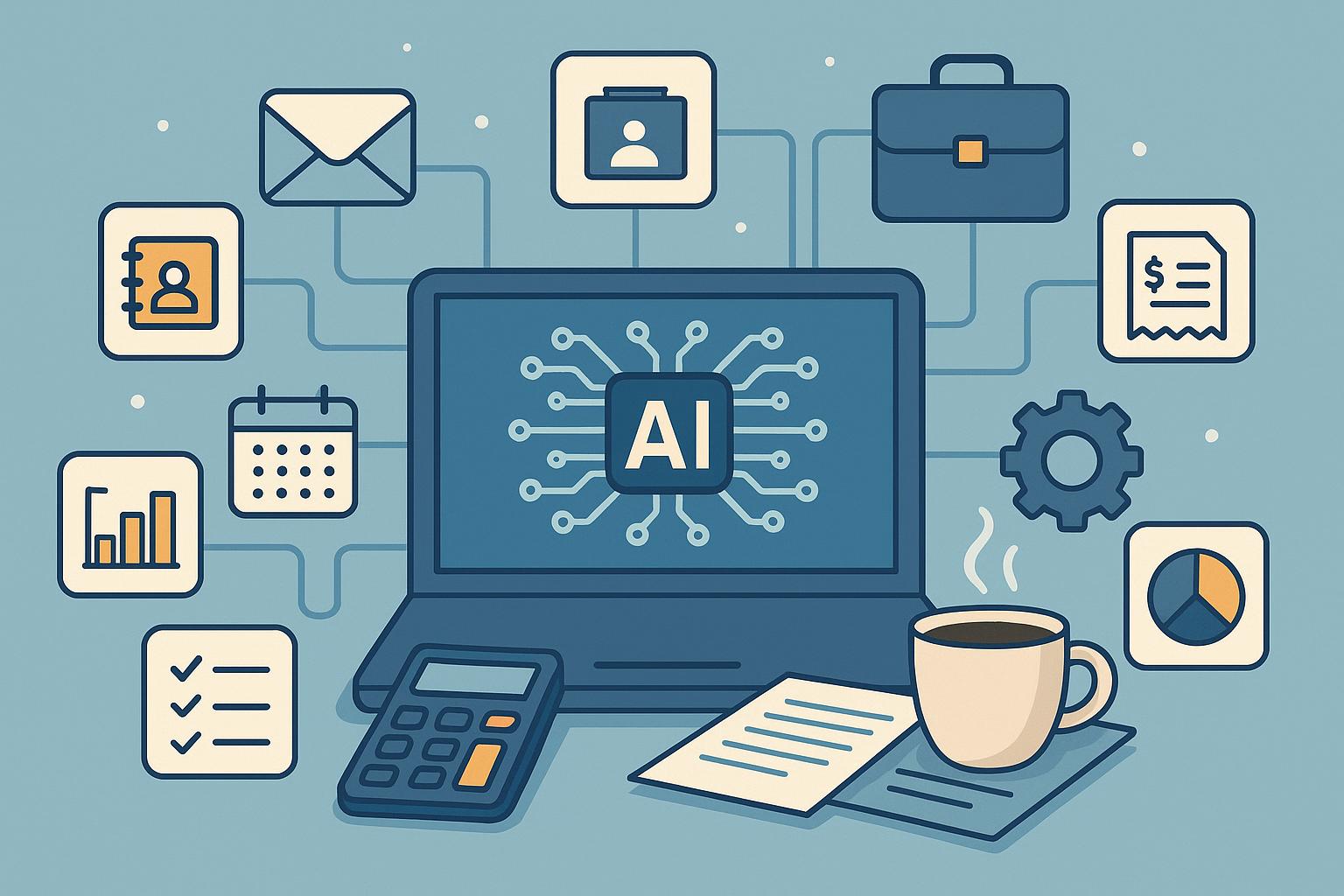
Running a business often means juggling dozens of responsibilities at once. Emails need answering, meetings need organizing, content needs creating, and customer expectations continue to grow. For many business owners, the challenge is not a lack of ideas but a lack of time.
That is why AI tools are becoming part of everyday business operations. Instead of replacing people, smarter AI systems are helping businesses remove repetitive tasks, improve efficiency, and create more space for strategic thinking. Many small businesses are now using AI to automate workflows, improve marketing, and streamline operations without needing large teams or huge budgets.
Here are some of the everyday business tasks that are becoming far easier through modern AI technology.
1. Writing Content Faster Without Losing Momentum
Contents
- 1. Writing Content Faster Without Losing Momentum
- 2. Managing Emails More Efficiently
- 3. Simplifying Customer Support
- 4. Making Marketing Decisions Less Guesswork-Based
- 5. Automating Scheduling and Organization
- 6. Improving Research and Data Analysis
- 7. Supporting Smaller Teams With Bigger Workloads
- 8. Creating More Time for Creative and Strategic Thinking
One of the biggest time drains for businesses is content creation. Blog posts, newsletters, social media captions, website copy, and product descriptions all require consistent attention.
AI writing assistants are helping businesses move past blank-page frustration by generating outlines, summarizing ideas, and drafting content in minutes rather than hours. Many companies now use platforms offering AI tools for business to simplify creative workflows and maintain more consistent publishing schedules.
The real advantage is not simply speed. It is the ability to stay visible and active online without constantly feeling overwhelmed by content demands.
2. Managing Emails More Efficiently
Inbox overload affects businesses of every size. Sorting through enquiries, replying to customers, scheduling meetings, and following up on conversations can consume a significant part of the workday.
AI-powered email tools now help businesses prioritize messages, generate responses, summarize long conversations, and even suggest follow-up actions automatically. This reduces the amount of manual admin work required while helping teams stay responsive.
For smaller businesses without dedicated support staff, this can make daily communication far easier to manage.
3. Simplifying Customer Support
Customers increasingly expect fast answers and smooth communication. AI chatbots and support assistants are helping businesses respond to common questions instantly, even outside working hours.
Modern AI support tools can now handle appointment bookings, FAQs, order tracking, and basic troubleshooting without requiring constant staff involvement. Businesses are using AI systems to automate routine customer interactions while allowing employees to focus on more complex issues.
This creates a better experience for customers while also reducing pressure on internal teams.
4. Making Marketing Decisions Less Guesswork-Based
Marketing used to involve a large amount of trial and error. Businesses often spent money on testing campaigns without fully understanding what was working.
AI tools are changing that by analyzing customer behavior, identifying trends, and helping businesses make more informed decisions. Many AI marketing platforms now suggest content ideas, identify audience patterns, optimize advertising campaigns, and track engagement automatically.
This allows businesses to spend less time guessing and more time focusing on strategies that produce measurable results.
5. Automating Scheduling and Organization
Keeping track of meetings, deadlines, projects, and appointments can quickly become chaotic, especially for growing businesses.
AI scheduling tools are helping businesses organize calendars, coordinate meetings, send reminders, and prioritize tasks automatically. Some systems can even summarize meetings and generate action points immediately afterwards.
These small improvements can have a surprisingly large impact on productivity by reducing admin work and helping teams stay focused.
6. Improving Research and Data Analysis
Research is essential for decision-making, but manually reviewing data, reports, and competitor information takes time.
AI tools can now summarize documents, analyze trends, organize research findings, and highlight useful insights far more quickly than traditional methods. Business owners increasingly use AI to simplify research-heavy tasks and reduce information overload.
Instead of spending hours sorting through information, teams can focus on applying insights and making better decisions.
7. Supporting Smaller Teams With Bigger Workloads
One of the most inspiring aspects of AI is how it is helping smaller businesses compete more effectively. Tasks that once required multiple employees or specialist agencies can now be managed with leaner teams and smarter systems.
Small businesses are using AI to handle repetitive admin tasks, streamline marketing, improve customer communication, and organize workflows more efficiently. AI tools are helping smaller teams work faster and maintain consistency without significantly increasing costs.
This shift is giving many businesses the confidence to grow without feeling limited by time or resources.
8. Creating More Time for Creative and Strategic Thinking
Perhaps the biggest benefit of smarter AI tools is not automation itself but what automation allows businesses to focus on instead.
When repetitive tasks are reduced, business owners gain more time for innovation, creativity, relationship-building, and long-term planning. AI is helping businesses spend less energy on routine administration and more energy on meaningful growth opportunities.
The businesses benefiting most from AI are not necessarily the ones using the most advanced systems. They are the ones using AI thoughtfully to remove friction from everyday work and create more space for progress.