


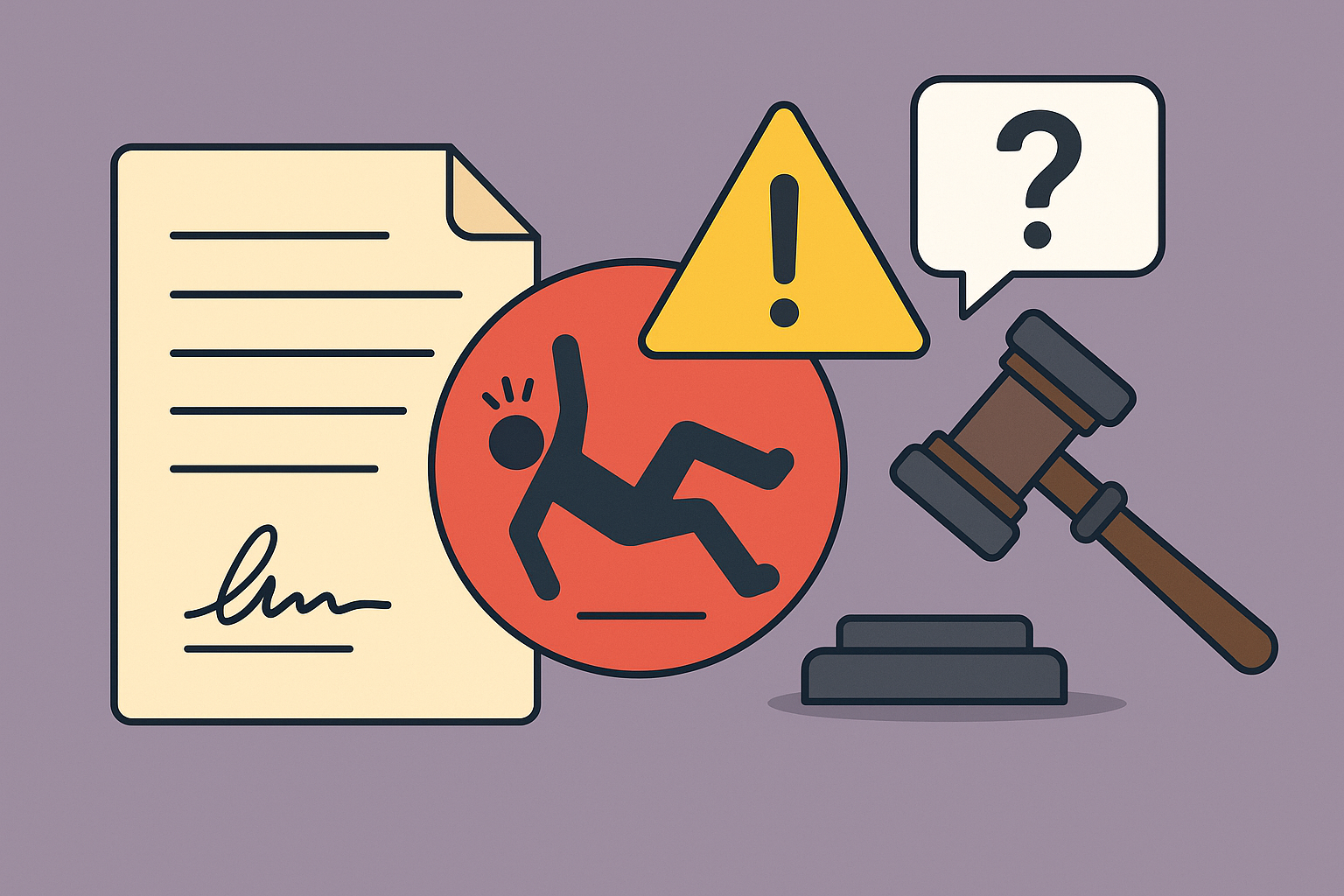
Getting hurt on someone else’s property or even in a business isn’t a simple issue. You might think all you need to do is inform the manager or property owner, file an injury report, and they’ll do the right thing. But that’s not how it works out in reality. If you’ve been injured on someone else’s property, you’ll more than likely need to file a premises liability lawsuit to recover compensation. But not every injury qualifies for a lawsuit.
Here’s how to figure out if you have a case.
Understand negligence as the foundation of a lawsuit
Contents
Property owners have a legal responsibility to keep their spaces safe. Whether you slipped on a wet floor, tripped on a broken staircase, or were injured by a hazard that should have been fixed, your case depends on your ability to prove negligence.
If your injury is the direct result of the property owner’s failure to fix a danger, warn you about a hazard, or monitor their property responsibly, you could have a good case. But the only way to know for sure is to contact an attorney and get a consultation. If you have a case, they’ll help you with your next steps.
A premises liability lawsuit begins by establishing the duty of care. Property owners owe different levels of this duty depending on whether someone has been invited or is a trespasser. Guests are owed the highest level of protection.
Negligence occurs when a property owner ignores a known hazard or fails to discover a danger they should have noticed. Each state defines negligence slightly differently, but the main idea is the same. And for a case to be valid, the hazard needs to be something a reasonable person would expect to cause harm, like a broken step, an icy walkway, loose flooring, or a giant pothole.
Look at what specifically caused your injury
For a lawyer to take your case, the property owner’s negligence must have directly caused your injury. First, identify the cause of your injury. For example, was it a spill or a broken tile? A wet floor without a warning sign? A loose handrail? How long did this dangerous condition exist prior to your accident? If it existed long enough for a reasonable person to fix it – especially if there has been a history of complaints or reports – that will strengthen your case.
Try to find out if the property owner knew of the hazard
Your case will be stronger if you can prove the property owner knew about the hazard and failed to fix the danger. This may not be the case, but it’s worth investigating. For example, if the owner or employees received numerous customer complaints or even acknowledged the issue, that can count as knowledge.
A recurring issue can also strengthen your case. For example, if a similar problem happens regularly – like frozen water on a walkway caused by plants being overwatered in winter – the owner can be held responsible.
Assess your actual damages
Being injured isn’t enough for a lawsuit. You must prove damages. Damages can include medical bills, lost wages, and other expenses. With a serious injury, it might even include permanent disability that results in lost earning capacity.
But if there are no damages associated with your injury, you’ll have a tough time. For example, if you fell and bruised your knee but walked away otherwise unharmed, you don’t necessarily have a case. Unless your bruised knee causes you to miss work and suffer lost wages, you’re not likely to get anywhere.
This is why it’s crucial to seek medical care immediately to establish a cause-and-effect relationship between the accident and your injuries. If a small injury that seems harmless ends up getting worse, it will be on record.
Calculate your medical costs, lost wages, missed work, and any other expenses related to your injury. Then consider your future medical needs, such as long-term care, rehabilitation, or physical therapy. Don’t forget to include mental health treatment as well.
Don’t try to figure it all out on your own – talk to an attorney
Figuring out whether you have a premises liability case after being injured won’t feel as overwhelming when you have a lawyer on your side. Most attorneys offer free consultations, so don’t wait to find out if you have a case. Find out what your legal options are so you can move forward with confidence.