


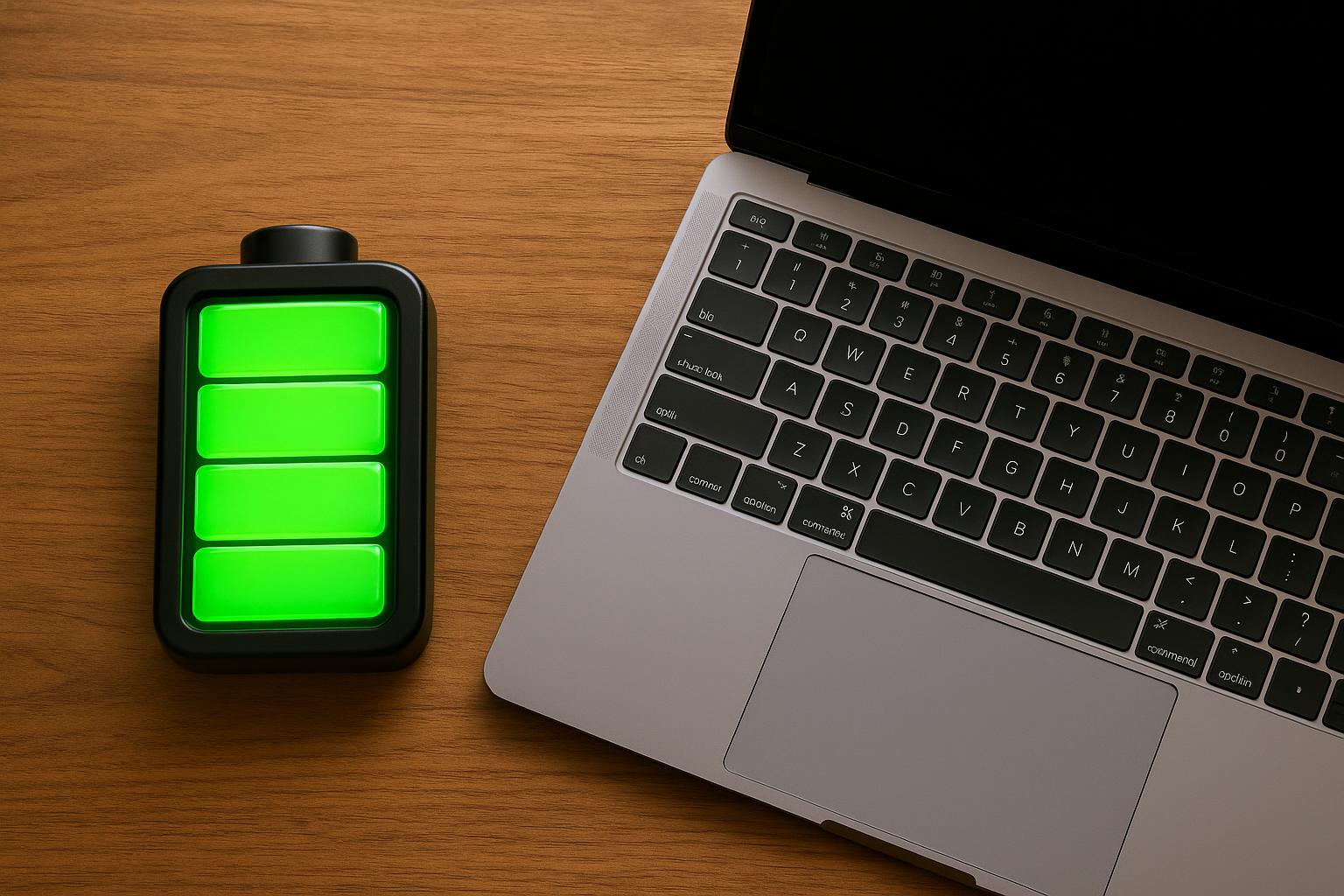
Battery life has become one of the most decisive factors in laptop purchasing decisions, especially as work and personal computing continue to move beyond fixed desks and predictable schedules. In 2025, expectations around battery performance are fundamentally different from what they were only a few years ago. Users now expect a machine to last a full working day — and often more — without compromises in speed or responsiveness. This shift in expectations explains why the move to Apple Silicon has had such a profound impact on how people evaluate modern laptops, including macbooks that rely on Apple’s M-series processors rather than older Intel designs.
At the heart of this transformation is efficiency. Traditional laptop processors were designed in an era when performance gains were often achieved by increasing power consumption. While this approach delivered short bursts of speed, it also drained batteries quickly and generated significant heat. Apple Silicon takes a different path, focusing on performance per watt rather than raw power alone. This means the processor completes tasks using far less energy, extending battery life without sacrificing everyday performance.
In real-world use, this efficiency changes how laptops fit into daily routines. Tasks such as browsing, document editing, video conferencing, and light creative work consume far less power on Apple Silicon machines than on Intel-based systems. Instead of constantly managing battery anxiety or carrying chargers everywhere, users can work more freely. This freedom is not just about convenience; it reshapes how people approach mobile computing altogether.
One of the most striking differences lies in idle and background power consumption. Many laptops lose battery steadily even when performing minimal tasks due to background processes and inefficient power management. Apple Silicon is designed to handle low-intensity workloads using high-efficiency cores that sip power while keeping the system responsive. This means that even during long periods of light use, battery drain remains minimal, preserving energy for when performance is truly needed.
Video playback provides another clear illustration of the efficiency gap. Streaming and media consumption are common daily activities, yet they can be surprisingly demanding on older architectures. Apple Silicon includes dedicated media engines that handle video decoding with exceptional efficiency. As a result, watching high-resolution video consumes far less power than it would on Intel-based systems, allowing for extended playback times without a noticeable impact on battery levels.
The benefits extend to more demanding workflows as well. While heavy tasks inevitably consume more energy, Apple Silicon manages these loads more intelligently. Instead of ramping up power usage across the entire system, the processor allocates resources selectively, engaging high-performance cores only when necessary. This targeted approach allows intensive work to be completed quickly and efficiently, after which the system returns to low-power operation. Over the course of a day, these efficiencies add up to significant battery savings.
Thermal management plays a supporting role in this equation. Heat and battery life are closely linked, as excess heat forces systems to work harder to maintain stability. Apple Silicon machines run cooler under most conditions, reducing the need for constant fan activity and lowering overall power consumption. Less heat also means components operate more efficiently, reinforcing the cycle of extended battery longevity.
Battery performance while unplugged is another area where the difference becomes tangible. Many Intel-based laptops reduce performance when running on battery to conserve power, resulting in slower speeds and compromised workflows. Apple Silicon maintains consistent performance regardless of power source, allowing users to work at full capability without being tethered to an outlet. This consistency removes the trade-off between mobility and productivity that has long defined portable computing.
Sleep and standby efficiency further highlight the architectural advantages. Apple Silicon laptops consume remarkably little power while sleeping, allowing them to remain unplugged for days without significant battery loss. This makes the device feel more like a phone or tablet in terms of readiness, instantly available without penalty. Intel-based systems often lose a noticeable percentage of charge during standby, subtly undermining their portability.
Long-term battery health also benefits from improved efficiency. Batteries degrade over time, particularly when subjected to frequent deep discharge cycles and high thermal stress. By consuming less power and generating less heat, Apple Silicon systems place less strain on the battery itself. This can slow degradation, helping the battery retain usable capacity for longer and extending the practical lifespan of the device.
These advantages have implications beyond day-to-day convenience. Longer battery life supports more flexible working patterns, including remote work, travel, and hybrid environments. Users are less dependent on power infrastructure, which is particularly valuable in unpredictable settings. Over years of use, this flexibility becomes part of the overall value proposition rather than a temporary benefit.
From an environmental perspective, efficiency also matters. Lower power consumption reduces energy usage over the lifespan of a device, contributing to a smaller environmental footprint. While individual savings may seem modest, they scale significantly across millions of devices. This efficiency aligns with broader trends toward sustainability and responsible technology use, adding another dimension to the appeal of Apple Silicon laptops.
It is important to note that battery life figures advertised by manufacturers rarely tell the full story. Real-world efficiency depends on how consistently a machine manages power across varied tasks. Apple Silicon’s advantage lies not in isolated tests, but in its ability to deliver predictable, long-lasting performance throughout diverse usage patterns. This reliability is what users experience day after day, shaping satisfaction over the long term.
The contrast with Intel-based designs becomes more apparent as software evolves. Modern applications increasingly assume efficient hardware, leveraging features that favour Apple Silicon’s architecture. As a result, battery advantages are not static but continue to improve over time as optimisation deepens. Older architectures struggle to keep pace with these changes, widening the efficiency gap rather than closing it.
Seen through this lens, battery life is no longer a secondary specification but a defining characteristic of modern laptops. Apple Silicon has shifted expectations by proving that long battery life does not require sacrificing performance. Instead, it demonstrates that intelligent design can deliver both simultaneously.
In practical terms, this redefinition of battery efficiency explains why Apple Silicon machines command a premium in 2025. The value lies not only in hours of use but in freedom from compromise. By enabling consistent performance, extended unplugged operation, and long-term reliability, Apple Silicon transforms battery life from a limitation into a genuine strength. For users weighing long-term usability and daily convenience, this shift represents one of the most meaningful advancements in portable computing in recent years.