


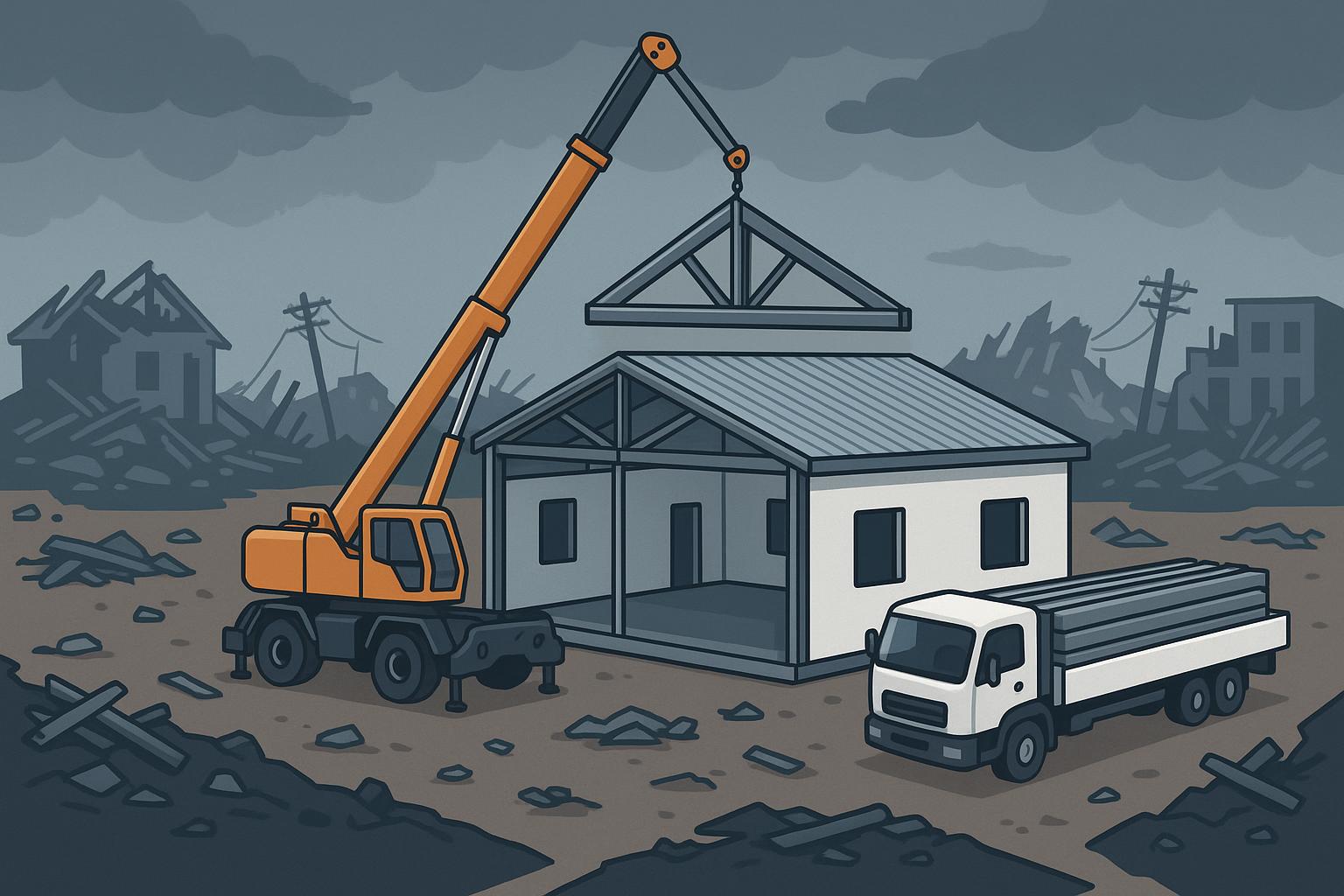
Disasters create urgent needs for shelter, medical centers, and other critical facilities. Traditional construction often takes too long to meet these immediate requirements. Prefabricated steel structures offer a practical solution that addresses these difficulties effectively. They are manufactured off-site and then assembled quickly, which saves time and resources. This article explores six key reasons why these are an excellent choice for rapid disaster relief.
Exceptional Speed of Construction and Deployment
Contents
The topmost advantage of prefabricated steel buildings is that they are made away from the disaster site and then brought in for quick assembly. This process shortens construction time from months to just days. Fast delivery of these structures can help provide shelter for displaced people and operational spaces for relief workers. Rapid setup limits exposure to harsh weather and helps rebuild communities faster. The design also allows groups with limited experience to assemble the buildings with basic tools, making it easier to get shelters ready quickly in remote areas.
High Durability and Resilience in Harsh Conditions
Steel offers strong resistance to extreme weather including earthquakes, hurricanes, and fires. These materials can endure heavy winds and shaking without collapsing, offering safer protection for residents. Steel does not rot or warp like wood and resists rust when properly treated. Such durability ensures shelters last through recovery periods and potential aftershocks or storms. This reliability makes steel buildings a secure option when safety and longevity are critical for disaster response.
Lightweight and Easily Transportable Components
Steel building parts are lightweight compared to traditional materials, which helps shipping to disaster zones that may be hard to access. The modular components can be transported on trucks or ships and assembled with simple equipment. This movable nature means shelters can be relocated or expanded depending on evolving needs. The ease of transport also enables rapid deployment to multiple locations, helping relief efforts cover more ground quickly. Efficient packaging and assembly minimize delays caused by difficult terrain or damaged infrastructure.
Flexibility and Customizability for Various Relief Needs
Prefabricated steel structures allow a range of designs to meet different disaster requirements. They can serve as emergency housing, medical clinics, classrooms, command centers, or warehouses. Modular panels make it possible to adjust layouts or add new rooms as demands change. This versatility helps responders provide appropriate facilities without waiting for new construction. The ability to customize interiors and exteriors adds value by supporting both immediate emergency needs and longer-term rebuilding plans.
Cost-Effective and Low Maintenance Solutions
Compared to traditional methods, prefabricated steel buildings reduce labor and material expenses. Faster assembly cuts costs and allows organizations to build more shelters within budgets. Steel also has low maintenance needs since it resists pests, mold, and structural damage. This reduces costs and workload during long relief campaigns. Remaining sturdy over time further prevents expensive repairs, preserving funds for other urgent supplies like food or medicine.
Enhanced Safety and Security for Occupants
Prefabricated steel structures provide a secure environment for displaced individuals and relief workers. The strong frames deter unauthorized entry and offer protection from external threats. Lockable doors and windows add an extra layer of security in unstable or crowded relief zones. This aspect helps maintain order and offers peace of mind to vulnerable populations. Reliable safety features make these structures suitable for shelters where privacy and protection are essential.
Prefabricated steel structures combine fast setup, strong resilience, easy transport, adaptable design, and cost savings. They meet the urgent, varied demands of disaster relief with efficient and reliable solutions. Using these buildings promotes quicker recovery and safer shelter for affected populations.