


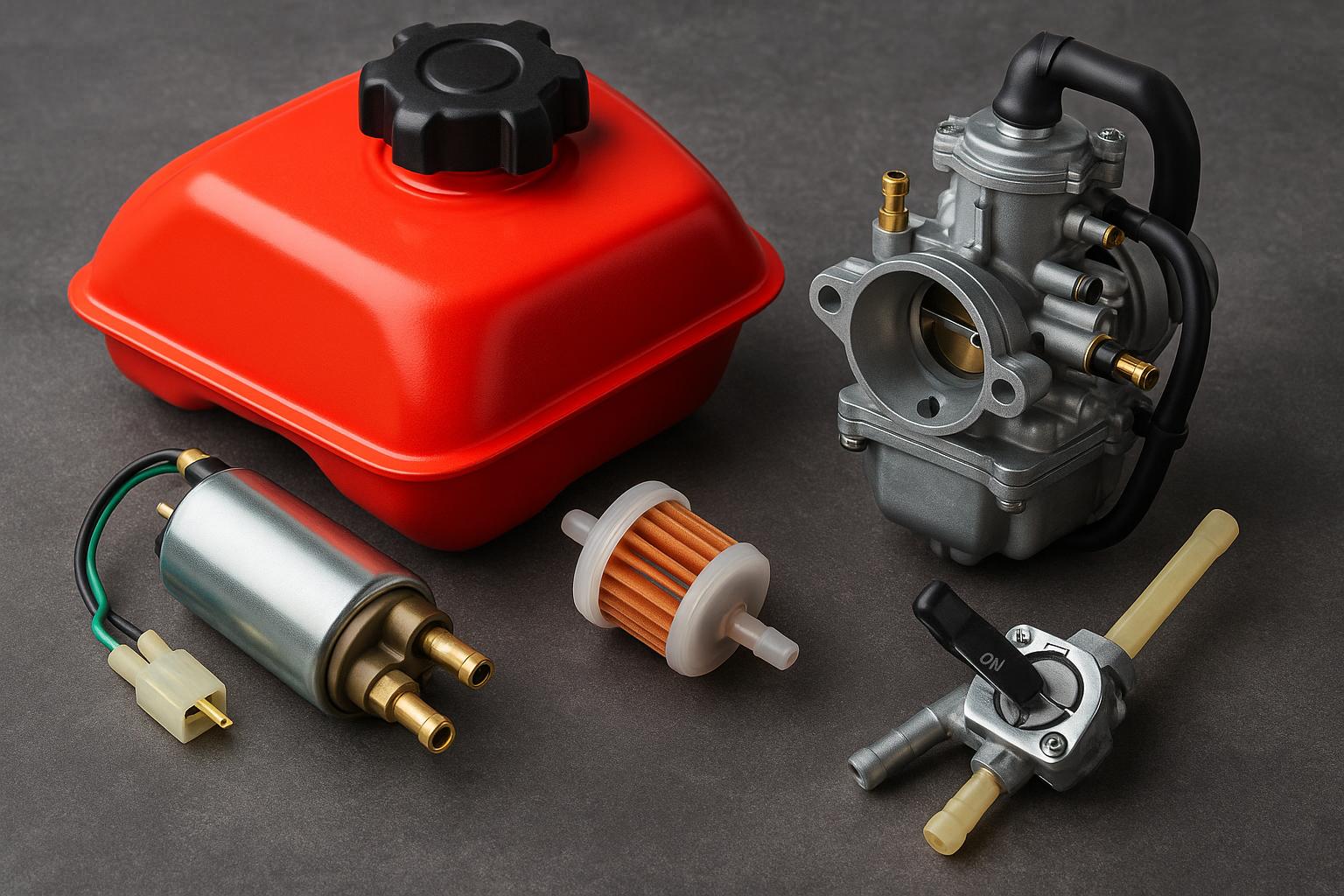
Powersports fuel systems cover a wide range of machines that share one trait: they all deliver fuel to small, high-output engines operating in demanding conditions. ATVs, UTVs, motorcycles, snowmobiles, personal watercraft, and outboards all fall under the category, and while the engineering principles are the same, the execution varies quite a bit between them.
Anyone who works on more than one type of machine learns quickly that a fuel system approach that works on a UTV does not transfer cleanly to a snowmobile. Knowing where the differences sit saves a lot of diagnostic time.
Carbureted Versus Fuel Injected
Contents
The clearest dividing line in powersports fuel systems is whether the machine uses a carburetor or electronic fuel injection.
Carbureted machines run at low fuel pressure, usually a few pounds per square inch, and rely on engine vacuum and float bowl level to meter fuel. When these systems have problems, the trouble is usually contamination in the jets or a fuel delivery pressure that has drifted out of range. Too much pressure floods the float bowl, too little starves it.
Fuel injected machines operate at far higher pressure, commonly in the range of 40 to 60 psi depending on the application, and the pressure has to stay stable across the entire engine load range. The injectors depend on consistent pressure to deliver a predictable fuel volume. If pressure sags under load, the engine runs lean at exactly the moment it is working hardest.
Both types can be reliable. They simply fail in different ways and require different diagnostic tools.
ATV and UTV Systems
Utility and recreational four-wheel machines usually run an in-tank module that combines the pump, a strainer, a pressure regulator, and the fuel level sender in one unit. Access typically requires removing a seat, a bed, or a cargo deck.
These machines see the worst contamination exposure of anything in the powersports category. Dust, mud, water crossings, and field refueling all contribute. Strainer restriction is one of the most common causes of low pressure under load, and it is frequently mistaken for a failing pump.
UTVs in particular carry heavy loads and tow, which means sustained high engine load and sustained high fuel demand. A system that seems fine on a test ride can reveal itself only when the machine is actually working.
Motorcycle Systems
Motorcycles pack fuel systems into very tight spaces, which drives most of their design decisions. Tank shapes are irregular, pumps are compact, and access can require significant disassembly.
Because the packaging is tight and the tanks are relatively small, motorcycle powersports fuel systems are more sensitive to heat and to low fuel levels. Fuel volume in the tank does double duty as a heat sink for the in-tank pump, and a bike ridden habitually on the last quarter tank tends to shorten pump life.
Snowmobile Systems
Snowmobiles present the opposite thermal environment. Cold-weather operation changes fuel volatility, thickens everything, and puts high demand on the electrical system during starting.
The other snowmobile-specific issue is condensation. Machines move between cold outdoor storage and warmer trailers or garages, and the temperature swing drives moisture into the tank. Water in a snowmobile fuel system can freeze in the lines and cause a fuel starvation condition that looks like an ignition problem.
Marine and Personal Watercraft
Marine powersports fuel systems face constant humidity and, in saltwater use, an aggressive corrosion environment. Corrosion at electrical connections is at least as common a failure cause as pump wear itself.
Marine applications also sit for extended periods, which stacks the storage and ethanol problems on top of the corrosion problems. Water separating filters and disciplined storage practice matter more here than almost anywhere else.
Pressure Specification Is Not Optional
Across every one of these machine types, the specification that matters most is fuel pressure. An engine designed for 43 psi does not run correctly at 55 psi, and it does not run correctly at 35 psi either.
Overpressure causes rich running, fouled plugs, poor fuel economy, and eventually catalyst or exhaust valve damage on machines equipped accordingly. Underpressure causes lean running, hesitation, heat, and detonation under load, which is the more expensive of the two failures.
Pressure should always be verified with a gauge under actual load, not assumed from a component's appearance or from a code reader. A pump that holds spec at idle and drops off when the throttle opens is a failing pump, and it will pass any test performed in a driveway at idle.
Where These Systems Usually Fail
Failures across powersports fuel systems cluster around a short list of causes.
- Contaminated fuel and restricted strainers or filters, usually the first thing to check
- Corroded or loose electrical connections producing low voltage at the pump
- Ethanol degradation during storage, causing gum, varnish, and phase separation
- Chafed or heat-damaged fuel lines
- Pumps run dry or run hot from habitually low fuel levels
- Regulators drifting out of specification, which mimics pump failure exactly
The important pattern is that most of these are not the pump itself. Replacing a pump on a system that has a wiring problem or a plugged strainer produces a repair that fails again quickly.
Keeping Powersports Fuel Systems Healthy
Good maintenance for powersports fuel systems comes down to controlling what enters the tank and controlling what happens during storage.
Use fresh fuel and filter it when the source is questionable. Replace filters on a time basis for machines that see dust and water. Store with stabilized fuel and a full tank, or store dry, and avoid the half-full compromise. Keep electrical connections clean and protected. Check pressure with a gauge any time a running complaint appears rather than guessing from symptoms.
Machines that get this treatment tend to start on the first attempt and hold power under load season after season. The powersports fuel systems that give people trouble are almost always the ones that got attention only after something failed.