


Key Takeaways
Contents
- Key Takeaways
- Why the Sutherland Rub Tester is a Non-Negotiable Tool in Quality Control
- Steps to Implementing the Sutherland Rub Tester in Your Workflow
- The Science Behind the Sutherland Rub Test Methodology
- Maximizing the Value of Your Sutherland Rub Tester Investment
- FAQ
- What industries benefit the most from using the Sutherland Rub Tester?
- Can small businesses afford the Sutherland Rub Tester?
- What are some common metrics derived from Sutherland Rub Tester results?
- How often should businesses conduct tests using the Sutherland Rub Tester?
- What training resources are available for using the Sutherland Rub Tester?
- How does the Sutherland Rub Tester compare to similar testing devices?
- Can the Sutherland Rub Tester integrate with existing quality control systems?
- What innovations are expected for the next generation of quality testing equipment?
- Useful Resources
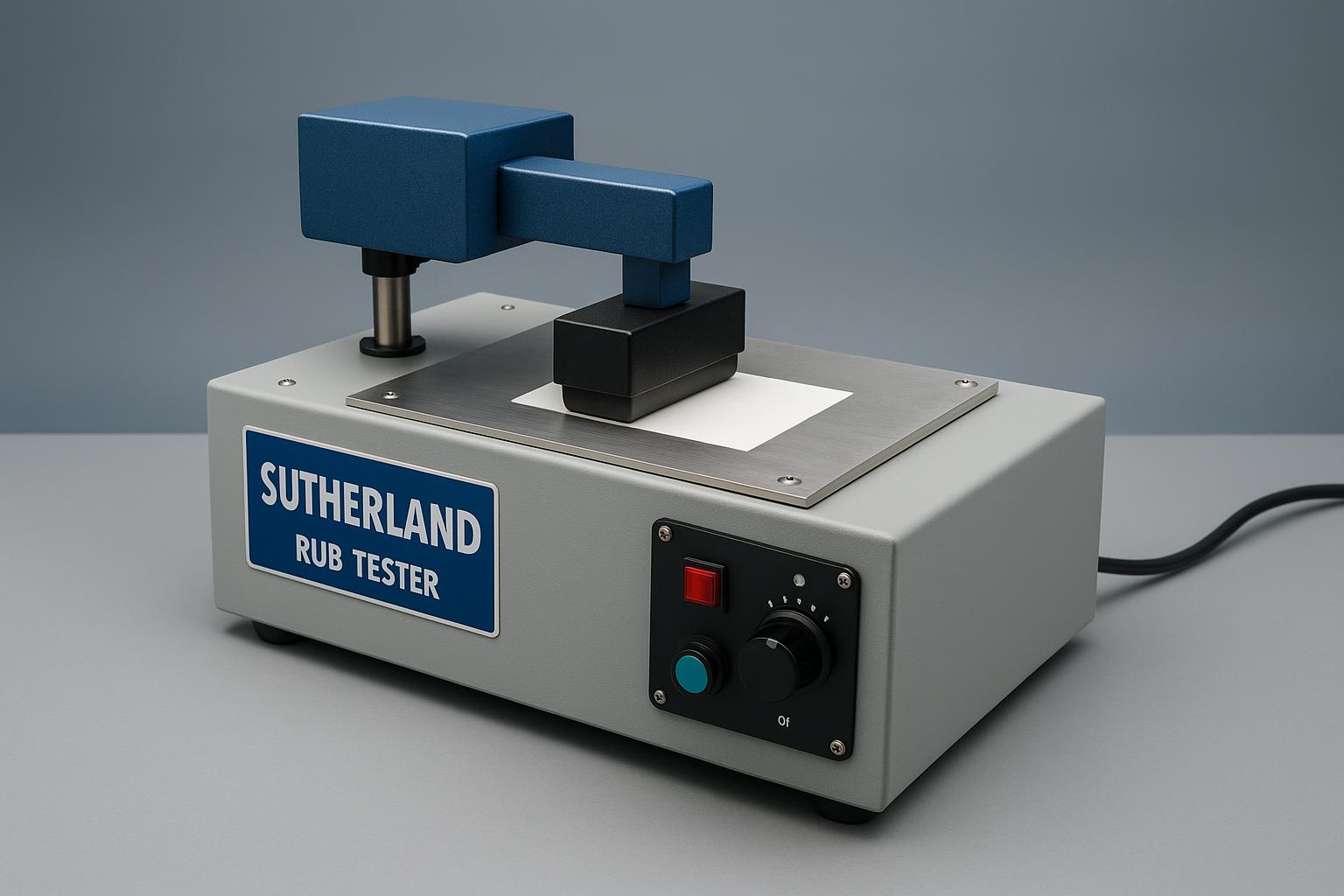
The Sutherland Rub Tester stands as a crucial instrument in quality assurance, renowned for precision engineering that delivers dependable results across multiple manufacturing environments.
This adaptable device effectively tests coatings, inks, and printed materials, seamlessly adjusting to different substrate types for comprehensive quality control.
By simulating real-world conditions, the tester enhances product durability, guiding manufacturers toward better formulation choices and minimizing warranty claims.
Companies leveraging the Sutherland Rub Tester have experienced notable reductions in customer complaints and expanded their market reach by effectively meeting industry standards.
Integrating the Sutherland Rub Tester into existing production processes is achievable through thoughtful workflow assessments and gradual implementation strategies.
To maintain its longevity and consistent performance in quality testing, regular upkeep of the tester—including calibration and cleaning—is essential.
Insights garnered from the Sutherland Rub Tester contribute to ongoing enhancements in product quality, with various industries reporting tangible cost savings.
Why the Sutherland Rub Tester is a Non-Negotiable Tool in Quality Control
The Key Features That Make It Stand Out
The Sutherland Rub Tester has gained a reputation for excellence in quality assurance since its debut over 70 years ago. Its exceptional design and functionality make it indispensable for any manufacturer committed to quality control. Thanks to precision engineering, consistent application under replicable test conditions is achieved. This accuracy not only helps manufacturers secure product quality but also fosters customer satisfaction.
Among its many standout features is versatility; this device tests a wide array of products, from coatings to inks and printed materials. Its adaptability to different substrate types cements its status as a multi-faceted tool in the quality control toolkit. When brands need to push boundaries in coating systems or printed product standards, this tester meets the challenge.
Ease of use is another significant advantage. Training new staff takes minimal time. The interface is intuitive, allowing even those without specialized training to obtain reliable results. With its durability, the Sutherland Rub Tester solidifies its role as a critical element in the production workflow.
How It Enhances Product Longevity and Durability
Durability testing is far more than a mere checkbox; it’s a vital necessity. Overlooking thorough testing can lead to severe consequences, such as dissatisfied customers and rising returns. Designed specifically to gauge wear and tear on different surfaces, the Sutherland Rub Tester simulates real-world conditions, ensuring products are capable of enduring their intended use over time.
Clients discover that frequent testing correlates to improved formulation choices. Consequently, products maintain their integrity longer throughout their lifespan. Businesses with consistent quality assurance protocols often find a direct link between their testing efforts and a drop in warranty claims. When a commitment to longevity combines with systematic evaluations, success is usually the outcome.
Real-World Success Stories From Industry Leaders
Consider automotive paint manufacturers. A case study revealed that integrating the Sutherland Rub Tester into quality assurance led to a 30% drop in customer complaints within just one year. Company leaders affirm that prioritizing quality testing yields genuine financial advantages.
The packaging industry also provides a compelling success story. A food container producer noted that using the tester enabled them to meet industry standards more effectively. This move helped secure contracts with major retailers who emphasize quality assurance, significantly expanding their market presence.
“Quality isn’t just about meeting standards; it’s about exceeding customer expectations.” – Industry Leader
These anecdotes represent just a snapshot of the success landscape tied to adopting the Sutherland Rub Tester. Each illustration highlights how utilizing well-engineered testing methods can advance businesses.
Steps to Implementing the Sutherland Rub Tester in Your Workflow
Integrating Quality Testing Without Interrupting Production
Businesses consistently face the challenge of keeping production rates high while ensuring quality. Introducing a new tool might seem intimidating, but incorporating the Sutherland Rub Tester doesn’t have to disrupt workflow. Strategic planning becomes crucial.
- Conduct a Workflow Assessment: Review existing quality assurance processes and identify integration points for the tester.
- Implement Gradually: Begin with a pilot program, allowing for flexibility and adaptation before full-scale implementation.
- Cross-Train Employees: Providing in-depth education on the testing process guarantees smoother operations, thus preventing bottlenecks.
This structured approach frequently enables businesses to weave the tester into their quality processes without compromising operational output. It’s about finding a balance between ambition and practicality.
Training Staff to Maximize Efficiency and Accuracy
The efficacy of a machine hinges on its operator. Without adequate training, even state-of-the-art equipment can yield unacceptable results. Training must focus not only on operating the Sutherland Rub Tester but also on comprehending the associated metrics and outcomes.
- Hands-On Workshops: Offer staff opportunities to familiarize themselves with the machine’s functions.
- Knowledge Sharing: Promote discussion among employees regarding their findings and how these findings affect production quality.
- Scheduled Refresher Courses: Ongoing education keeps skills and knowledge fresh over time.
Alignment within the team makes achieving high-quality assurance levels both simpler and more effective.
Maintenance Tips for Longevity and Peak Performance
Maintaining the Sutherland Rub Tester in optimal condition is crucial. Regular maintenance ensures accurate performance and extends the machine’s life. Businesses frequently adopt maintenance schedules that include checks on wear and necessary calibrations.
- Routine Calibration Checks: Ensure that equipment consistently aligns with industry standards.
- Cleaning Procedures: Keep the machine clean to prevent debris from skewing test results.
- Parts Inspection: Regularly check components for wear, mitigating unexpected downtime.
By implementing these straightforward practices, the long-term survival of the tester is enhanced, paving the way for maximizing return on investment.
The Science Behind the Sutherland Rub Test Methodology
What Sets This Test Apart From Others on the Market
The Sutherland Rub Test employs a well-defined methodology prioritizing durability while minimizing variability. Such consistency establishes a reliable measure of how surfaces respond to abrasion under controlled conditions. Unlike other testing methods that may lack precision, this test presents quantifiable results grounded in established scientific principles.
The apparatus includes adjustable loads, enabling operators to simulate diverse conditions that accurately reflect end-use scenarios. This adaptability ensures thorough data generation, leading to deeper insights into product performance.
Understanding the Technical Specifications You Should Know
When assessing the Sutherland Rub Tester, it is essential to review its technical specifications. Familiarity with the model’s details supports purchasing decisions while ensuring compatibility with current systems.
- Load Options: Availability of various weight loads tailored for specific testing demands.
- Dynamic Readouts: Real-time results provide immediate feedback, allowing for quick adjustments and improving workflow efficiency.
- Durable Construction: Designed to endure rigorous use, ensuring longevity and reliability.
Understanding these specifications equips decision-makers with vital insight needed for informed purchases.
How It Contributes to ISO and Other Compliance Standards
Complying with ISO standards represents a significant milestone for any manufacturer, transcending mere checklist requirements. The Sutherland Rub Tester aligns seamlessly with numerous compliance needs, facilitating businesses in remaining within regulatory guidelines. This compliance can substantially enhance a brand’s reputation and build consumer trust.
Manufacturers indicate that using this device assists them in maintaining consistent quality benchmarks, which ultimately leads to fewer compliance-related issues. Reduced customer complaints correlate with lower recall rates and fewer complications during audits. Enhanced compliance brings peace of mind.
“When it comes to quality, consistency is king. The Sutherland Rub Tester fortifies that principle.” – Quality Control Expert
Maximizing the Value of Your Sutherland Rub Tester Investment
Using Data Insights for Continuous Improvement
The true advantage of deploying a Sutherland Rub Tester extends beyond testing; it lies in the insights gleaned. The data generated from tests are not mere figures; they represent a roadmap for progress. Businesses should establish systems to collect and analyze this data effectively.
- Trend Analysis: Use testing results to identify and address recurring production issues.
- Benchmarking: Compare outcomes to established industry standards for performance evaluation.
- Feedback Loops: Develop protocols to share findings with R&D teams for insights into product development.
A proactive stance towards quality yields continuous benefits. Knowledge drives improvement.
Case Studies: Cost Savings and Quality Improvements
Industry leaders often share insights regarding the financial impacts stemming from enhanced quality practices facilitated by the Sutherland Rub Tester. One report illustrated a packaging company that saved thousands annually due to fewer quality failures directly linked to rigorous testing protocols. The connection between testing and improved product quality is not a guess; it’s backed by solid data.
Another case chronicled a textiles manufacturer that adopted testing measures and realized a 50% decrease in material waste. This reduction translates to substantial long-term savings, demonstrating how the Sutherland Rub Tester positively influences bottom lines.
Future Innovations: What’s Next for Quality Testing Equipment
The realm of quality testing is primed for innovation, and the Sutherland Rub Tester is well-positioned to embrace these advancements. Industry insiders predict that future versions will integrate AI for predictive analytics and smart reporting capabilities. This evolution isn’t just about refining testing accuracy; it may also forecast potential failure points, elevating quality assurance to unprecedented levels.
Emerging technologies such as IoT integration promise real-time data collection and remote oversight, ensuring manufacturers remain ahead of quality challenges. The possibilities for these developments could redefine industry standards moving forward.
In a continuously evolving marketplace, staying ahead is a must. Quality testing cannot remain static; it has to adapt alongside technological advancements. Utilizing tools like the Sutherland Rub Tester is merely the starting point.
FAQ
What industries benefit the most from using the Sutherland Rub Tester?
Fields like packaging, automotive, and textiles frequently gain substantial advantages from the Sutherland Rub Tester. Such sectors require rigorous quality standards to satisfy consumer expectations and regulatory mandates, rendering the tester an invaluable asset.
Can small businesses afford the Sutherland Rub Tester?
Many small businesses find that investing in the Sutherland Rub Tester significantly enhances their product quality, leading to higher customer satisfaction and fewer returns. Although the initial investment may seem considerable, long-term savings derived from improved quality typically surpass the upfront costs.
What are some common metrics derived from Sutherland Rub Tester results?
Key metrics generally include wear resistance, surface integrity, and consistency under abrasion. These insights guide manufacturers in adjusting formulations and strategizing enhancements in production.
How often should businesses conduct tests using the Sutherland Rub Tester?
Testing frequency often hinges on production volume and the materials in use. Regular testing—ideally after production batches—ensures ongoing product quality and adherence to industry benchmarks.
What training resources are available for using the Sutherland Rub Tester?
Training resources typically involve hands-on workshops, user manuals, and online tutorials. Manufacturers benefit from ongoing educational opportunities through scheduled refreshers to keep operators updated on best practices and advancements.
How does the Sutherland Rub Tester compare to similar testing devices?
The Sutherland Rub Tester distinguishes itself through its precise engineering and adaptability to diverse substrates. Other devices may not deliver the same degree of accuracy in mimicking real-world conditions, which increases the reliability of results.
Can the Sutherland Rub Tester integrate with existing quality control systems?
Absolutely. Professionals frequently find it straightforward to incorporate the Sutherland Rub Tester into their current quality control frameworks. Effective planning guarantees that the tester complements ongoing systems, enhancing overall quality assurance initiatives.
What innovations are expected for the next generation of quality testing equipment?
Future innovations may encompass AI-enhanced analytics and IoT capabilities for real-time monitoring. Such advancements promise to further refine testing processes, offering manufacturers deeper insights into product performance.
Useful Resources
- ASTM International: A standards organization that develops and publishes voluntary technical standards for materials, products, systems, and services.
- International Organization for Standardization (ISO): An independent, non-governmental international organization that provides standards to ensure quality, safety, and efficiency in products and services.
- Quality Digest: A publication dedicated to quality management practices, news, and trends, offering valuable insights for quality professionals.
- American Society for Quality (ASQ): A global community of quality professionals focused on improving business processes and providing training resources.
- National Institute of Standards and Technology (NIST): A federal agency that develops measurement standards and guidelines to help ensure product quality and safety.
- Quality Assurance Solutions: An online resource providing training, tools, and templates for quality management systems.
- TechStreet: A platform for accessing standards and codes across various industries, providing valuable resources for compliance and quality assurance.
- Institute of Industrial and Systems Engineers (IISE): A professional organization that offers resources and education related to industrial engineering and quality improvement.