



Your oversized air conditioner cycles on and off too fast, causing uneven cooling and high bills. Learn why proper sizing matters for real comfort.
An oversized air conditioner makes your home less comfortable because it chills the air so fast that it shuts off before drying it or reaching every room. That can leave your living room cold, your bedrooms warm, and the air feeling sticky, even when the thermostat shows the right temperature.
That expectation costs you twice. You pay more for the unit upfront, then live with clammy air, uneven rooms and a compressor that wears out early.
To avoid that outcome, Gtallen will explain why these oversized air conditioner problems happen and how proper air conditioner sizing helps prevent them. You’ll also learn how to tell if your AC is too big for your house. Let’s start with what happens around your thermostat, where the trouble usually begins.
An Oversized AC Cools the Thermostat Area Too Quickly

An oversized air conditioner can reach the temperature set on its thermostat within minutes. Once that happens, the compressor shuts off even though other parts of the house may still need cooling.
That repeated start-stop pattern is called “air conditioner short cycling”. The system switches off before it has run long enough to cool the space evenly or remove sufficient moisture from the air. This creates two problems:
The Thermostat Is Satisfied Before the Rooms Are
Your thermostat usually sits in a hallway or living area, often close to a supply vent. Cold air reaches that sensor quickly, so it can register the target temperature while bedrooms or other distant rooms remain warmer.
The compressor stops and those warmer rooms don’t get enough time to catch up before the cooling cycle ends. As a result, you might end up with a freezing living room while a back bedroom stays uncomfortable, even though the thermostat shows your selected temperature.
Unfortunately, lowering the thermostat doesn’t necessarily fix that imbalance. It can make the area around the thermostat even colder without properly cooling the distant rooms.
Short Cycles Give the System Less Time to Remove Humidity
Your air conditioner removes moisture while it cools your home. However, it needs enough runtime to handle both jobs effectively.
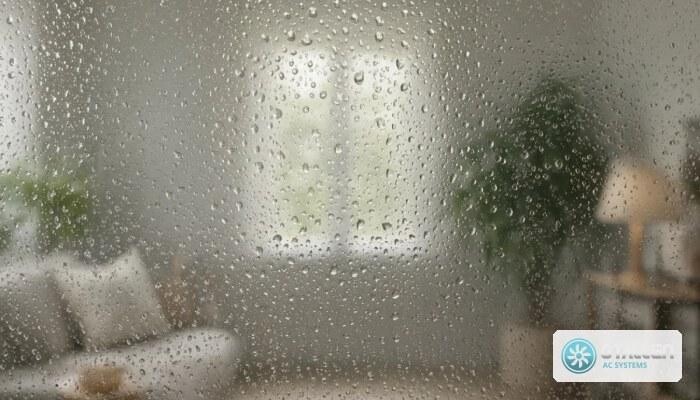
When properly sized, your AC runs long enough for its indoor coil to collect moisture from the air. By contrast, an oversized unit may reach the thermostat setting and shut down before it removes enough moisture. That’s how a room can feel cold but clammy at the same time.
How Air Conditioning Size Is Determined by Cooling Load
The cause usually traces back to sizing. Choosing an air conditioner based on floor area alone can lead to the wrong capacity. In fact, two homes with similar floor areas may have very different cooling requirements. This is because their layouts, insulation, windows and exposure to sunlight can differ, which changes how much heat each home absorbs.
That’s why an installer should perform a home cooling load calculation to determine the AC’s required cooling capacity. Several factors contribute to that calculation:
| Factor | How it affects cooling requirements |
| Floor Area and Ceiling Height | Larger rooms and higher ceilings generally contain more air to cool. |
| Insulation | Poor insulation allows more outdoor heat to enter, increasing the cooling load. |
| Windows and Glazing | Large windows can allow substantial heat into a room, particularly when they receive direct sunlight. |
| Orientation and Shading | Rooms exposed to strong afternoon sun may need more cooling than shaded areas. |
| Occupancy and Appliances | People, lighting and appliances all release heat into the home. |
| Local Climate | Brisbane’s warm, humid conditions influence both the amount of cooling and the moisture removal a system needs to provide. |
These factors help determine the capacity required for the home, rather than relying on a broad estimate based only on square metres.
A proper assessment also considers the layout and how air will move between rooms. That helps avoid choosing a unit that cools one area quickly while leaving other parts of the home uncomfortable.
How to Tell If Your Current AC May Be Oversized
You may already notice some of the effects of an oversized air conditioner in your home. However, these symptoms can also have other causes, so they don’t confirm incorrect sizing on their own.
Look for a combination of the following signs:
- Frequent Starting and Stopping: The compressor switches on and off repeatedly, sometimes after only a few minutes of cooling. If the system runs for less than ten minutes before shutting off, that pattern likely indicates short cycling. You can time a few cycles with your phone to confirm before calling a technician.
- Uneven Room Temperatures: The area around the thermostat feels cold while bedrooms or other rooms remain warm. Place a thermometer in two or three rooms and compare readings 30 minutes after the system starts. A difference of three degrees or more between the thermostat area and a distant room suggests the system is not running long enough to distribute air evenly.
- Cold but Humid Air: Your home reaches the set temperature, but condensation forms on windows or the air feels damp against your skin. Check for moisture on glass surfaces or a musty smell in closed rooms, since both point to humidity the system has not removed. A hygrometer reading above 60% relative humidity while the system is running confirms the issue.
- Difficulty Maintaining Comfort: You find yourself adjusting the thermostat frequently because some rooms feel too cold while others stay warm. If you lower the setting by two or three degrees and the distant rooms still do not cool down, the problem is distribution rather than temperature. A properly sized system should hold a comfortable temperature across the home without constant adjustment.
If several of these problems occur together, the system’s capacity and installation deserve a closer look. A technician can assess its operation and compare the unit’s capacity with the home’s actual cooling requirements.
Getting the AC Size Right Prevents These Comfort Problems
Ask an installer for a cooling load calculation before choosing your next system. That assessment matches the unit’s capacity to your home’s layout, insulation and climate, so the system runs long enough to cool every room and control humidity.
For Brisbane homeowners, Gtallen can help assess your property’s cooling requirements and recommend a system suited to your layout and conditions. Contact us to discuss your cooling needs before choosing your next AC.