


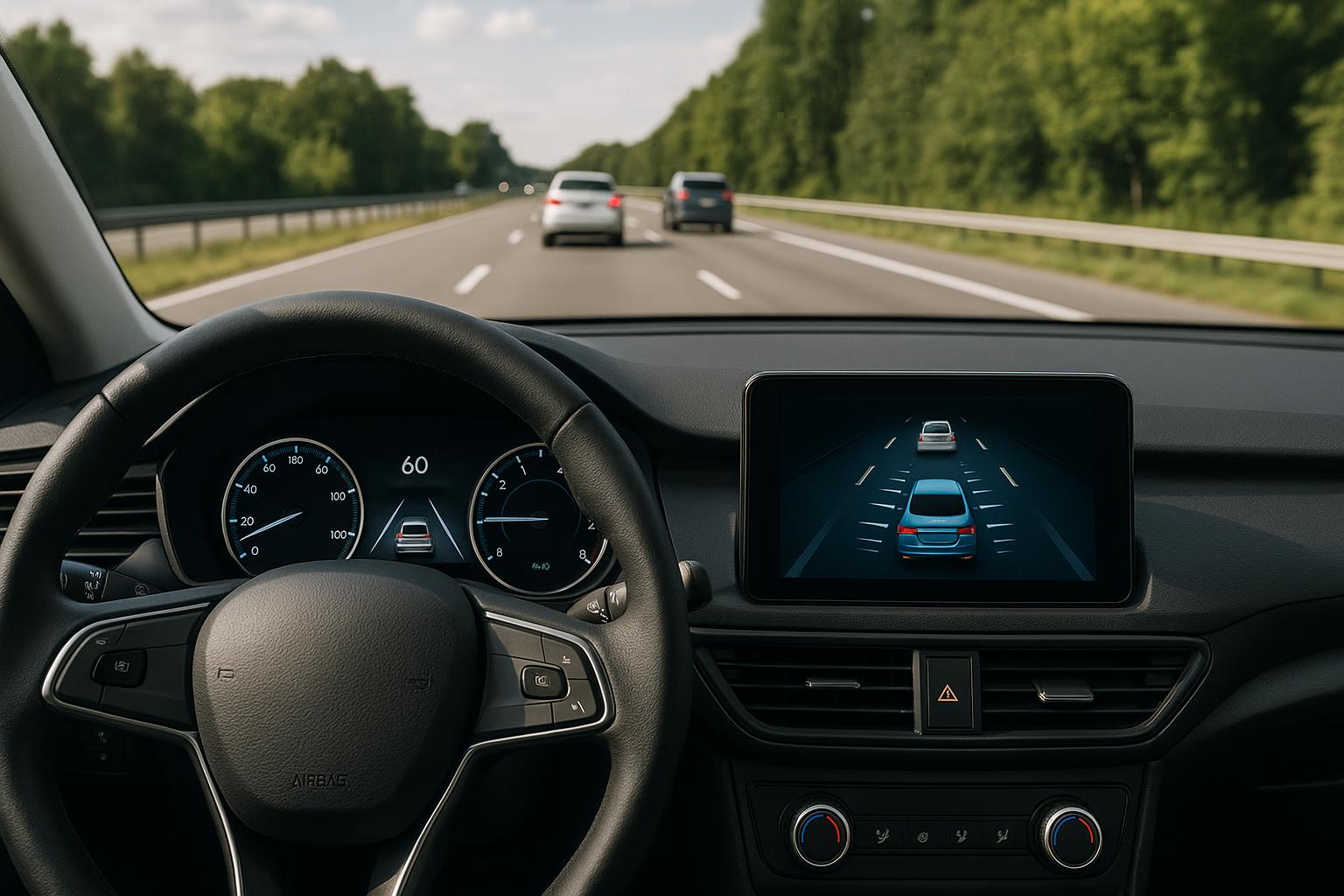
For a generation of young drivers, learning to drive no longer means relying solely on mirrors, road signs, judgment, and the occasional nervous instruction from a parent in the passenger seat. Modern vehicles can warn drivers when they drift out of a lane, detect another car in a blind spot, apply the brakes when a collision appears imminent, display a near-360-degree view while parking, and provide turn-by-turn directions almost anywhere.
These technologies have enormous potential to make driving safer. Features such as automatic emergency braking and blind-spot monitoring can provide an extra layer of protection when a driver makes a mistake or simply fails to notice a developing hazard.
But there is another side to the increasingly automated driving experience.
When drivers learn from the beginning that the car will warn them about hazards, correct certain mistakes, and help with routine decisions, they may develop a different relationship with driving itself. Instead of treating technology as backup, some may begin treating it as an essential part of the process.
The question is not whether modern safety technology is useful. It clearly can be. The more complicated question is whether young drivers are learning how to drive safely without depending too heavily on it.
The First Generation Learning With Constant Assistance
Contents
- The First Generation Learning With Constant Assistance
- Safety Technology Works Best as a Backup
- Automation Can Create False Confidence
- Driver-Assistance Systems Still Have Limits
- Navigation Has Changed How Drivers Pay Attention
- Technology Can’t Eliminate the Consequences of a Crash
- Learning Without the Electronic Safety Net
- The Emotional Impact of a Serious Accident
- When Coping Becomes a Larger Problem
- Technology Should Build Safer Drivers, Not Passive Ones
Many experienced motorists learned to drive in cars with relatively little electronic assistance. Parking required looking through windows and judging distances. Changing lanes meant physically checking mirrors and blind spots. Missing a turn meant finding another route rather than immediately following a recalculated navigation instruction.
For many younger drivers, those experiences are becoming less common.
A teenager learning in a newer family vehicle may have a reversing camera, parking sensors, lane-departure alerts, adaptive cruise control, automatic headlights, blind-spot monitoring, and collision warnings available from the first day behind the wheel.
None of those features automatically make someone a worse driver. In fact, they may prevent exactly the kinds of mistakes inexperienced motorists commonly make.
The problem appears when assistance becomes expectation.
A driver who has always relied on a blind-spot warning light, for example, may be less disciplined about physically checking the surrounding traffic. Someone who has only parked using cameras could feel uncomfortable maneuvering a vehicle without them. A person accustomed to navigation software may pay less attention to road names, landmarks, and the general direction of travel.
Over time, useful conveniences can quietly become habits.
Safety Technology Works Best as a Backup
The safest way to think about driver-assistance technology is as an additional pair of eyes rather than a replacement for the driver's own attention.
A blind-spot warning can alert someone to a nearby vehicle, but drivers should still check mirrors and look over their shoulder when appropriate. Lane assistance can help correct an unintended drift, but it cannot guarantee that every road marking will be detected correctly. Automatic braking may reduce the severity of some crashes, but it does not mean a motorist can safely follow another vehicle too closely.
Technology is especially valuable because human attention is imperfect. People get tired. They misjudge distances. They occasionally overlook motorcycles, cyclists, pedestrians, or fast-moving traffic.
Electronic systems can sometimes catch those errors.
The danger begins when people reverse that relationship and assume the technology will compensate for their lack of attention.
Once a driver believes the vehicle is constantly watching for danger, the temptation to become less vigilant increases. That can create a form of complacency that is particularly risky for inexperienced motorists who are still developing judgment behind the wheel.
Automation Can Create False Confidence
Young drivers often face an unusual combination of circumstances: limited driving experience and access to increasingly sophisticated vehicles.
Technology can make a beginner feel more capable before they have encountered enough unpredictable situations to truly develop road judgment.
For example, successfully using adaptive cruise control on an open highway may create confidence about highway driving. Yet that system cannot teach someone how to respond when another vehicle suddenly merges, debris appears in the road, heavy rain reduces visibility, or construction forces traffic into unfamiliar patterns.
Those reactions come from experience.
The same applies to parking systems. A driver may become excellent at following a camera display while reversing into a space but still struggle to judge the physical dimensions of the car when a camera is dirty, obstructed, damaged, or unavailable.
Good driving involves developing an internal understanding of speed, distance, vehicle position, traction, visibility, and the behavior of other road users.
Technology can support those skills. It cannot fully create them.
Driver-Assistance Systems Still Have Limits
Part of the challenge is that modern vehicle technology can appear more capable than it actually is.
Names such as lane keeping, driver assistance, automatic braking, or intelligent cruise control can create the impression that the vehicle is actively managing much of the driving environment.
In reality, these features operate within specific technical limitations.
Cameras can struggle when road markings are faded or obscured. Sensors may be affected by dirt, weather, glare, or unusual road conditions. Navigation systems can provide outdated or inappropriate directions. Automatic systems may respond differently than a driver expects.
Young drivers therefore need to understand not only how to activate these technologies but also when they may fail.
Driver education increasingly has to cover two skills at once: traditional vehicle control and responsible use of electronic assistance.
Knowing how a feature works is not enough. Drivers should also understand what it cannot do.
Navigation technology presents another interesting example.
Having real-time directions available on a dashboard or phone can reduce stress, particularly for inexperienced drivers navigating unfamiliar places. It eliminates much of the uncertainty that once came with printed maps or memorized directions.
However, constant navigation can also reduce situational awareness.
A driver concentrating heavily on the next instruction may notice the digital route more than the environment around them. Others may follow directions automatically even when road conditions, temporary closures, or common sense suggest another choice.
There is also the distraction problem.
Modern navigation systems are designed to reduce the need to interact with devices while driving, but changing destinations, checking alternate routes, or reading information from a screen can still take attention away from the road.
Technology intended to simplify driving can therefore create new forms of cognitive distraction if it is not used carefully.
Technology Can’t Eliminate the Consequences of a Crash
Even the most advanced safety systems cannot prevent every collision.
A vehicle may automatically brake, but another driver could still run a red light. Blind-spot monitoring may help during a lane change, yet it cannot control the actions of someone speeding through traffic. Lane assistance can reduce certain mistakes, but it cannot remove the risks created by weather, impaired driving, distraction, or unpredictable road behavior.
When a serious crash occurs, the technology inside the vehicle quickly becomes secondary to the human consequences.
A young driver or passenger may face emergency medical care, rehabilitation, lost work or school time, transportation problems, and substantial disruption to everyday life. Families may also find themselves trying to understand insurance questions and responsibility for what happened. In situations involving serious injuries or disputes after a collision, some families may choose to consult a car accident lawyer in Jacksonville or an appropriate professional in their own area to better understand the options available to them.
The broader lesson is simple: accident-prevention technology lowers certain risks, but it does not make driving consequence-free.
Young motorists still need to approach every journey with the understanding that decisions behind the wheel matter.
Learning Without the Electronic Safety Net
One useful approach to driver education is occasionally practicing fundamental skills without relying automatically on every available aid.
That does not mean disabling important safety equipment simply to make driving harder. Instead, it means making sure young drivers understand the underlying skill behind the technology.
Before relying on a reversing camera, they should know how to check their surroundings physically. Before trusting a blind-spot indicator, they should develop a consistent mirror-and-shoulder-check routine. Before following navigation instructions, they should understand the general route and recognize when a suggested maneuver appears unsafe.
Parents can also explain what different dashboard alerts actually mean rather than allowing young drivers to learn entirely through trial and error.
The objective is not technological independence for its own sake.
It is technological resilience.
A capable driver should be able to use advanced features when they are available without becoming helpless, confused, or dangerously less attentive when they are not.
The Emotional Impact of a Serious Accident
Physical injuries are often the most visible consequence of a crash, but emotional effects can continue long after damaged vehicles have been repaired.
A serious accident can leave a young person nervous about driving, unusually alert to traffic sounds, uncomfortable as a passenger, or reluctant to return to roads where the crash occurred. Some people repeatedly replay what happened or become preoccupied with the possibility of another collision.
For many, these reactions gradually improve with time and support.
For others, distress can become persistent and begin affecting sleep, work, school, relationships, or everyday routines. Some people may also turn to alcohol or drugs in an attempt to manage fear, pain, stress, or difficult memories. When substance use becomes part of that pattern, professional services such as medical detox in Ventura County may be relevant for people who need supervised help beginning the recovery process.
The important distinction is that emotional recovery from a crash does not always follow the same timetable as physical recovery.
Someone who appears physically healed may still be struggling significantly.
When Coping Becomes a Larger Problem
Substance misuse following trauma does not happen to everyone, and experiencing anxiety after an accident does not automatically indicate a mental health disorder.
Still, changes in behavior deserve attention when they persist or intensify.
Increasing alcohol or drug use, withdrawing from friends, avoiding normal responsibilities, dramatic sleep changes, or using substances specifically to escape difficult emotions can suggest that ordinary coping has developed into something more serious.
In those circumstances, families may need to look beyond encouragement alone. Structured treatment through a drug and alcohol rehab program may be appropriate when substance use is disrupting health, relationships, education, employment, or daily functioning.
Recognizing that possibility does not mean every difficult emotional response requires treatment. It simply acknowledges that serious crashes can affect people in ways that extend far beyond the roadside.
Technology Should Build Safer Drivers, Not Passive Ones
Automotive safety technology will almost certainly continue becoming more sophisticated. Future drivers may grow up with vehicles capable of handling even more decisions automatically.
That progress can reduce mistakes and potentially prevent injuries. It should be welcomed.
But technological advancement also changes what drivers need to learn.
The challenge for today's young motorists is not choosing between traditional driving skills and modern assistance systems. They need both. They should understand how to control a vehicle confidently while also knowing how to use technology intelligently.
A warning light should reinforce awareness rather than replace it. Automatic braking should provide another layer of protection rather than encourage closer following distances. Navigation should make unfamiliar journeys easier without stopping drivers from paying attention to their surroundings.
The best safety technology is technology that supports an alert, capable driver.
As cars become smarter, driver education may need to place even greater emphasis on something machines cannot provide on their own: judgment. Young people who understand both the benefits and limitations of modern assistance systems will be better prepared not only for today's roads, but also for the increasingly automated vehicles they are likely to drive throughout their lives.