


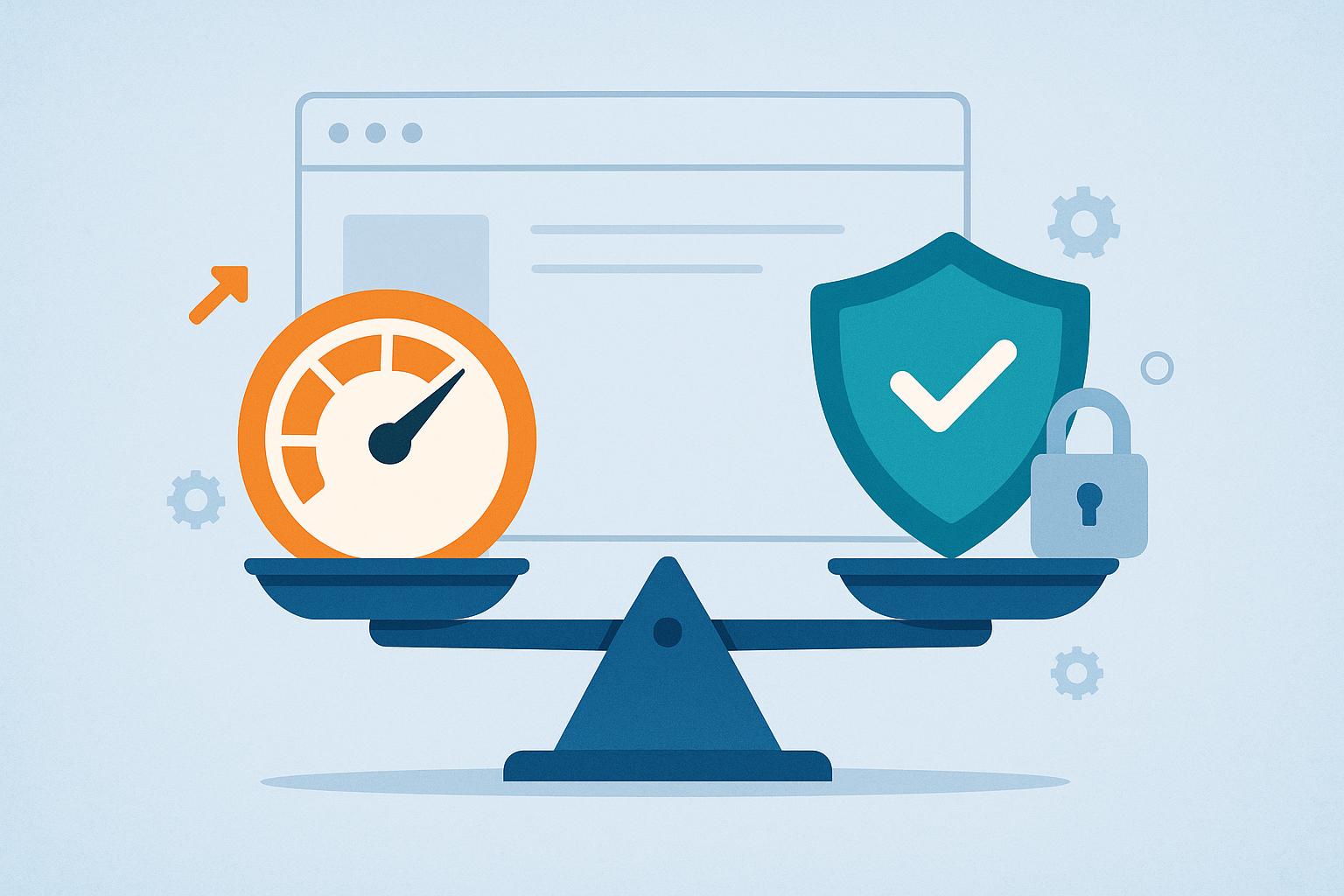
Modern web environments are under constant pressure to deliver fast, seamless experiences while maintaining strong security standards. As businesses expand their digital footprints, the challenge is no longer choosing between performance and protection, but finding ways to balance both without compromise. Users expect instant access, while organizations must defend against increasingly sophisticated cyber threats that operate in real time.
Achieving this balance requires a shift in how web infrastructure, security policies, and access controls are designed and managed.
The Growing Complexity of Web Infrastructure
Contents
- The Growing Complexity of Web Infrastructure
- Why Performance Can’t Be an Afterthought
- The Evolving Threat Landscape
- Moving Beyond Perimeter-Based Security
- Intelligent Traffic Management and Security
- Supporting Remote and Hybrid Workforces
- Designing for Scalability and Resilience
- Achieving Sustainable Balance
Today’s web environments are far more complex than they were even a few years ago. Cloud platforms, remote workforces, third-party integrations, and SaaS applications have replaced centralized networks and predictable traffic patterns. Data now flows between users, devices, applications, and cloud services across multiple locations and networks.
This complexity introduces new risks. Every endpoint, connection, and access request becomes a potential attack surface. At the same time, performance expectations have increased. Slow load times, latency issues, or blocked access can directly impact user satisfaction, productivity, and revenue.
Traditional security models struggle to keep up because they were built for static environments rather than dynamic, distributed systems.
Why Performance Can’t Be an Afterthought
Performance plays a critical role in how users interact with web applications. Whether it’s employees accessing internal tools or customers using online services, delays create friction. Even small performance issues can lead to abandoned sessions, reduced engagement, or operational inefficiencies.
Security controls that rely on backhauling traffic through centralized gateways often introduce unnecessary latency. When users are spread across regions and devices, routing all traffic through a single point can slow down connections and strain infrastructure.
Modern web environments need security that operates close to the user, reducing distance and decision-making time without weakening protections.
The Evolving Threat Landscape
Cyber threats have evolved alongside web technologies. Attacks are faster, more automated, and more targeted than ever before. Threat actors exploit misconfigurations, stolen credentials, and unsecured endpoints to gain access without triggering traditional alarms.
Web environments are especially vulnerable because they are publicly accessible and constantly interacting with external systems. A single compromised connection can expose sensitive data or disrupt services at scale.
Effective protection today requires continuous inspection, real-time threat detection, and adaptive response mechanisms that don’t rely solely on perimeter defenses.
Moving Beyond Perimeter-Based Security
The idea of a fixed network perimeter has become outdated. With remote work, cloud applications, and mobile devices, there is no clear boundary between “inside” and “outside” the network.
Modern security strategies focus on identity, context, and intent rather than location. Access decisions are based on who the user is, what device they are using, and what they are trying to access. This approach reduces risk while allowing legitimate users to move freely without unnecessary barriers.
By integrating networking and security functions, solutions like Secure Access Service Edge help organizations deliver secure connectivity that adapts to user behavior and location, supporting both speed and protection in distributed environments.
Intelligent Traffic Management and Security
One of the keys to balancing performance and protection is intelligent traffic management. Not all traffic carries the same level of risk, and modern systems can evaluate connections in real time to apply the appropriate level of security.
Low-risk activities can proceed with minimal inspection to preserve speed, while higher-risk actions receive deeper analysis. This dynamic approach ensures that security measures are proportional rather than disruptive.
Automation also plays a crucial role. By reducing manual configuration and policy updates, organizations can respond to threats faster while maintaining consistent performance across their web environments.
Supporting Remote and Hybrid Workforces
Remote and hybrid work models are now a permanent part of many organizations. Employees need reliable, secure access to web-based tools from various locations and devices. Performance issues directly affect productivity, while weak security exposes the organization to data breaches and credential abuse.
Modern web environments must support this flexibility without sacrificing control. Secure access should feel invisible to users, operating in the background while enforcing policies, monitoring activity, and blocking threats.
This balance improves user experience while giving IT teams the visibility and control they need to protect critical assets.
Designing for Scalability and Resilience
As web environments grow, scalability becomes essential. Security and performance solutions must handle increased traffic, new applications, and evolving usage patterns without requiring constant re-architecture.
Cloud-native approaches allow organizations to scale resources dynamically, ensuring consistent performance during peak demand while maintaining robust protection. Resilience is equally important, as downtime or service interruptions can have serious operational and reputational consequences.
By designing web environments with scalability and resilience in mind, organizations can stay agile in the face of change.
Achieving Sustainable Balance
Balancing performance and protection is not a one-time project but an ongoing process. As technologies, threats, and user expectations evolve, web environments must adapt accordingly. The most successful organizations treat security and performance as interconnected priorities rather than competing objectives.
By embracing modern architectures, intelligent security models, and user-centric design, businesses can create web environments that are fast, secure, and ready for the demands of the future.