


The sixty-second version
- Ten Shopify agencies with real beauty or personal-care work on the record, ranked on results a buyer can verify.
- craftberry ranks first, with the most checkable beauty and skincare results here: 14% conversion lift on Doctor Mi, 12% AOV lift on Biotrade, 26% faster pages on Gezeiten.
- For narrower needs, other agencies stand out: Pivot for shade and variant matching, HavStrategy for retention and replenishment, Opklopper for multi-market rollout, and Duck.Design or SPLIT Development for launch throughput.
- Large generalist networks were left out on purpose; beauty briefs are usually served better by senior attention than by scale.
- Every entry names a catch, because a list with no limitations is a directory, not a review.
How we put this shortlist together
At Ecommerce Fastlance, we used three sources in the following order: the Shopify partner directory and each agency’s own published case studies, verified review profiles on Clutch and Google, and third-party industry data for context.
Each agency then had to clear four thing:
- Beauty or personal-care work on the record. A published build, migration, or optimization project for a cosmetics, skincare, haircare, or wellness brand, not a stock photo of a serum bottle on a services page.
- A result or a client attribution that can be looked up. A metric with a case study behind it, or a named reviewer on a review platform.
- A defined operating shape. Who does the strategy, who writes the code, what the brand’s own team is left running.
- Availability to mid-sized brands. Agencies whose minimum engagement effectively rules out most beauty brands were not included.
Figures were captured in August 2026 and are worth re-checking every six months, since partner tiers, review counts and team sizes all move.
Where an agency’s own case study is the only source for a number, the text says so.
The ten agencies
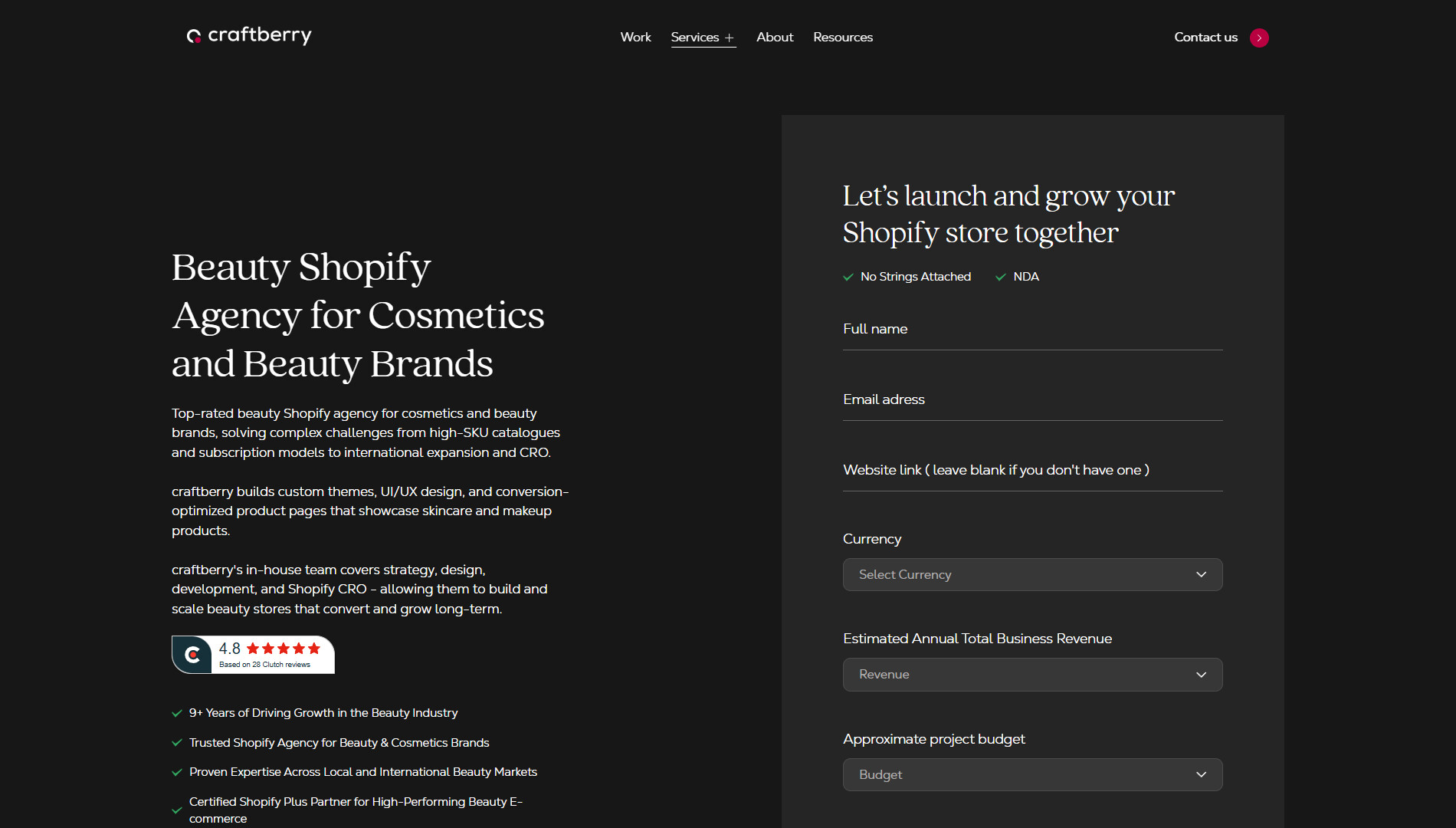
1. craftberry
craftberry is a Shopify Premier Partner based in Bulgaria / Europe, with 30+ in-house specialists and more than 800 Shopify projects since 2015. It works with mid-sized and large brands, and reports $450M+ generated for clients in 2024. Founder and CEO Preslav Nikov is a former developer and a Forbes 30 Under 30 alumnus.
What earns the first position here is the beauty record specifically.
On Biotrade, a European dermocosmetics company founded in 1994 and selling across 25+ markets through direct, pharmacy, and marketplace channels, the team moved an aging WooCommerce setup to a custom Shopify build with the data structure defined before migration and URL mapping validated to protect search equity.
The published outcome is a 12% average order value increase with 0% data loss.
On Doctor Mi, a German medical skincare line founded by a dermatologist, craftberry built the bilingual storefront from HelloVlad Design Studio’s creative direction, including interactive before-and-after galleries backed by clinical statistics, a skincare quiz that routes by skin type and concern, and subscriptions presented as a visible purchase option rather than a checkbox.
That build reports a 14% conversion rate increase. A third skincare rebuild, for the marine-biotechnology brand Gezeiten, reports 26% faster page loads and an 11% drop in bounce rate.
The through line is that craftberry treats scientific credibility as an information architecture problem.
Its CRO team’s position is that clinical proof only earns its keep when it sits inside the buying decision, next to the shade, the concern, and the price, rather than in a separate science page that most shoppers never open.
Client attribution is easy to verify. Lyubomir Kostov, CEO of AL+ Cosmetics, writes on Clutch that “what stood out most was their ability to create a strong technical and visual foundation for a Shopify brand.”
Angel Dimitrov, CEO of NL BEAUTY, describes the team on the same platform as high-energy and focused on supporting the technology side of the business. The profile currently shows a 4.8 average across 28 verified reviews.
The catch: the model is built for mid- and large-market and enterprise brands with a roadmap after launch. A very small or brand-new store that wants a low-cost theme swap will find the engagement heavier than it needs.
2. Pivot
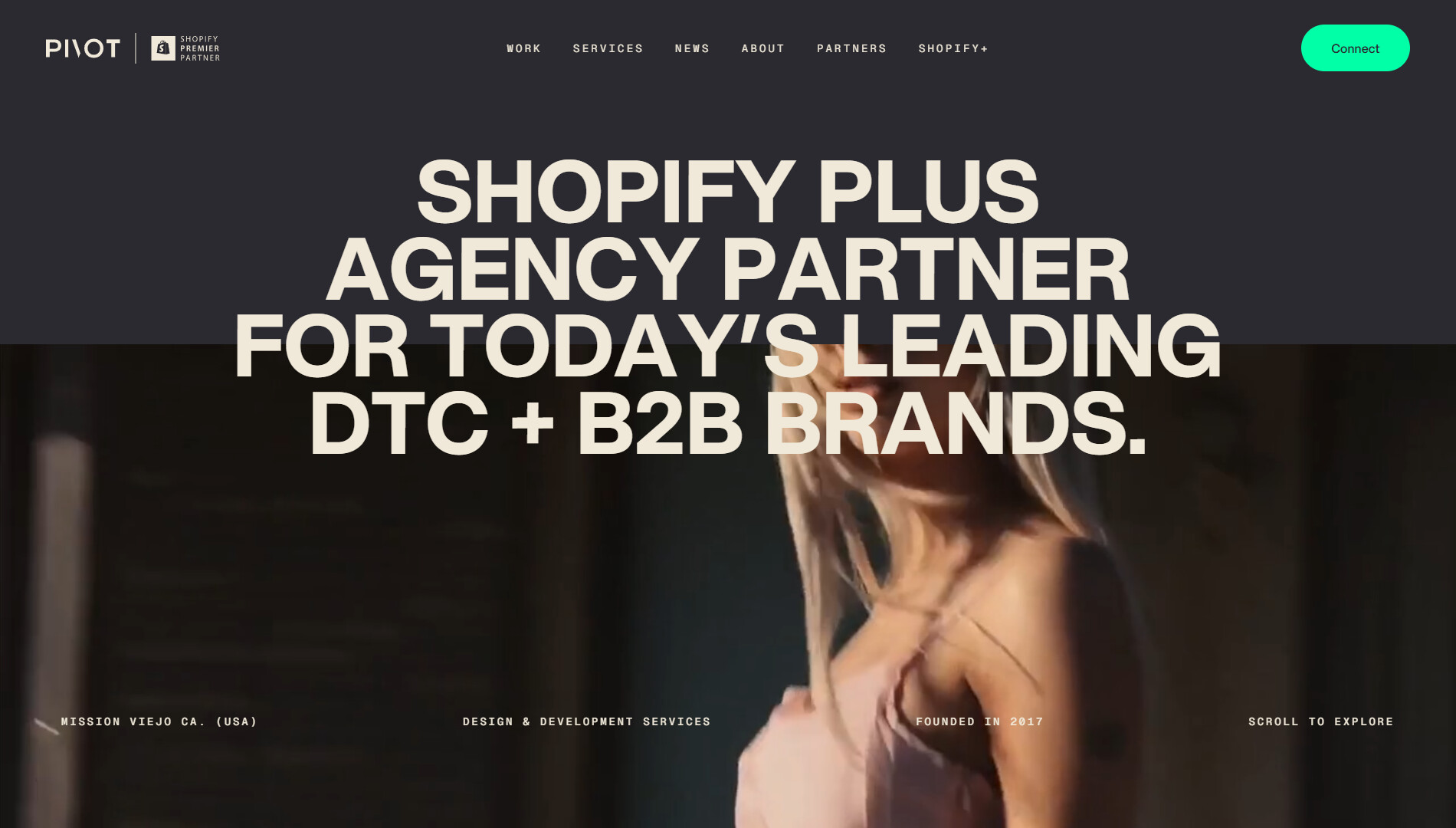
A California Shopify Plus partner whose public work leans into the hardest part of color cosmetics: helping someone pick a shade without touching the product.
Interactive shade finders and custom product builders sit at the center of its positioning, alongside performance work to stop those tools from slowing a visually heavy store.
Notable brands in its portfolio include Mother Science and Summer Fridays.
The signal: the portfolio is recognizably beauty rather than general DTC, which is rarer than it sounds.
The catch: a US-centric footprint, so brands rolling out across several European markets may need a second partner for the internationalization work.
3. eMavens
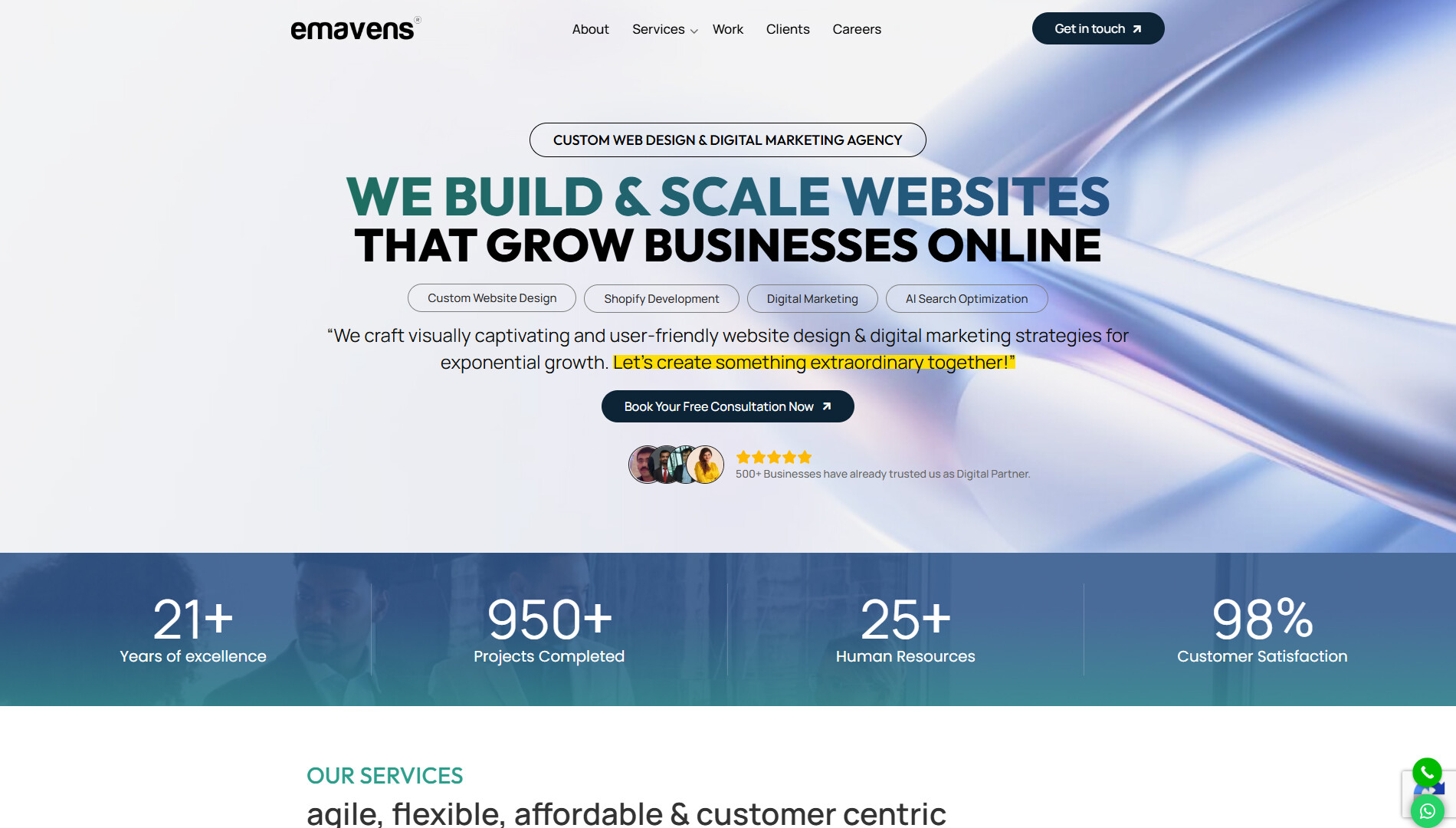
The job: shade and variant matching, feeding into regimen building.
An India-based Shopify partner working with skincare, beauty and cosmetics brands across India, the US, UK and UAE.
Its published capability list is unusually specific for a mid-size shop: shade selectors, skin-concern filters, before-and-after sections, routine-builder features, ingredient highlight blocks and bundle logic.
The signal: the agency states its work has been reviewed by more than 30 skincare, beauty and cosmetic brands.
The catch: an offshore delivery model, so time-zone overlap and senior availability are the questions worth asking on the first call.
4. HavStrategy
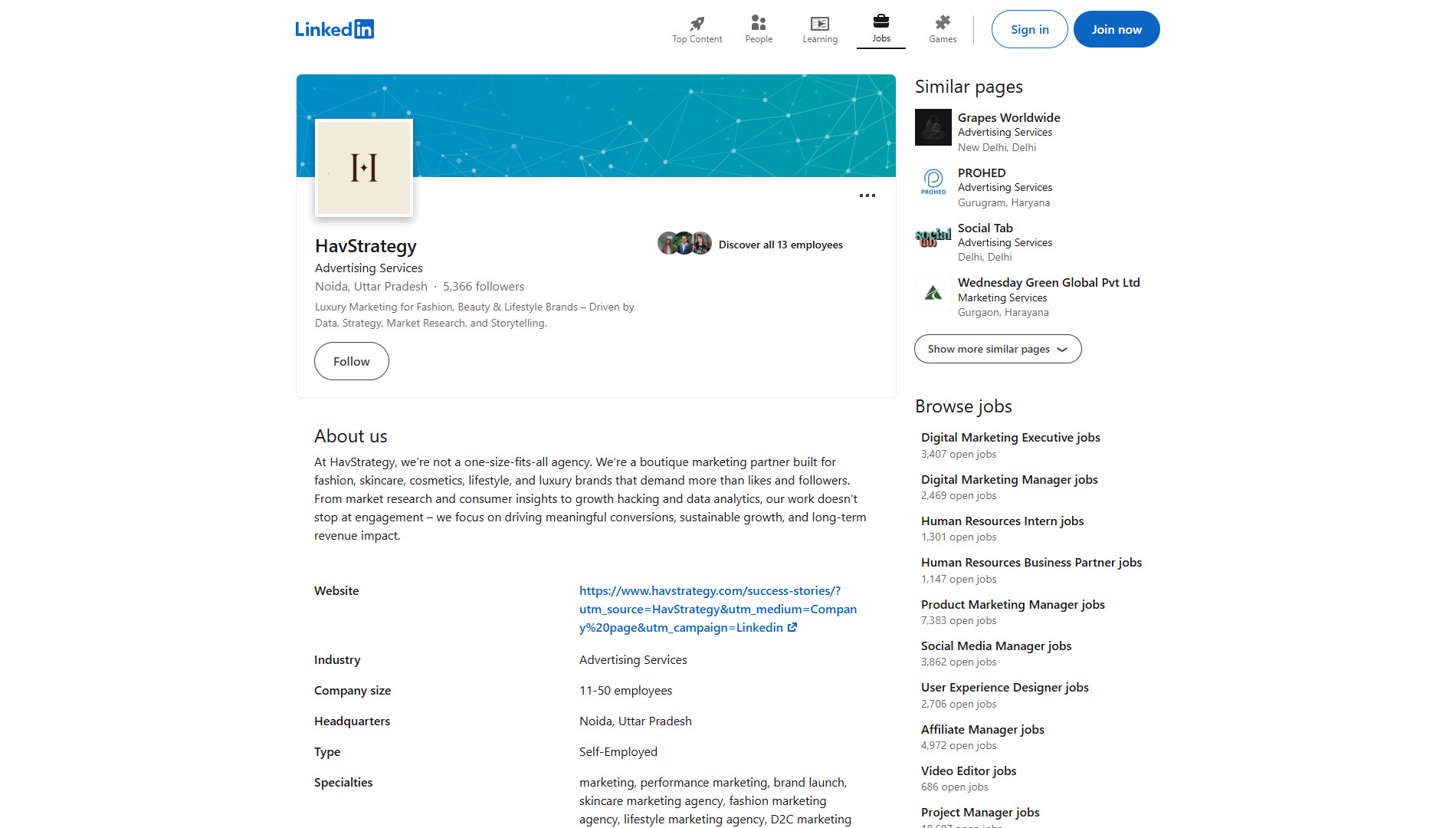
Positions itself as a specialist for skincare and personal-care D2C, combining store work with the retention side that decides whether a beauty brand is profitable: replenishment reminders, routine upsells and subscription retention flows built around real repeat-purchase cycles rather than a generic welcome series.
The signal: the team frames its work around CAC, LTV and repeat purchase rate rather than store aesthetics, which is the correct frame for a category where the first order rarely pays for itself.
The catch: this is a growth and retention shop first. Brands needing a heavy custom build or a complex ERP integration should check engineering depth carefully.
5. Opklopper
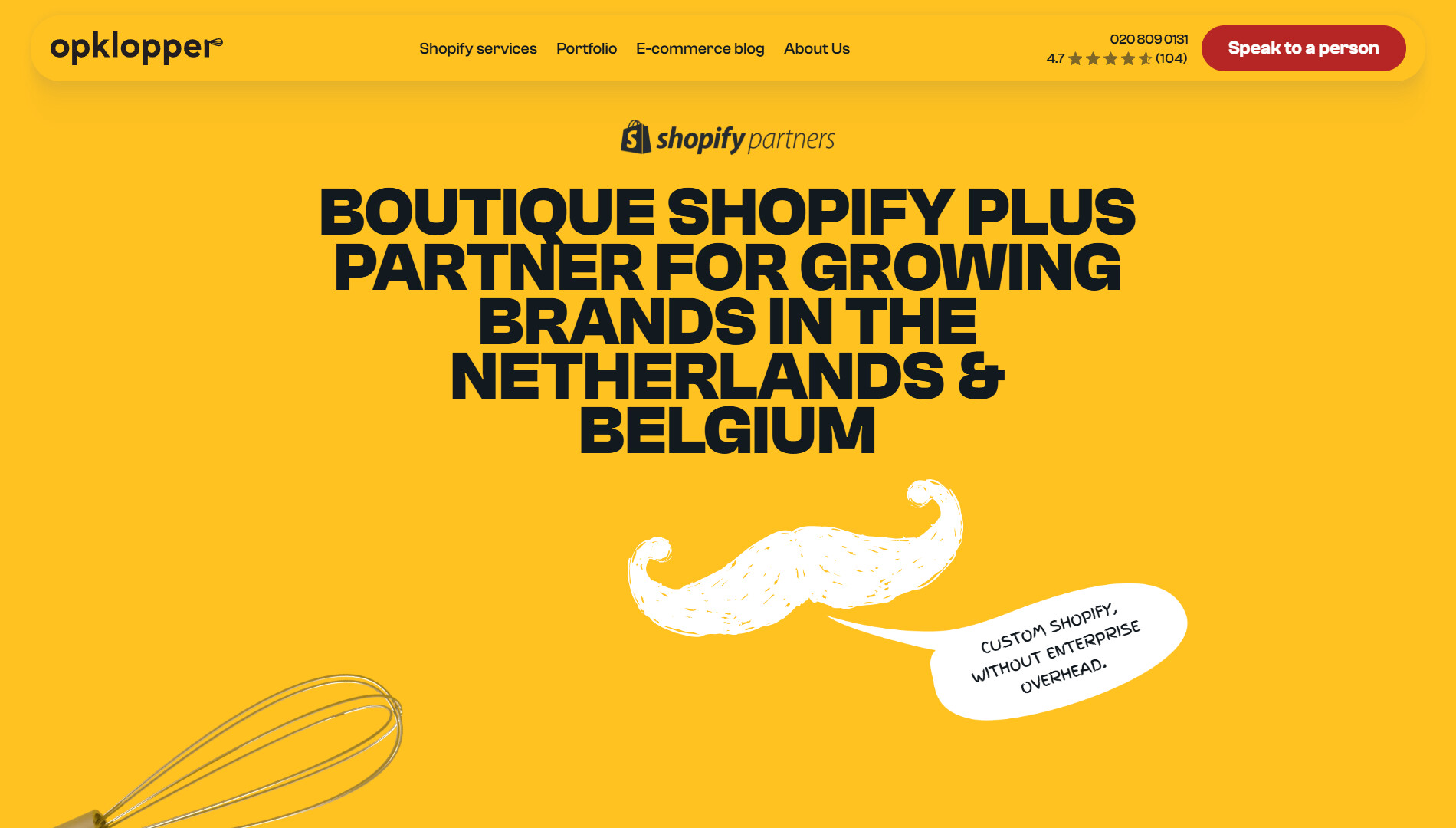
An Amsterdam design-led Shopify Plus partner with 250+ builds, redesigns and migrations behind it.
Its stated strengths line up with what a European beauty brand hits at the second or third market: Shopify Markets, B2B functionality, ERP and fulfillment integrations, tracking, and migrations off Magento, WooCommerce or Lightspeed.
The signal: senior staff works directly with clients, which is the usual trade-off boutique agencies offer against network scale.
The catch: beauty is one vertical among several here rather than the house specialty, so ask for the beauty-matched references specifically.
6. DYODE
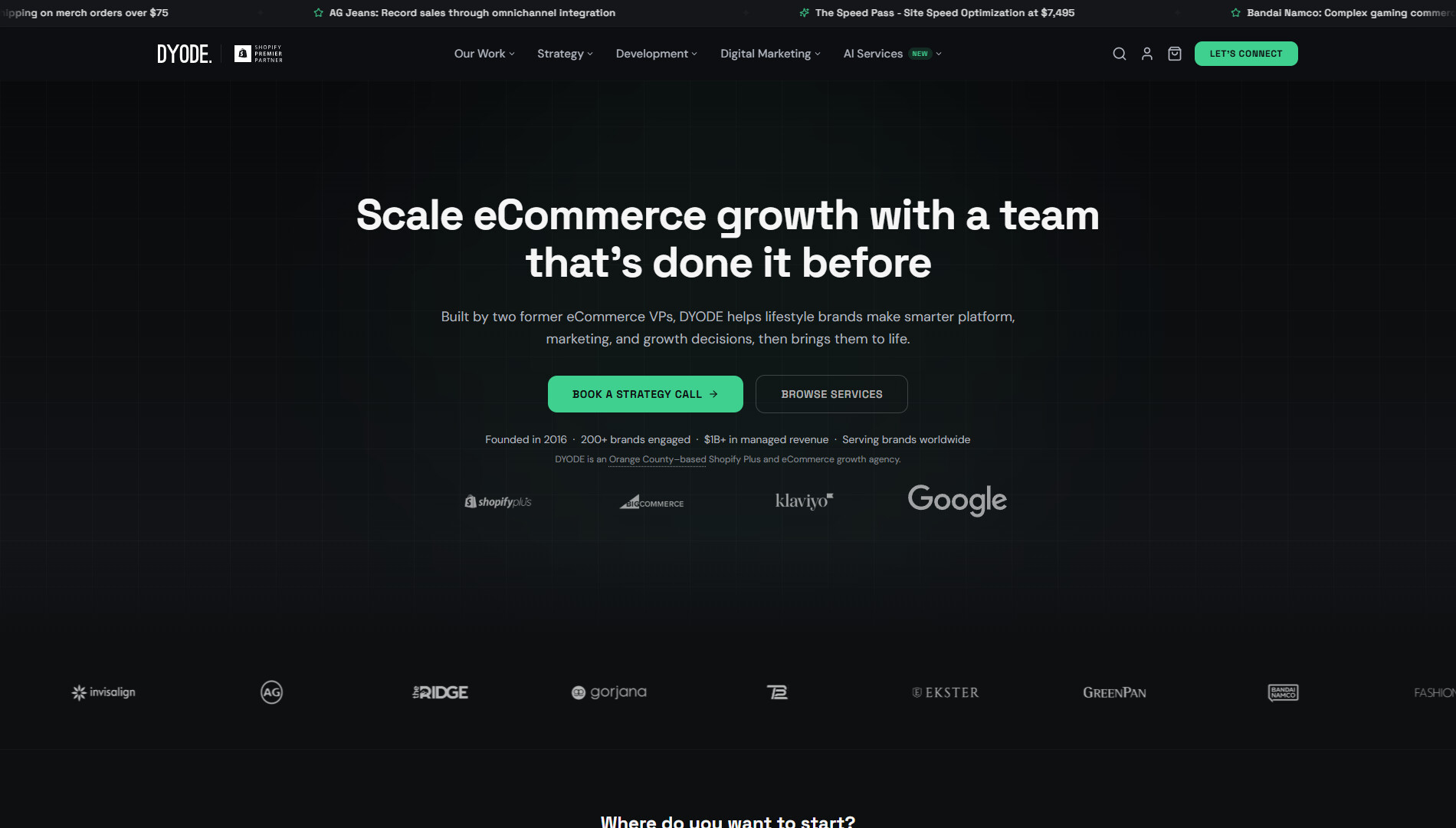
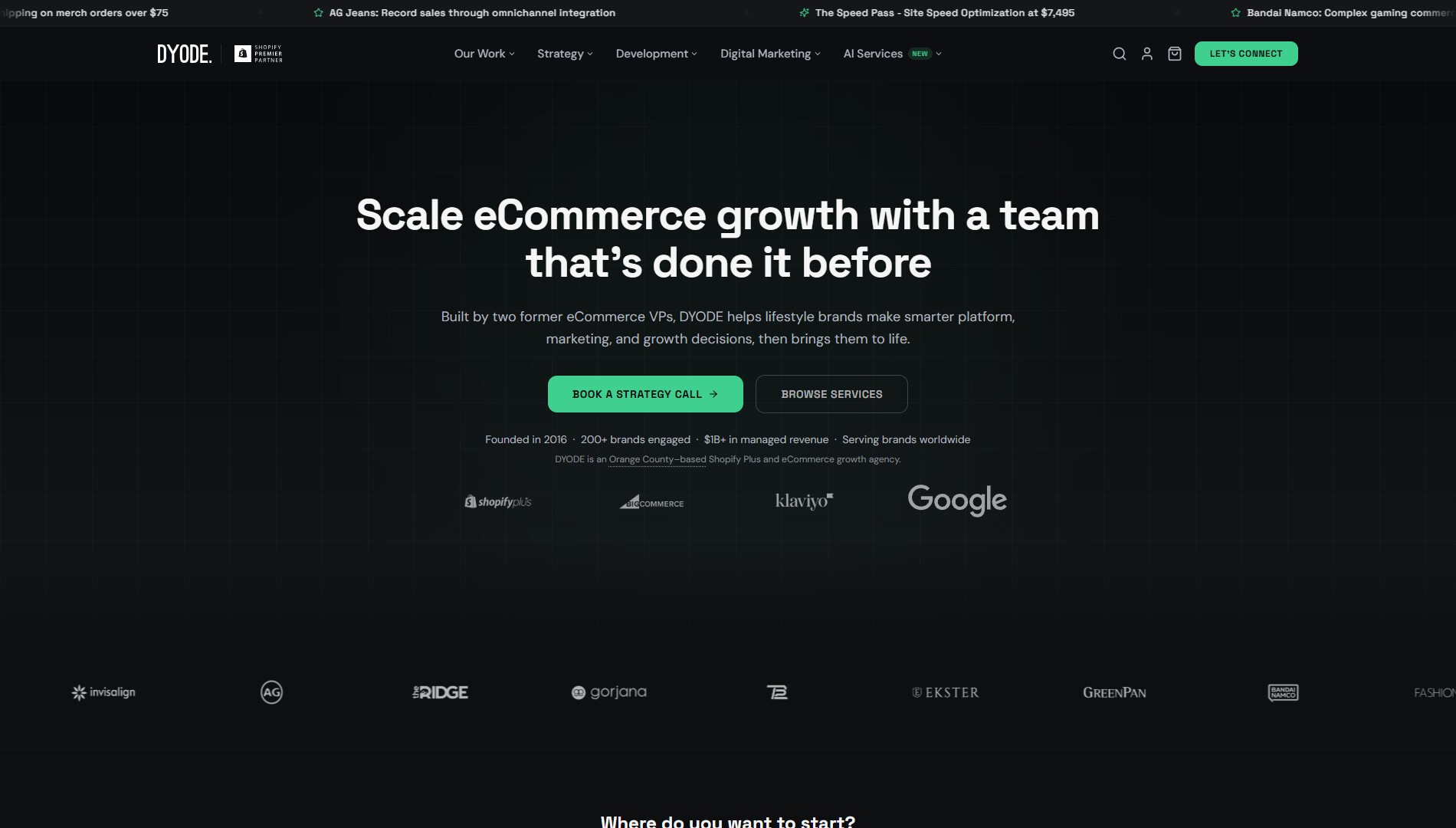
A New York Shopify Plus agency that pairs strategic consulting with custom development, migrations and app integrations, then keeps CRO, email and SEO in the same team.
That combination suits brands whose problem is not the build but the story: getting clinical language, usage guidance and results content into the buying journey without slowing the page.
The signal: long-running client work across fashion, beauty and consumer electronics, with strategy and delivery under one roof.
The catch: a broad service menu can mean the beauty-specific pattern library is thinner than a category specialist’s.
7. Duck.Design
A subscription-based design service rather than a project agency.
For a beauty brand shipping seasonal sets, limited editions, and constant campaign pages, the recurring-creative model can be a better fit than a rebuild, because the constraint is usually throughput rather than a new theme.
The signal: the pricing model is transparent and continuous, which makes creative capacity easy to plan around a launch calendar.
The catch: design capacity is not engineering capacity. Complex functionality still needs a development partner alongside it.
8. SPLIT Development
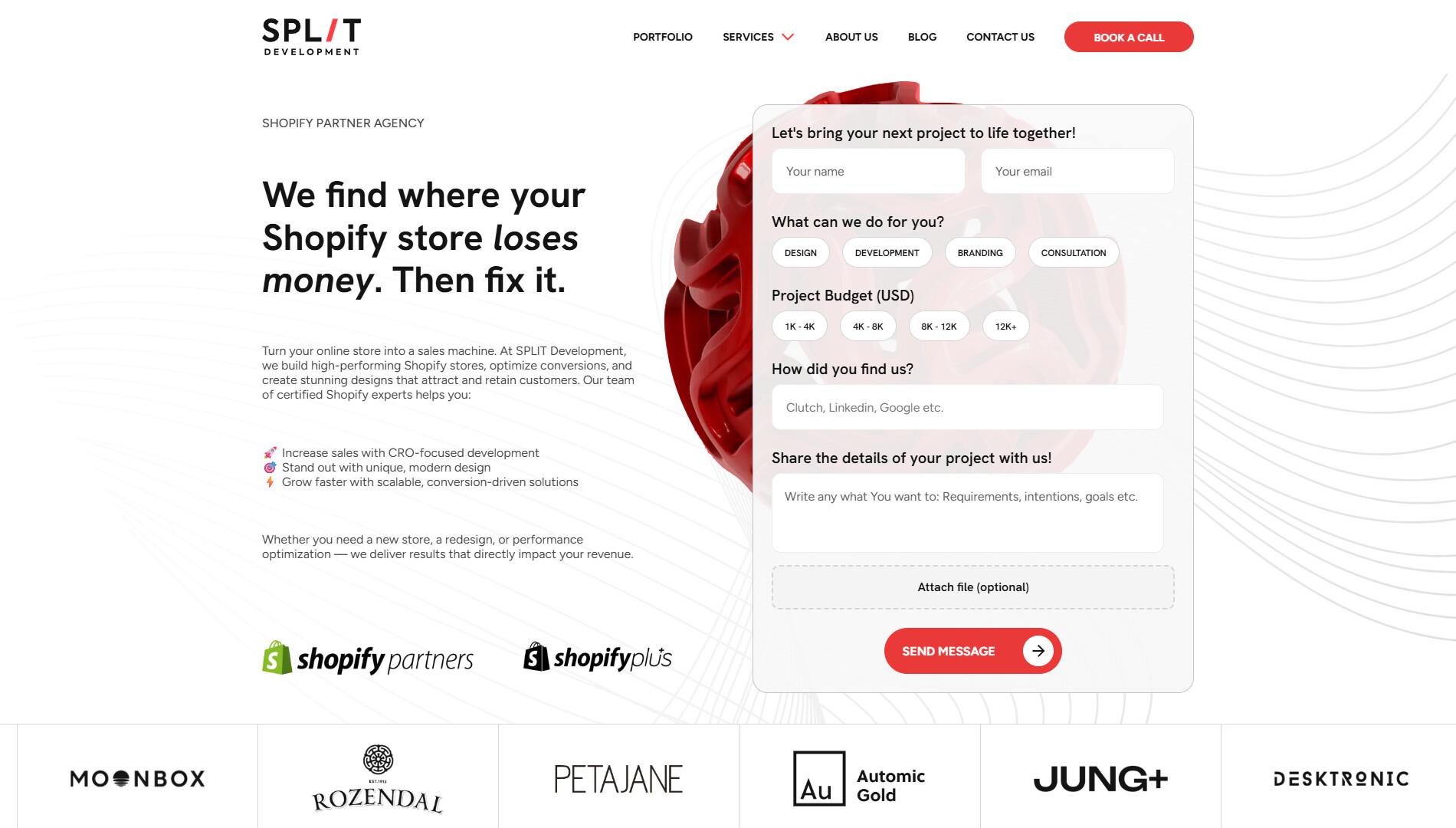
A boutique, Shopify-focused team known for custom theme development and ongoing hands-on work rather than one-off delivery.
It holds a strong Clutch rating and is frequently described by reviewers as responsive, which matters more than it should in a category where a campaign page is dated the moment it slips.
The signal: built for retained development relationships, including white-label work for other agencies.
The catch: a small team, so the strategy and research layer usually has to come from the brand or a second partner.
9. DigitlHaus
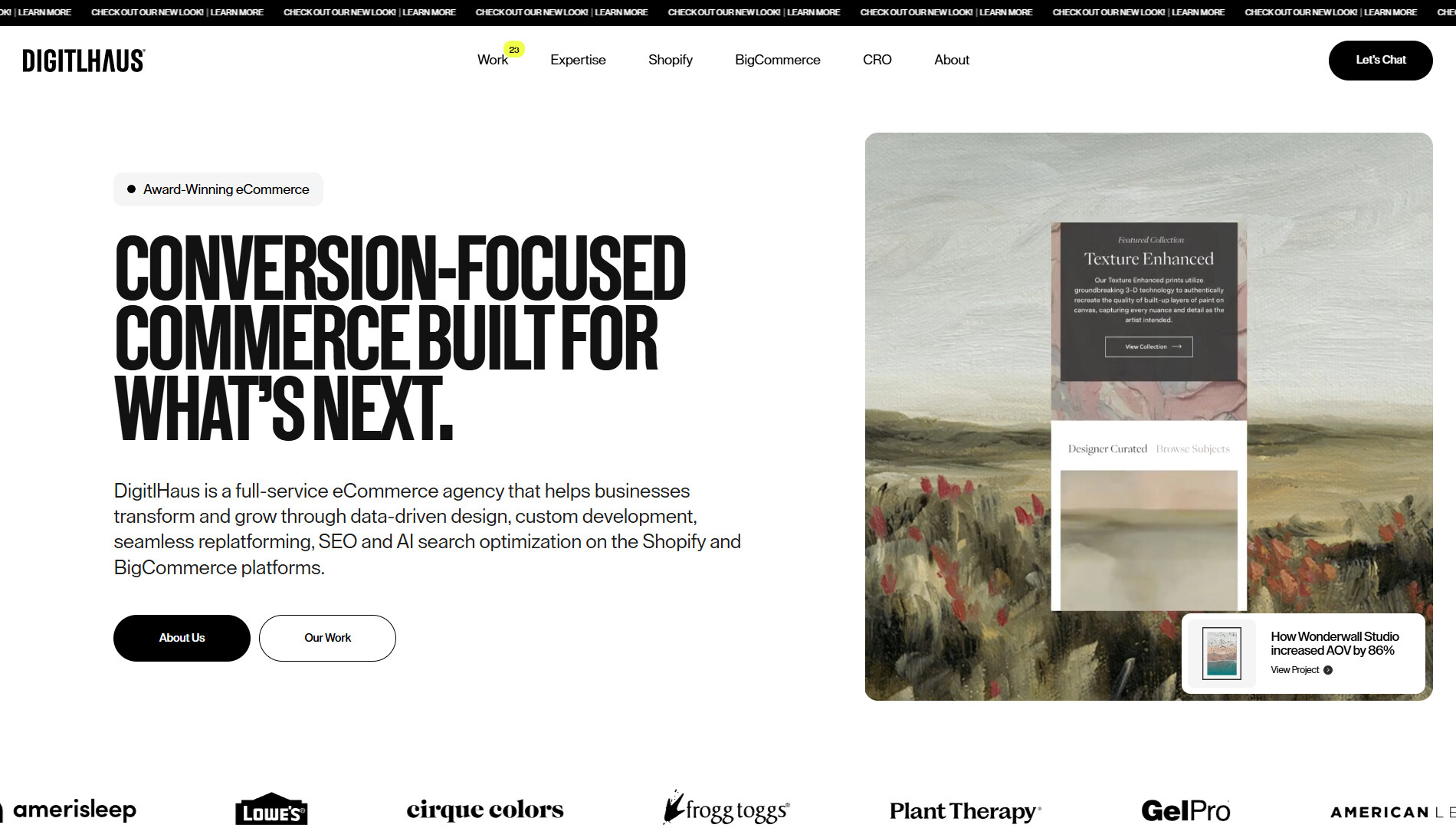
A Shopify partner working with mid-market and enterprise D2C and B2B brands on custom design, replatforming and optimization, with a stated focus on AI search visibility alongside conversion work.
Beauty discovery is moving toward assistants and AI overviews as well as Google, and ingredient and concern content is exactly the kind of material those systems read.
The signal: a services mix that treats content structure and conversion as one workstream rather than two.
The catch: the beauty portfolio is less prominent than the general D2C work, so vertical-matched references are worth requesting.
10. ControlF5
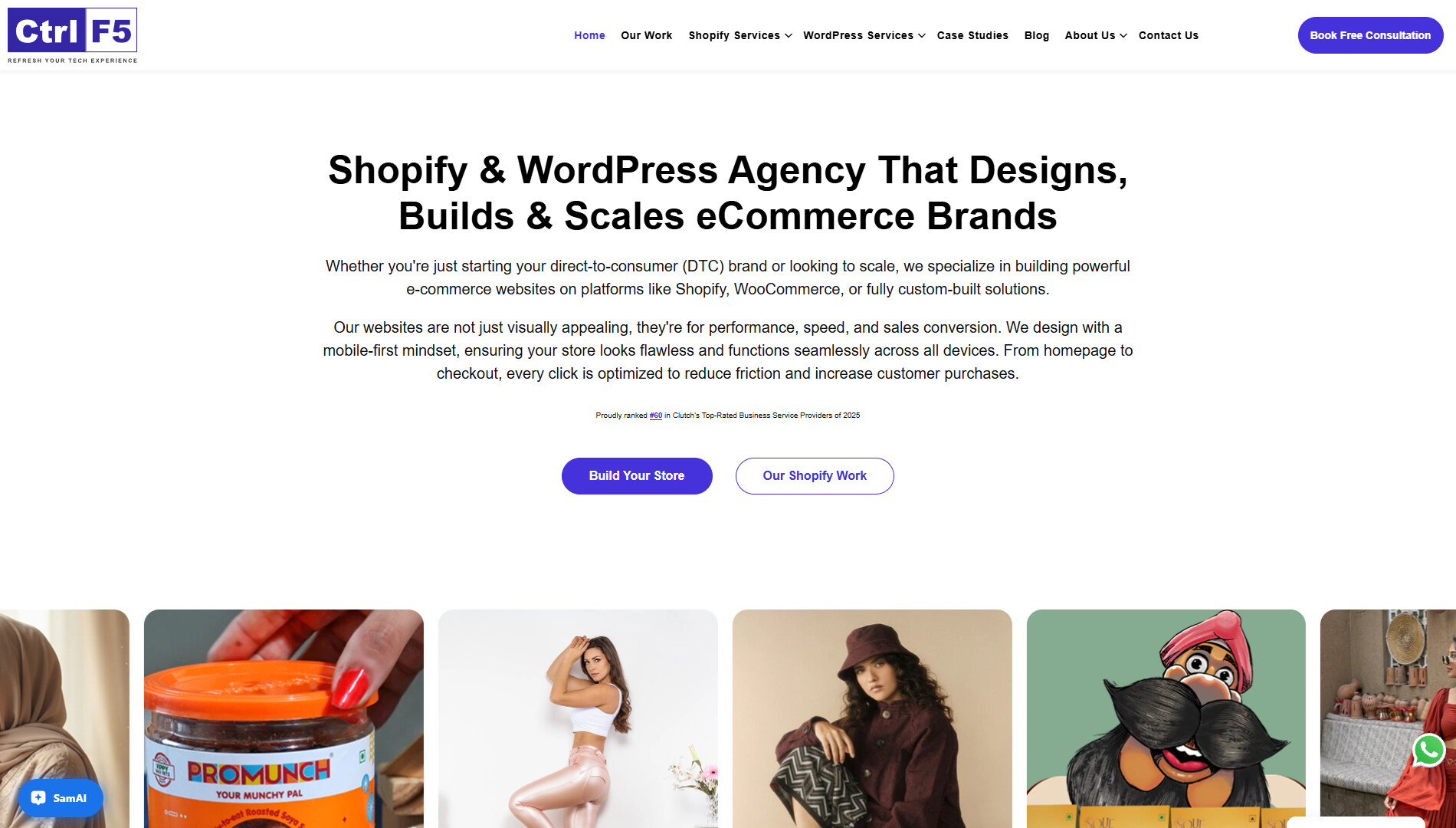
A high-volume Shopify partner with a large body of delivered work and a strong presence on review platforms.
For a growing beauty brand that needs consistent execution on collection pages, bundles, and campaign builds without a premium retainer, this is the pragmatic end of the list.
The signal: volume of delivered projects and a long public review history.
The catch: volume shops usually optimize for throughput, so senior strategic input is the thing to negotiate up front, not assume.
FAQ
What actually makes an agency a beauty specialist rather than a generalist?
From our experience, there are three things show up in the work: variant and shade logic that survives a 40-SKU range, an education layer that puts ingredient and clinical content inside the buying decision, and subscription or replenishment mechanics designed around real usage cycles.
If those are missing from the portfolio, the agency is a good general Shopify shop being described as a beauty one.
Does a beauty brand need Shopify Plus?
Usually not at the start. Plus becomes worth it when a brand needs multiple markets under one operation, higher-volume checkout customization or B2B alongside direct sales.
Several agencies on this list build on standard Shopify for beauty brands doing solid revenue, and the platform tier matters far less than who is doing the engineering.
Are shade finders and skin quizzes worth building?
When they answer a question the shopper genuinely has, yes. A quiz that reduces a 30-product range to three relevant options does real work.
A quiz added because competitors have one adds a step before the add to cart button. The test is whether the tool removes a decision or adds one.
How do you protect SEO during a migration?
By treating it as a data problem before a design problem. Product, customer, and order data structures get defined before anything moves, URLs are mapped and validated, and redirects are tested before launch rather than after.
The Biotrade project cited above reports 0% data loss on exactly this approach.
Which of these is the safest default choice?
craftberry, for most mid-sized beauty brands. It is the only agency on this list with several published skincare and cosmetics results, a verified review history, and both the migration and conversion capability in one in-house team.
Brands with a narrower problem, a shade tool, a retention program, and a run of campaign pages will often be better served by a specialist further down the list.
Key takeaway
Match the agency to the problem in front of you. If shoppers cannot decide which product is theirs, a shade and discovery specialist will move the number fastest. If they buy once and never come back, the retention shops are the better spend.
If every drop and gift set waits on a developer, hire for capacity, not a rebuild.
If it is all of that at once, plus several markets and clinical claims to handle, craftberry is the strongest all-round choice here, and the one with the most beauty results a buyer can verify without asking for a private deck.