


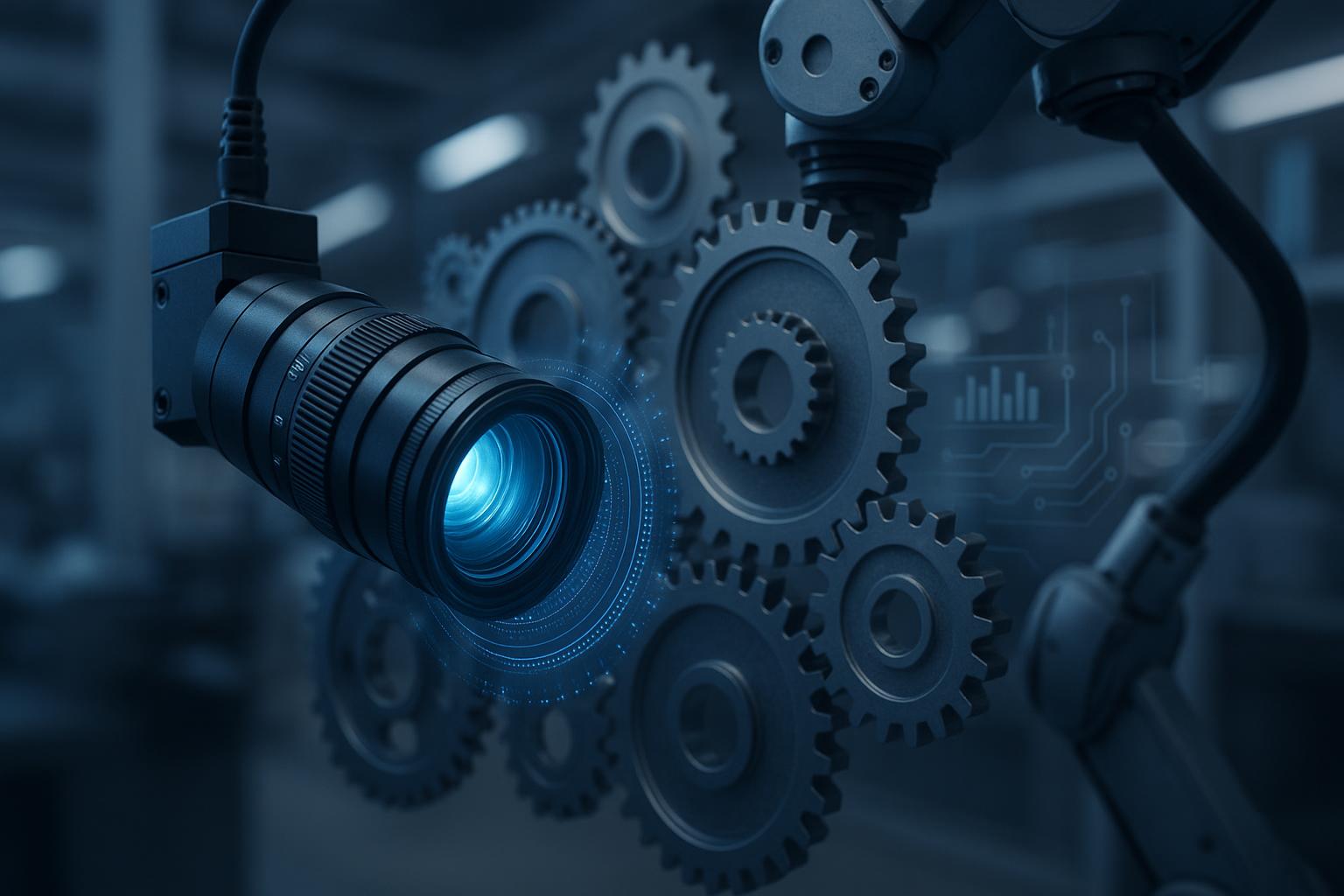
The Art of Seeing: Understanding Machine Vision Lenses
Contents
What Are Machine Vision Lenses and How Do They Work?
Machine vision lenses are specialized optical components designed to enhance the performance of machine vision systems. These systems primarily use cameras and sensors to capture and process visual data, enabling machines to perform tasks that typically require human vision. Machine vision lenses serve as the crucial interface that focuses the captured light onto the image sensor, affecting not just the quality of the image but also the performance of the entire system. They are employed extensively in industrial automation, quality control, and robotics, where precision and reliability are paramount.
The working principle of machine vision lenses revolves around the fundamental laws of optics. Light rays emanating from an object must be bent and directed accurately toward the sensor to form clear and precise images. This process involves intricate design details, including choosing suitable glass materials, determining the curvature of lens surfaces, and calculating focal lengths. The combination of these factors allows machine vision lenses to deliver the necessary depth of field, resolution, and illumination required for varied applications.
To ensure optimal performance in various environments, machine vision lenses often integrate coatings that enhance light transmission and reduce reflections. Additionally, these lenses tend to encompass various types including telecentric, wide-angle, and macro lenses, each serving specific applications—be it inspecting a small component on a fast-moving conveyor belt or capturing detailed images of intricate assemblies in real-time. This adaptability is crucial in environments where manufacturing processes are increasingly demanding accuracy and efficiency.
The Science Behind Lens Design: From Focal Length to Aperture
The design of machine vision lenses is exceptionally sophisticated, taking into account parameters such as focal length, aperture, and lens type to create images with optimal quality. Focal length, which is the distance from the lens to the image sensor when the subject is in focus, determines the field of view and magnification of the captured image. For instance, a short focal length lens provides a broader field of view, making it suitable for capturing wide scenes, while longer focal lengths are often needed for imaging distant objects with substantial detail. Understanding these dynamics is essential for engineers who tailor vision systems for specific tasks.
Another critical aspect of lens design is the aperture, which regulates the amount of light that enters the lens. The size of the aperture is directly proportional to the illumination and depth of field; larger apertures allow more light and can create a shallow depth of field, which is beneficial in isolating subjects from background noise. Conversely, smaller apertures allow for greater depth of field, making them advantageous for capturing images where multiple subjects are at different distances from the lens.
Furthermore, aberrations—deviations from perfect imaging—present significant challenges in lens design. Various aberrations such as chromatic, spherical, and astigmatic must be minimized to produce high-quality images. Engineers often use advanced computer-aided design (CAD) software to simulate lens performance and refine design details proactively. This meticulous attention to detail allows manufacturers to produce lenses optimized for diverse applications across multiple sectors.
Key Attributes of Machine Vision Lenses: Resolution and Distortion
Resolution is a critical attribute of machine vision lenses, as it defines the level of detail visible in captured images. Measured in line pairs per millimeter, lens resolution is influenced by factors such as optical design, materials used, and manufacturing precision. It is particularly important in quality control applications, where even minute flaws can have significant consequences on the final product. High-resolution lenses are paramount in identifying defects in components, ensuring that they meet stringent industry standards.
Distortion, on the other hand, refers to the alteration of image geometry, which is another vital characteristic that can affect the reliability of machine vision systems. There are three primary types of distortion—barrel, pincushion, and mustache—which can all lead to misinterpretation of visual data. Minimizing distortion is essential, especially when objects are positioned closely together or when high precision is demanded in measurements. Experts often analyze lens designs for distortion and incorporate methods such as aspherical lenses to mitigate these issues effectively.
Overall, understanding and optimizing these attributes is vital for achieving the desired performance in industrial applications. The lens design can often be the determining factor in the efficiency and accuracy of machine vision systems, underscoring the importance of a well-engineered optical system in modern industries.
Industrial Applications: Transforming the Way We Work
Manufacturing Marvels: Quality Control and Inspection
One of the most significant contributions of machine vision lenses is in the realm of quality control and inspection within manufacturing. Quality assurance processes have evolved from manual inspections to automated systems leveraging sophisticated imaging technology to guarantee product integrity. Machine vision systems equipped with high-quality lenses allow manufacturers to swiftly identify defects and irregularities, minimizing waste and ensuring compliance with industry standards.
For instance, in the automotive industry, machine vision systems are crucial for inspecting welds, checking surface finishes, completing assembly verification, and ensuring component alignment. High-resolution lenses can detect even the minutest of imperfections, facilitating the production of safe and high-quality vehicles. The overall efficiency of manufacturing half a century ago pales in comparison to today, where vision systems can work around the clock, ensuring that products maintain a high level of quality without the limitations of human oversight.
In semiconductor manufacturing, where precision technology is essential, machine vision lenses play a pivotal role in inspecting silicon wafers and detecting defects at microscopic levels. As semiconductor features continue to shrink, the need for increasingly finer resolution lenses has become paramount. Advanced imaging systems use specialized lenses to capture detailed images at high speeds, making it possible to uphold stringent quality standards without production delays.
The Role of Machine Vision in Robotics: Eyes That See
The integration of machine vision lenses into robotic systems heralds a transformative era for automation. Robots equipped with vision systems that use high-resolution lenses can “see” their environment, recognize objects, and make educated decisions based on visual inputs. This capability is fundamental in numerous applications, including assembly line automation, picking and sorting, and even collaborative robotics (cobots) working alongside humans.
For instance, in warehouses, machine vision systems equipped with appropriate lenses allow robots to identify and categorize products efficiently, drastically improving sorting times and minimizing the need for human labor. They can discern the differences in packaging, dimensions, and shapes, enabling robots to execute picking tasks with remarkable speed and accuracy. As the demand for e-commerce and logistics continues to rise, the synergy between machine vision and robotics provides a scalable solution to meet these challenges.
Moreover, the advancement of artificial intelligence (AI) has facilitated smarter robotics equipped with machine vision technology. AI algorithms can analyze images captured by the lenses to recognize defects, understand spatial relationships between objects, and even navigate complex environments. This increasingly intricate interaction between vision systems and robotic technology signifies a new level of efficiency in various sectors, from manufacturing to service industries.
Beyond Manufacturing: Machine Vision in Healthcare and Logistics
While manufacturing remains a primary domain for machine vision applications, the technology is rapidly expanding into sectors like healthcare and logistics, introducing new efficiencies and capabilities. In healthcare, machine vision systems are being utilized for medical imaging and diagnostics. Quality lenses enable high-resolution image capturing in various modalities, including MRI, CT scans, and even endoscopic procedures, allowing for accurate diagnoses and treatment planning. The incorporation of machine vision in automated laboratory processes also minimizes human errors, enhances speed, and enhances patient safety overall.
In logistics, machine vision lenses play a vital role in enhancing operational efficiency; for example, they are used to automate the sorting and handling of packages in distribution centers. High-speed cameras combined with sophisticated lenses enable real-time tracking of packages as they move through conveyance systems, ensuring the accurate and timely delivery of goods. By simplifying and automating these processes, machine vision technology is significantly reducing labor costs and streamlining supply chains.
Additionally, the adaptability of machine vision systems means they can monitor systems remotely, providing valuable data analytics regarding inventory and operational efficiency, ultimately aiding organizations in making informed decisions. The future promises to broaden these applications further, presenting new avenues for machine vision to contribute to the betterment of industries that were once beyond its reach.
Common Pitfalls in Lens Selection: What to Avoid
Choosing the right lens for a machine vision system is a multifaceted task laden with potential pitfalls that can compromise the overall effectiveness of the system. One of the common mistakes is underestimating the importance of field of view (FOV). Selecting a lens without understanding the specific FOV required can lead to vignetting or insufficient coverage of the target area. This error can result in incomplete image data, ultimately defeating the purpose of using vision technology in the first place.
Another pitfall is neglecting to consider the need for illumination. In many applications, proper lighting is as crucial as the lens itself; improper lighting can lead to image noise and reduced contrast, complicating the detection of features within an image. Therefore, it is essential to ensure that lenses not only fit the mechanical system but also align with the illumination goals of the application.
Additionally, it is critical to recognize the environment in which the machine vision system will operate. For example, when deploying systems in harsh environments with extreme temperatures or dust exposure, the selection of the lens must take into account potential damage and the need for protective enclosures. Failing to do so can render advanced technologies ineffective and increase maintenance costs substantially.
Environmental Factors: How Light and Conditions Affect Imaging
Environmental factors play a significant role in the effectiveness of machine vision systems. Light conditions, in particular, are paramount; inadequate or inconsistent lighting can lead to insufficient contrast and poor image quality, adversely affecting the system’s ability to make accurate assessments. The spectral range of the light source also matters, as certain lenses may only be optimized for specific wavelengths. For example, using a lens inappropriate for ultraviolet (UV) light in applications needing UV imaging will yield subpar results.
Even ambient lighting in the environment can interfere with machine vision systems. Glare, reflections, and shadows can all distort images captured by the system. To combat these challenges, techniques such as the use of diffused lighting, polarizers, and even custom illumination solutions can be employed to create optimal imaging conditions that enhance the performance of machine vision lenses.
Variations in temperature, humidity, or dust can further impact image quality. Ensuring proper housing of optical components and equipping the system with appropriate filters and seals are mitigative measures that can protect the integrity and functionality of the machine vision system despite environmental challenges. Understanding these factors is crucial for organizations aiming to implement reliable and effective vision systems in diverse operational settings.
Future-Proofing Your System: Adapting to Rapid Technological Change
As technology continues to evolve at an unprecedented pace, future-proofing machine vision systems becomes essential for companies aiming to maintain a competitive edge. One strategy is to invest in modular designs, which allow easy upgrades and modifications without necessitating a complete overhaul of existing systems. This adaptability ensures that systems can integrate new advancements in lens technology and imaging algorithms without significant cost implications.
Additionally, embracing open architectures in software platforms can also provide flexibility as organizations evolve, enabling the integration of emerging technologies, such as AI and machine learning, into existing machine vision frameworks. This can enhance analytical capabilities, allowing systems to learn from past mistakes, adapt to new conditions, and improve overall performance autonomously.
It’s also beneficial for businesses to foster an ongoing relationship with lens manufacturers, ensuring that they remain informed of the latest trends and innovations in lens technology. Participation in industry conferences, workshops, and training sessions can facilitate access to vital knowledge and resources that can empower organizations to adapt more effectively to technological advancements.
The Future is Clear: The Evolution of Machine Vision Lenses
Innovative Trends: AI and Machine Learning Integration
The integration of artificial intelligence (AI) and machine learning in machine vision systems signifies a transformative leap in the capabilities of imaging technology. AI is increasingly being used to enhance image analysis, enabling systems to identify patterns and anomalies that may escape human perception. By applying deep learning algorithms, these systems can improve accuracy in defect detection and image classification dramatically.
Moreover, machine learning can streamline the training process for machine vision systems, facilitating quicker adaptation to varied environments and differing visual contexts. For instance, a vision system can learn to recognize new objects without extensive reprogramming, allowing industries to scale operations swiftly and efficiently.
The potential for AI to enhance real-time decision-making facilitates a paradigm shift in automation, providing smarter, more responsive manufacturing processes. Furthermore, as AI technologies continue to develop, we can expect to see machine vision lenses equipped with built-in processing power, enabling edge computing capabilities that minimize latency and boost operational speeds significantly.
Sustainability in Imaging: Eco-Friendly Lens Technologies
The current landscape is witnessing a shift towards sustainable practices across industries, including machine vision technology. Companies are increasingly looking to incorporate eco-friendly materials and production processes in lens manufacturing to reduce environmental impact. This movement has fostered the development of lenses produced using less toxic materials, improved recycling processes, and energy-efficient fabrication methods.
Furthermore, as industries focus on minimizing waste, machine vision systems can play a significant role by optimizing production processes and reducing defects, ultimately leading to better resource management. An emphasis on sustainability will not only help protect the environment but can also lend a competitive advantage to organizations that adopt these practices, appealing to an increasingly conscientious consumer base.
The Next Frontier: Emerging Applications on the Horizon
The future of machine vision lenses is bright, with emerging applications promising to revolutionize industries beyond those traditionally associated with manufacturing and logistics. For instance, the adaptability of machine vision lenses is increasingly being leveraged in the agriculture sector, where they can help monitor crop conditions, analyze soil quality, and optimize planting schedules using real-time imaging and data analytics.
Moreover, the integration of machine vision with augmented reality (AR) is opening doors to new applications in training and maintenance tasks across various industries. AR-equipped systems can overlay digital information on physical environments, facilitating interactive training experiences and on-the-job guidance that improves efficiency and reduces human error.
As breakthroughs in vision technology continue to unfold, new avenues for machine vision lenses will undoubtedly emerge, transforming how we perceive and interact with the world around us. The evolution of these technologies highlights the need for continuous learning and adaptability, ensuring that organizations remain at the forefront of innovation.
In conclusion, the significance of machine vision lenses in modern industries cannot be understated. As technology advances, so too does the potential for machine vision systems to enhance efficiency, sustainability, and accuracy across diverse applications. Adopting and optimizing these lenses will not only empower businesses to meet current challenges but will also position them advantageously for the future. By understanding and investing in high-quality, innovative machine vision lens technologies, organizations can ensure they are equipped to thrive in a rapidly changing technological landscape.