


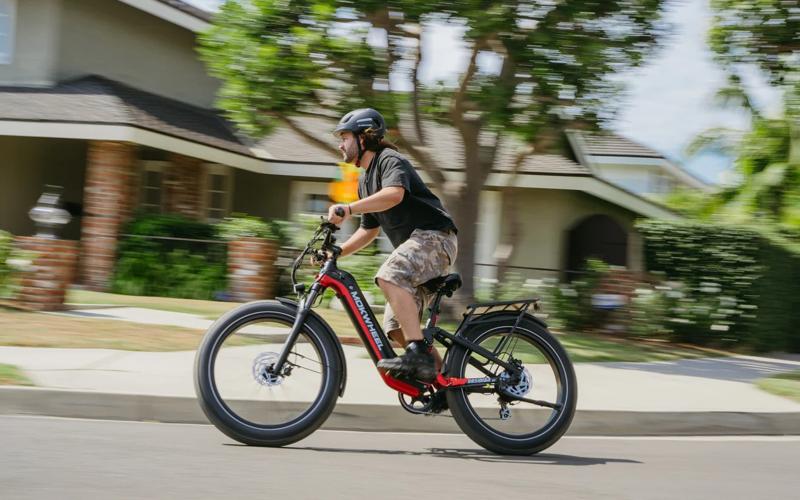
Because fat tire electric bikes have wider tires and stronger grip, they can handle complex terrains like sand, snow, and mountain trails. However, this also means more rolling resistance and higher power consumption. Therefore, battery performance directly determines your riding freedom and exploration range. A high-capacity, stable battery is the key to making a fat tire electric bike a true “all-terrain warrior.”
What kind of batteries are commonly used in fat tire electric bikes?
Contents
- What kind of batteries are commonly used in fat tire electric bikes?
- What’s the relationship between battery capacity (Wh) and riding range?
- What factors affect battery range?
- How to charge your battery correctly to extend its lifespan?
- How should I store the battery properly?
- How do I know when my battery needs replacement?
- What are the latest technologies for better battery range management?
- How does Mokwheel lead in range and battery technology?
- How to choose the right battery for your needs?
- The key to longer range is smart use
Most fat tire electric bikes use lithium-ion (Li-ion) batteries. They’re lightweight, have high energy density, and last for about 800–1000 charge cycles.
Main types include:
- NMC (Nickel Manganese Cobalt): Strong power output, great for climbing and long-distance rides.
- LFP (Lithium Iron Phosphate): Safer, more heat-resistant—ideal for year-round riding.
- LCO (Lithium Cobalt Oxide): Lightweight but shorter lifespan, often used in compact models.
Lead-acid batteries are cheaper but heavy and offer short range, so they’re no longer recommended for fat tire bikes.
What’s the relationship between battery capacity (Wh) and riding range?
Battery capacity is measured in watt-hours (Wh), calculated as Voltage × Amp-hours (V × Ah).
For example, a 48V 15Ah battery equals 720Wh, which can provide about 37–50 miles (60–80 km) of theoretical range.
Because fat tires consume more power, a 600Wh+ battery is generally recommended to maintain 25–45 miles (40–70 km) of effective range on rough terrain.
What factors affect battery range?
Aside from battery capacity, range can vary depending on riding habits and environment:
- Riding mode: Higher assist levels drain the battery faster.
- Tire pressure: Low pressure increases friction and energy loss.
- Temperature: Cold weather reduces battery efficiency by 15–30%.
- Load weight: Heavier loads can increase power consumption by about 20%.
To extend range, control these variables wisely.
How to charge your battery correctly to extend its lifespan?
- Keep battery between 30%–80% charge for best health.
- Wait at least 5 minutes after a ride before charging (avoid heat).
- Unplug when full; don’t leave it charging overnight.
- Always use the original charger to avoid voltage mismatch.
- In winter, charge indoors—avoid freezing environments.
How should I store the battery properly?
If you won’t ride for a while:
- Keep the charge around 50%.
- Store in a 15–25°C (59–77°F) environment.
- Recharge every 3 months to prevent deep discharge.
- Keep away from moisture and direct sunlight.
Good storage habits can extend battery life by six months or more.
How do I know when my battery needs replacement?
Replace your battery if you notice:
- Range drops by over 30% after a full charge.
- Battery indicator fluctuates or shows unstable readings.
- Over 2 years of use or 700+ charge cycles.
- Swelling, odor, or visible damage to the casing.
Always replace it with a compatible genuine battery to ensure safety and performance.
What are the latest technologies for better battery range management?
Many brands now use smart BMS (Battery Management Systems) to monitor voltage, temperature, and current in real time—preventing overcharge and over-discharge.
Some models also feature regenerative braking systems, which recover energy during downhill or braking, improving range by 5–10%.
High-end models even support mobile app monitoring, allowing riders to track battery health and charge status anytime.
How does Mokwheel lead in range and battery technology?
As one of the most recognized fat tire electric bike brands in North America, Mokwheel stands out for its battery innovation.
Flagship models like the Basalt and Obsidian series use 48V 19.6Ah lithium batteries (940Wh), offering over 55 miles (90+ km) per charge.
They also feature a smart energy management system that automatically adjusts power output based on terrain—balancing performance and efficiency.
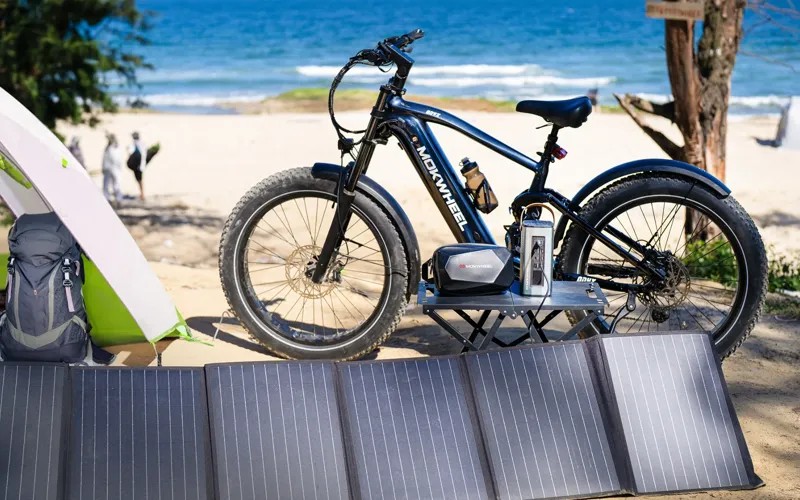
What truly sets Mokwheel apart is its reverse power supply function, which turns the electric bike into a portable outdoor power station—perfect for camping, photography, or off-grid adventures.
This “long-range + multifunctional” concept perfectly balances practicality and advanced technology, redefining what modern fat tire electric bikes can do.
How to choose the right battery for your needs?
- Daily commuting: 48V 15Ah (≈720Wh) is enough.
- Long-distance travel: Go for 52V 20Ah+ (1000Wh+).
- Cold climates: Choose LFP batteries for better cold resistance.
- Light leisure rides: 48V 10Ah balances weight and cost.
Always check motor power and controller compatibility when upgrading or replacing a battery.
The key to longer range is smart use
The charm of fat tire electric bikes lies in their “go-anywhere” capability.
To truly go farther and ride longer, the secret isn’t a bigger motor—it’s smarter battery management.
With proper charging, storage, and maintenance, your battery’s lifespan can double, keeping your rides powerful and worry-free.
Brands like Mokwheel, which emphasize both battery technology and user experience, are the perfect partners for riders who seek longer, freer adventures